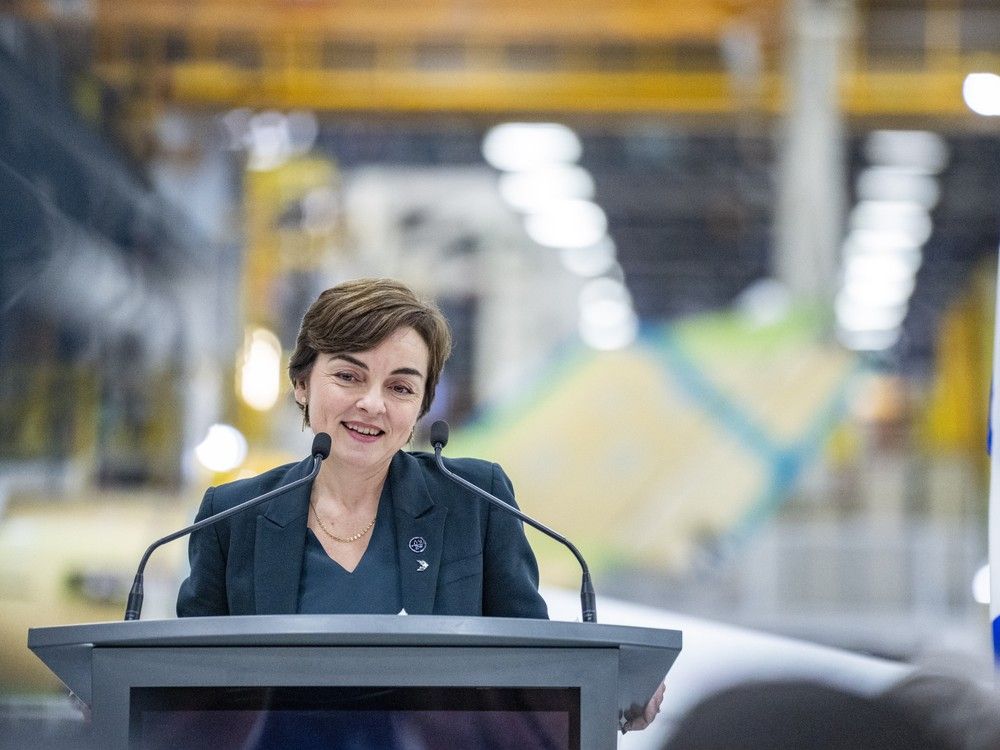
MONTREAL — Quebec's political landscape, long dominated by the surging Parti Québécois, is showing signs of a tightening race as the Coalition Avenir Québec's leadership contest injects fresh energy into the non-separatist camp. What had appeared to be a straightforward path to victory for the PQ, riding high in recent polls, now risks evolving into a more competitive contest, according to political observers. At the center of this shift is Economy Minister Christine Fréchette, whose rising profile in the CAQ leadership race has been dubbed the 'Fréchette effect' by former NDP leader Tom Mulcair in a recent column for the Montreal Gazette.
Mulcair, who once served as Quebec's environment minister under the Liberal government of Jean Charest, described the change as making Quebec politics 'suddenly becoming interesting again.' He noted that the PQ, with its 32 percent support in the latest Léger poll, had seemed poised for a 'cake walk,' but the dynamics are altering. The poll, conducted in recent weeks, places the Liberals at 26 percent and the CAQ at 17 percent, but projections with Fréchette at the helm suggest a narrower gap: PQ at 30 percent, CAQ at 25 percent, and Liberals at 21 percent.
The CAQ's leadership race, triggered by François Legault's announced departure, has become a focal point. Legault, who secured two majority governments largely on rural Quebec support, stepped aside amid questions about the party's direction. Fréchette, praised by Mulcair as a 'joyful warrior' with strong economic and policy credentials, emerges as the front-runner. According to the Léger poll, she holds a commanding lead in the race, which is set to unfold over the next two months and conclude with a vote among party members.
Her main challenger is Bernard Drainville, a former PQ cabinet minister who joined the CAQ and is now positioning himself as a serious contender. Mulcair characterized Drainville's recent attacks on Fréchette as 'vociferous' and tinged with 'desperation,' noting that they may have inadvertently boosted her visibility. Drainville, in a bid for attention, criticized Fréchette and the CAQ's overall performance, but the move drew mixed reactions. Mulcair wrote, 'It worked — but probably not for the reason he was hoping,' suggesting it highlighted Fréchette's strengths instead.
Initially, Justice Minister Simon Jolin-Barrette was seen as Fréchette's primary rival, but he withdrew from the race for family reasons, clearing the path for Drainville. This unexpected twist has kept the contest lively, with Fréchette's supporters viewing the extended race as an opportunity to build her profile. Mulcair highlighted her potential to retain much of Legault's rural base while appealing to voters in and around Montreal, the metropolis where the CAQ has struggled to expand.
Across the aisle, the Quebec Liberals are navigating their own leadership transition following the 'debacle' of Pablo Rodriguez, as Mulcair put it. The party has turned to Charles Milliard, described as an 'articulate, polished leader,' to revitalize its fortunes. However, the Liberals face steep challenges outside Montreal, where their support in the francophone heartland lingers in single digits. Milliard, who recently commented on the CAQ race by calling Immigration Minister Jean-François Roberge's endorsement of Fréchette the 'kiss of death' for her candidacy, has been urged by Mulcair to focus on his own party's strategy rather than playing pundit.
Roberge's support underscores the nationalist wing of the CAQ, which Fréchette appears to be courting effectively. Mulcair argued that such backing is 'crucial' for her, countering Milliard's dismissive remark. The Liberals' urban stronghold in Montreal remains a bulwark, but penetrating rural and suburban areas will be key to any comeback. Historical context shows the party's decline since the 2018 election, when it lost its majority amid sovereignty debates and economic pressures.
The Quebec Conservatives, led by Éric Duhaime, continue to defy expectations despite holding no seats in the National Assembly. With a firm 'no referendums' stance, the party polls at a respectable 14 percent in the latest Léger survey. Duhaime's focus on fiscal conservatism and opposition to sovereignty has resonated with voters wary of another referendum, the third since 1995. Mulcair questioned whether Duhaime would maintain his independent course or explore alliances with Milliard or Fréchette to counter the PQ's push for independence.
On the left, Québec Solidaire is faltering, with support dipping to seven percent and risking the loss of most of its seats in the next election. Mulcair compared the party's slide to the federal NDP's squeeze in the previous election, predicting it will be marginalized in the dominant separatist-federalist divide. The 2022 provincial election saw QS secure 11 seats, but current trends suggest a contraction, particularly as progressive voters gravitate toward larger parties.
The Parti Québécois, under leader Paul St-Pierre Plamondon, maintains its poll lead but faces scrutiny over its temperament. Mulcair described Plamondon as 'by turns arrogant and thin-skinned,' warning that recent byelection wins may foster overconfidence. The PQ's platform centers on sovereignty, with plans for a third referendum if elected, a prospect that alarms federalists. The party's 32 percent support reflects lingering separatist sentiment, bolstered by frustrations over federal policies on language and immigration.
Recent byelections have favored the PQ, but Mulcair emphasized that 'nothing got decided' there, pointing to the general election as the true battleground. Scheduled for October 2026, the vote will test whether non-separatist forces can coalesce. The CAQ's internal renewal, particularly Fréchette's appeal, could siphon votes from the PQ's nationalist base, while the Liberals and Conservatives vie for federalist support.
Broader context includes ongoing debates over tuition hikes for out-of-province students, upheld by a court ruling at 33 percent, and urban issues like Montreal Mayor Valérie Plante's pothole complaints, which recently led to two blown tires on her vehicle. These local concerns intersect with provincial politics, as parties address infrastructure and economic recovery post-pandemic. Immigration policies, highlighted by Roberge's role, remain contentious, with the CAQ pushing for tighter controls on temporary workers.
Mulcair's analysis, drawing from his decades in Quebec and federal politics, underscores the stakes. He wrote, 'The real question is whether the non-separatist forces can get their act together and stymie the PQ’s intention to hold a disastrous third referendum on sovereignty.' As the CAQ leadership vote approaches, all eyes are on Fréchette's ability to unify the party and challenge the PQ's momentum.
Looking ahead, the election cycle promises intensity, with potential strategic shifts among opposition parties. Duhaime's Conservatives could play kingmaker in ridings where votes split between federalists. For the Liberals, Milliard's early missteps in commenting on rivals may signal the need for a sharper focus. Meanwhile, Québec Solidaire's irrelevance could free up left-leaning voters, though most analysts expect the sovereignty question to overshadow other issues.
In the end, the 'Fréchette effect' represents a pivotal moment for Quebec's non-sovereigntist options. With polls indicating a closer race under her potential leadership, the path to the 2026 election appears more unpredictable than at any point in recent years. Political watchers in Montreal and beyond will monitor the CAQ contest closely, as it could redefine the province's future direction.