As the madness of March descends upon college basketball fans, the 2026 Men's NCAA Tournament bracket has been unveiled, setting the stage for high-stakes drama across the country. Top seeds like Duke, Arizona, Michigan, and Florida lead the pack, joined by perennial powerhouses and a handful of underdog stories that could steal the spotlight. With the first round tipping off this week in various regional sites, betting enthusiasts are already eyeing opportunities, from upset specials to deep tournament runs. According to DraftKings Sportsbook odds at the time of publication, Duke enters as the national title favorite at +330, followed closely by Michigan at +350, Arizona at +425, Florida at +700, Houston at +1000, and UConn at +1700.
ESPN's college basketball betting analysts have wasted no time in sharing their early picks, drawing from team performances, matchups, and historical trends in the tournament. These insights, published shortly after the bracket reveal, highlight potential value in first-round games and longer futures bets. Kevin Pulsifer, Mark Zinno, and Keith Lipscomb each offered distinct perspectives, emphasizing how seeding quirks and stylistic clashes could lead to surprises.
One of the most intriguing first-round bets centers on the clash between No. 11 VCU and No. 6 North Carolina. Pulsifer favors the Rams at +120, pointing to vulnerabilities in the Tar Heels' lineup. "North Carolina isn't the same team that beat Duke earlier this season," Pulsifer wrote. "Caleb Wilson's injury has limited the Tar Heels' ceiling, and now they face a VCU team that gets to the free throw line at a top-20 rate in the country." He noted that UNC has struggled without Wilson on the road, securing just one win away from the Dean E. Smith Center against a struggling Syracuse team. In contrast, VCU's nonconference slate included a near-upset of NC State in Raleigh and an 18-point victory over Virginia Tech on a neutral floor. "VCU won't be afraid here," Pulsifer added, suggesting the Rams' foul-drawing ability could neutralize UNC's defensive edge, especially under the tournament's often-strict officiating.
Shifting to another potential upset, Zinno spotlighted No. 12 High Point against No. 5 Wisconsin, recommending the Panthers to cover +11.5. High Point enters the dance riding the nation's longest active winning streak at 14 games, averaging over 90 points per contest with a fast-paced, ball-sharing style. "The committee loves to take lower-seeded teams' strengths and match up them with higher-seeded teams' weaknesses," Zinno explained. "That's what you have here with High Point facing the Badgers." Wisconsin's defense ranks middling in effective field goal percentage allowed and three-point defense, areas where High Point excels offensively. The Panthers also boast elite perimeter defense, limiting opponents to 31.9% from beyond the arc—the fifth-best mark nationally—and force the fifth-most turnovers. Zinno highlighted Wisconsin's heavy reliance on three-point shooting as a potential Achilles' heel. "If there is a prototypical 5-12 upset this year, this is it," he predicted.
In the Midwest Region, Lipscomb sees value in No. 7 Miami over No. 10 Missouri at -2.5, despite the game's location in St. Louis, roughly two hours from Missouri's campus. "I like this matchup for Miami, even with the game being played in St. Louis," Lipscomb said. The Hurricanes have dominated the glass this season, with forwards Ernest Udeh Jr. and Malik Reneau expected to overwhelm the Tigers inside. Miami's road and neutral-court record stands at 10-5, with losses only to powerhouses like Florida, BYU, Virginia (twice), and Clemson. Missouri, meanwhile, has faltered away from home with a 5-9 mark, including a humiliating 91-48 loss to Illinois in the exact same arena hosting their tournament opener. Lipscomb anticipates Miami coach Jai Lucas devising a scheme to contain Missouri's red-hot Mark Mitchell while forcing others to step up. "That matters a lot less in the tourney," he noted regarding the proximity to Columbia, Missouri.
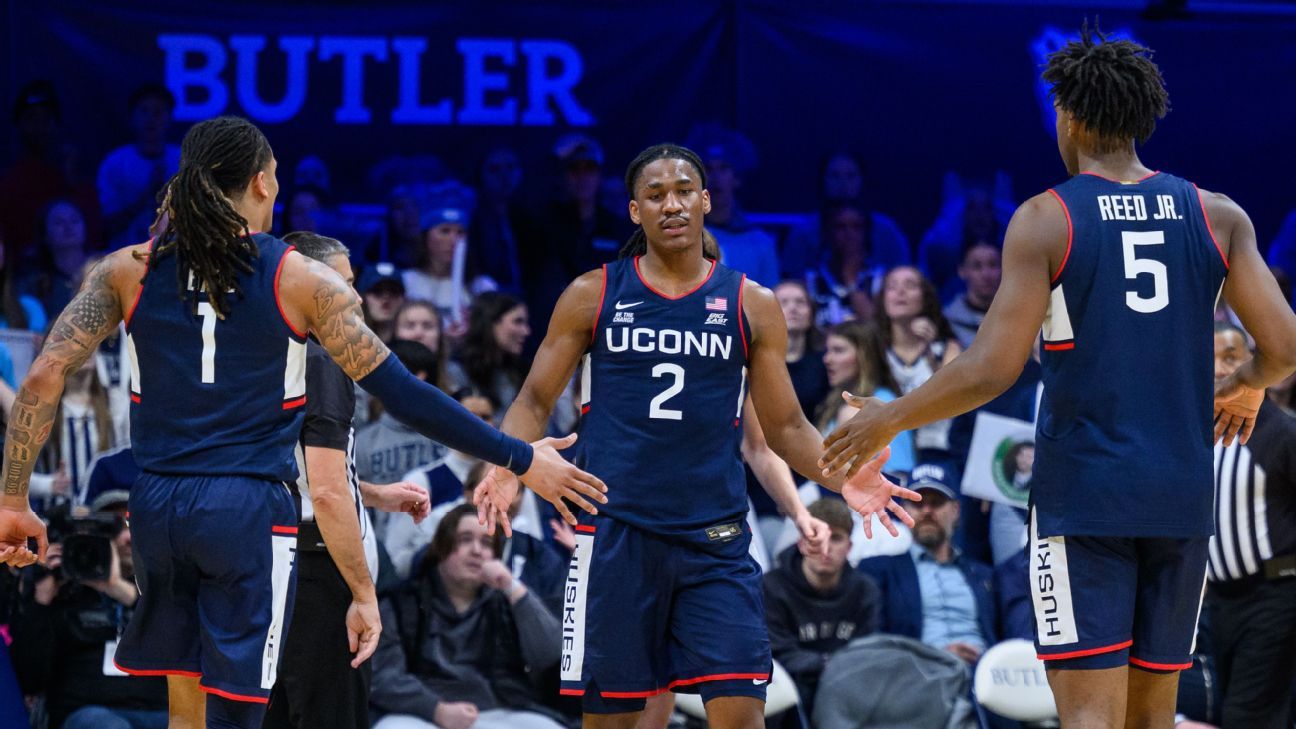
Beyond the opening round, analysts turned to futures markets, where UConn's path offers intriguing possibilities. Zinno backs the No. 2 seed Huskies to reach the Elite Eight at +170, despite viewing them as slightly overseeded. The selection committee's draw placed UConn in a favorable East Region bracket, starting with No. 15 Furman. "While the Furman Paladins are a pesky team, they are a bad matchup against UConn's defense, which has the size required to not cede the inside and the rebounding to not allow second-chance points," Zinno observed. The second-round foe could be No. 7 UCLA or No. 10 UCF, both of whom have shown weaknesses against elite defenses like UConn's. UCLA has struggled on the East Coast in Big Ten play under Mick Cronin, while UCF suffered lopsided defeats to Arizona, Houston, and Iowa State—teams mirroring UConn's profile.
If UConn advances to the Sweet 16 against No. 3 Michigan State, Zinno sees it as a toss-up, with the Huskies' perimeter defense potentially stifling the Spartans. He envisions chaos in the bracket's bottom half, where higher seeds might falter early, clearing a smoother road for UConn. "I can see all the higher-seeded teams in the bottom half of the East bracket losing their first-round matchup, which gives the Huskies an easier path," Zinno wrote. "UConn has one of the better draws in this tournament and should see three wins in a row here." This optimism contrasts with UConn's longer title odds at +1700, suggesting bettors might find value in shorter-term achievements.
Pulsifer echoed the theme of advantageous brackets in his pick for No. 3 Virginia to advance to the Elite Eight at +310. The Cavaliers, fresh off a nail-biting ACC Tournament final where they limited Duke's Cameron Boozer to 3-of-17 shooting, boast a versatile nine-man rotation. "Virginia is balanced inside and outside, on offense and on defense, and they have a favorable draw," Pulsifer said. Their second-round opponent could be streaky No. 2 Tennessee, an inferior SMU squad Virginia already defeated, or metrics-weak Miami (Ohio). A potential Sweet 16 clash with No. 6 Iowa State plays to UVA's strengths, as the Cyclones historically underperform in March after relying on Ames' home-court edge and shoot poorly from the line. Iowa State's defense encourages three-point attempts, an area where Virginia thrives.
Building on his Miami first-round lean, Lipscomb extended the Hurricanes' prospects to the Sweet 16 at +400. To get there, Miami must topple No. 2 Purdue, who just endured a punishing Big Ten championship. "Why not build on the first-round pick and roll (yes, intended) with the Canes to survive the first weekend?" Lipscomb quipped. He views the odds as undervaluing Miami, which ranks 25th in shortest odds to win two games. Purdue's top-20 three-point shooting (38%) poses a challenge, but Lipscomb believes Miami can dictate a physical tone offensively. Guard Tru Washington emerges as a key bench spark in what could be a grind. "My largest area of concern in the Purdue matchup is the Boilermakers' perimeter prowess," he acknowledged, "However, putting the shoe on the other foot, I think Miami can get what they want on the offensive end and give Purdue all it can handle, and then some."
These picks come amid a broader tournament landscape shaped by conference realignments and injury impacts. The SEC's bubble teams, like those Pulsifer referenced, endured a tense wait before the bracket dropped, underscoring the cutthroat nature of selection Sunday. Blue bloods such as Duke and North Carolina remain focal points, but new faces like High Point—making their first appearance since 2006—add fresh narratives. The Panthers' 14-game streak, fueled by high-octane offense, positions them as a classic Cinderella candidate, reminiscent of past 12-seed runs by teams like Oral Roberts in 2021.
Contextually, the tournament's structure amplifies matchup intricacies. Games will unfold in host cities like Spokane, Washington; Omaha, Nebraska; and Raleigh, North Carolina, with regional finals determining Final Four bound teams. Officials from the NCAA emphasized a focus on competitive balance this year, though analysts like Zinno question some seedings, such as UConn's. No major controversies have surfaced yet, but Wilson's ongoing injury for UNC could draw scrutiny if VCU pulls off the upset.
From a betting standpoint, the analysts' selections reflect a market ripe for variance. DraftKings odds, subject to fluctuation, underscore Duke's dominance after a stellar ACC campaign, while Michigan's +350 title line benefits from a Midwest draw avoiding early rematches with rivals. Florida's +700 reflects their SEC title pedigree, but Houston and UConn lurk as value plays for patient wagerers.
As the first games tip off Thursday, these early bets could foreshadow the tournament's twists. VCU-North Carolina in the West Region and High Point-Wisconsin in the South carry upset potential that could ripple through brackets nationwide. Miami's double-dip prediction against Missouri and Purdue highlights the Hurricanes' resilience under coach Jai Lucas, who has navigated a 10-5 road schedule adeptly.
Looking ahead, the Elite Eight paths for UConn and Virginia hinge on regional dynamics. UConn's East bracket, potentially cleared by early chaos, contrasts with Virginia's West matchup against Tennessee's inconsistency. Pulsifer and Zinno's analyses suggest the committee's bracketing—intended to reward merit—might inadvertently create soft spots for savvy teams.
For fans and bettors alike, the 2026 tournament promises the usual blend of heartbreak and heroics. With analysts like Pulsifer, Zinno, and Lipscomb providing these targeted insights, the conversation has already begun on which underdogs might dance longest. As the field of 68 narrows, one thing remains certain: in March, anything can happen.