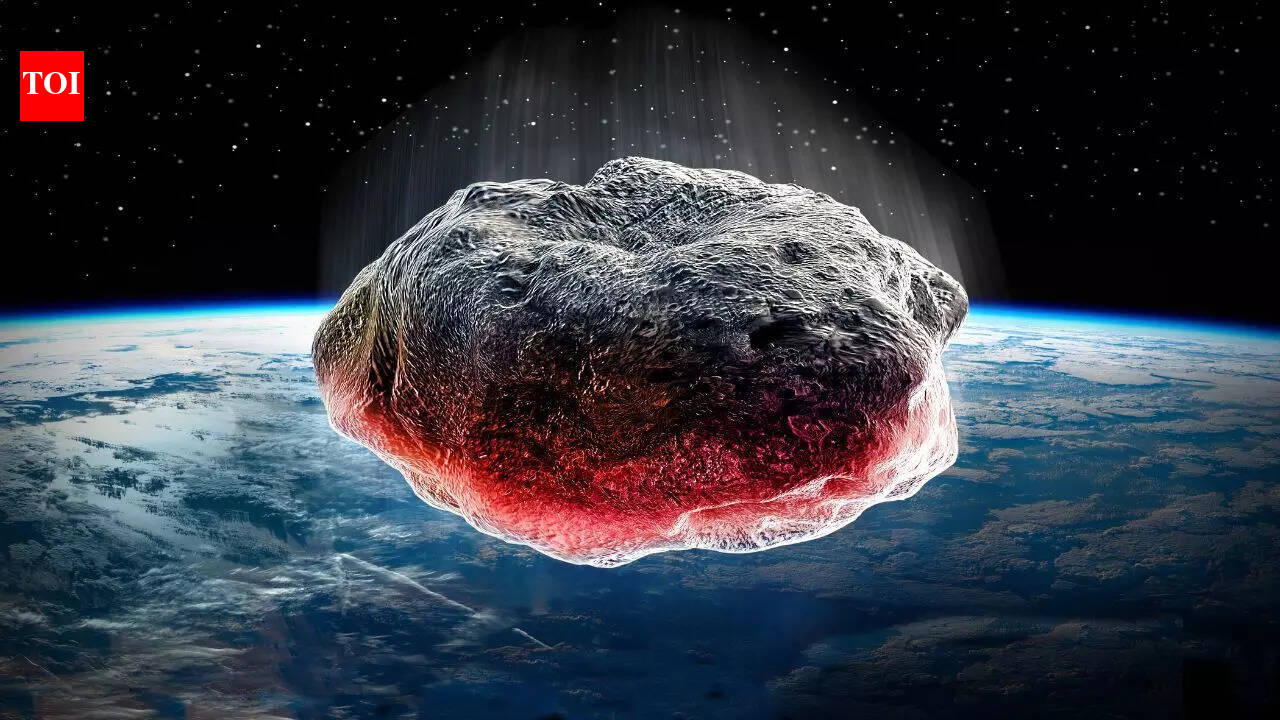
APPLETON, Wis. — A car-sized asteroid named 2026 FM3 is barreling toward Earth, set to make its closest approach on March 25, 2026, at a distance of just 238,000 kilometers from our planet's surface. According to NASA officials, the space rock, roughly the size of a standard sedan, poses no immediate threat but highlights the ongoing vigilance required in monitoring near-Earth objects. The announcement, first detailed in a report by the Times of India, has sparked interest among astronomers and the public alike as space agencies continue to track potential cosmic visitors.
The asteroid, designated 2026 FM3, was discovered through NASA's ongoing surveillance efforts, which include telescopes and radar systems designed to detect objects that could intersect Earth's orbit. Experts at NASA's Jet Propulsion Laboratory in Pasadena, California, have confirmed the trajectory, noting that the asteroid will pass well outside the Moon's average distance of 384,400 kilometers from Earth. "This close approach is a routine event in the grand scheme of celestial mechanics, but it serves as a reminder of why we maintain constant watch," said Paul Chodas, manager of NASA's Center for Near-Earth Object Studies (CNEOS), in a statement released to media outlets.
At approximately 5 to 10 meters in diameter, 2026 FM3 falls into the category of small near-Earth objects that, while not capable of causing global catastrophe, could produce significant local damage if they were to impact. Historical precedents, such as the 2013 Chelyabinsk meteor in Russia, which injured over 1,000 people and caused millions in damage despite being similar in size, underscore the potential risks. However, NASA's calculations indicate zero probability of collision for this event, with the asteroid's path taking it safely through space.
The Times of India report, published on their science desk, emphasized the alertness issued by NASA, framing the event with the question of whether such asteroids could ever pose a real threat. Drawing from NASA's data, the article noted that 2026 FM3's velocity during the flyby is expected to reach around 15 kilometers per second, fast enough to cover the distance from New York to Los Angeles in mere seconds. Astronomers worldwide, including those at the European Space Agency, have corroborated these findings through independent observations.
Background on asteroid detection reveals a robust international effort. NASA's Near-Earth Object Observations Program, funded by Congress since the 1990s, has identified over 30,000 near-Earth objects to date, with about 1,000 discovered annually. The agency uses ground-based telescopes like those at the Pan-STARRS observatory in Hawaii and space-based assets such as the upcoming NEO Surveyor mission, slated for launch in 2028. These tools scan the skies nightly, cataloging objects based on their orbits and potential hazards.
In the case of 2026 FM3, initial detection occurred earlier this year, allowing scientists ample time to refine its orbital path. "Early discovery is key; it gives us years to assess and, if necessary, prepare deflection strategies," explained Lindley Johnson, NASA's Planetary Defense Officer, during a recent briefing. While no deflection is needed here, the event aligns with NASA's broader planetary defense initiatives, including the Double Asteroid Redirection Test (DART) mission, which successfully altered the orbit of a small asteroid in 2022.
Public reaction to the news has been mixed, with social media buzzing about doomsday scenarios despite official reassurances. Some online forums have speculated on the asteroid's composition—likely a stony meteorite rich in silicates and metals—based on spectral analysis from preliminary observations. However, NASA has cautioned against unverified claims, stating that detailed composition studies will follow the flyby using radar from the Goldstone Deep Space Communications Complex in California's Mojave Desert.
Comparisons to past close approaches provide context for 2026 FM3's significance. In 2020, asteroid 2020 QG passed just 3,000 kilometers from Earth, the closest recorded at the time without impact. Similarly, 2004 BL86, about the size of a football field, came within 1.2 million kilometers in 2015, prompting live telescope views. These events, tracked by organizations like the International Asteroid Warning Network (IAWN), demonstrate that Earth is far from isolated in the solar system's busy traffic lanes.
Experts from the Minor Planet Center at the Smithsonian Astrophysical Observatory in Cambridge, Massachusetts, have added that 2026 FM3 is part of the Apollo group of asteroids, whose orbits cross Earth's. "There are thousands like it, but each one we track improves our models for predicting future encounters," said Tim Spahr, director of the center, in an interview with science reporters. The center, which assigns official designations, confirmed 2026 FM3's status as a potentially hazardous object only in the loosest sense, due to its proximity rather than impact risk.
Broader implications extend to global preparedness. The United Nations Office for Outer Space Affairs has called for increased funding for planetary defense, citing events like 2026 FM3 as teachable moments. In the U.S., the Federal Emergency Management Agency (FEMA) collaborates with NASA on impact scenarios, running simulations that involve evacuations and mitigation for urban areas. While the probability of a car-sized impact causing widespread harm is low—estimated at once every few decades— the potential for airbursts remains a concern.
Looking ahead, the March 25, 2026, flyby offers a rare opportunity for scientific study. Ground-based observatories, including the Very Large Telescope in Chile, plan to capture images and data on the asteroid's shape, rotation, and surface features. This information could inform future missions, such as NASA's OSIRIS-APEX, which is already en route to study another near-Earth asteroid, Bennu.
As the date approaches, NASA encourages public engagement through its Eyes on Asteroids app, allowing users to visualize 2026 FM3's path in real-time. Educational outreach, including webinars and school programs, aims to demystify space threats and foster interest in STEM fields. "Events like this aren't about fear; they're about wonder and readiness," Chodas reiterated, emphasizing the agency's role in safeguarding the planet.
In Appleton and across the Midwest, local astronomers at the University of Wisconsin's observatories are preparing viewing sessions, weather permitting, to spot the asteroid during its closest pass. Community interest has surged, with planetariums reporting increased attendance for lectures on cosmic neighbors. While 238,000 kilometers may sound distant—equivalent to about 148,000 miles—it's a mere whisker in astronomical terms, closer than many satellites in geostationary orbit.
Ultimately, the story of 2026 FM3 underscores humanity's growing capability to monitor and understand our solar system's dynamic environment. With no threat confirmed and international cooperation at its peak, the event promises to advance knowledge rather than alarm. As NASA continues its watchful eye, the cosmos reminds us of both our vulnerability and our ingenuity in the face of the unknown.