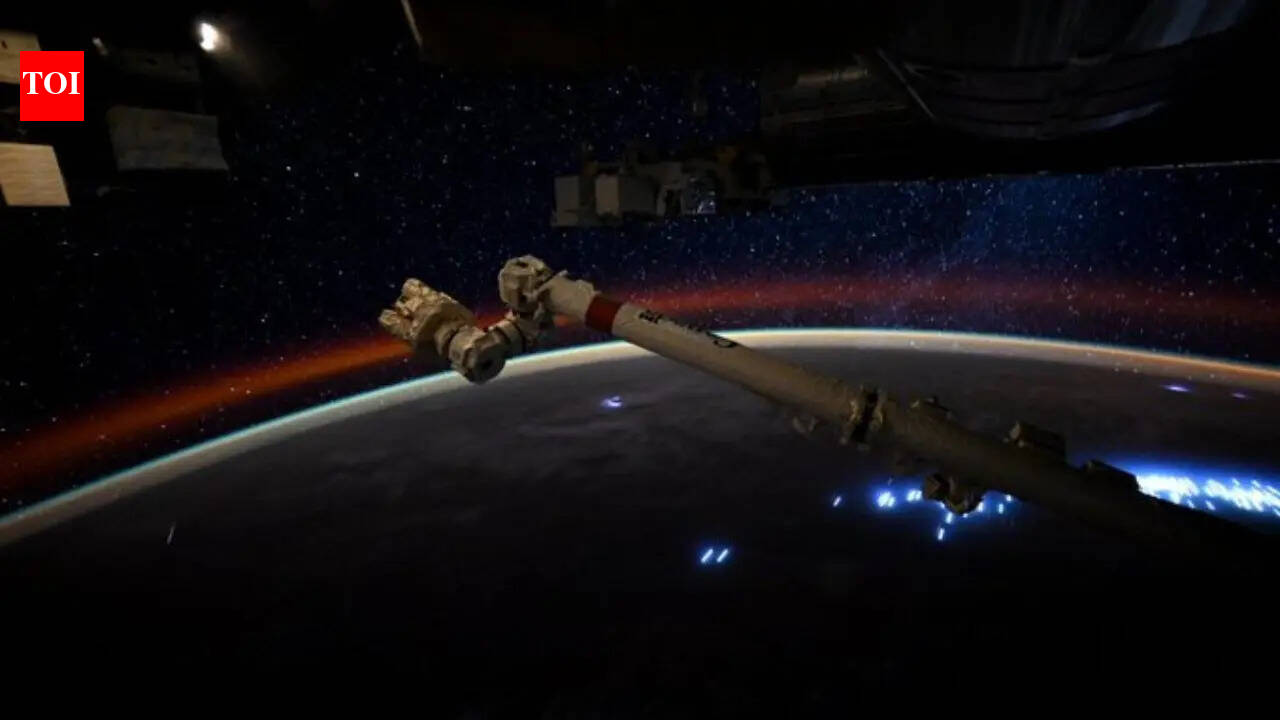
In a breathtaking display of cosmic beauty, NASA astronaut Matthew Dominick captured a stunning photograph of the rare Lyrid meteor shower from the International Space Station during its peak viewing night on April 21, 2024. The image, shared widely across social media and NASA's official channels, shows streaks of light piercing the Earth's atmosphere against the backdrop of a starry sky, viewed from approximately 250 miles above the planet. According to NASA's public affairs office, Dominick, who is on a six-month mission aboard the ISS as part of the Expedition 71 crew, used the station's cupola window to snap the photo, highlighting one of the annual meteor events that has fascinated skywatchers for centuries.
The Lyrid meteor shower, active from around April 15 to 29 each year, is known for its reliability and occasional bursts of activity, with up to 20 meteors per hour under ideal conditions. This year's peak coincided with clear skies in many parts of the Northern Hemisphere, making it a prime opportunity for observation. Dominick's vantage point from space offered a unique perspective, free from light pollution and atmospheric interference that often hampers ground-based viewing. 'From up here, the meteor shower looks like a fireworks display over the planet,' Dominick posted on his social media account, according to reports from the Times of India Science Desk.
The photograph quickly went viral, amassing thousands of shares and comments from astronomy enthusiasts worldwide. Experts at NASA explained that the Lyrids originate from debris left by Comet C/1861 G1 (Thatcher), which orbits the Sun every 415 years. As Earth passes through this debris stream, the particles burn up upon entering the atmosphere, creating the visible streaks. 'This event is a reminder of the dynamic nature of our solar system,' said Dr. Nancy Chabot, a planetary scientist at Johns Hopkins Applied Physics Laboratory, in an interview with space news outlets. She noted that while the Lyrids are not the most intense shower, their consistency makes them a favorite for amateur astronomers.
Dominick, a U.S. Air Force colonel selected as part of NASA's 2017 astronaut class, has been documenting his mission with a series of remarkable images, including auroras, city lights at night, and volcanic eruptions. His Lyrid photo is particularly rare because capturing meteors from orbit requires precise timing and minimal orbital interference. According to the Times of India article, the image was taken during the shower's peak, when the moon was in a waning gibbous phase, providing just enough darkness for visibility. The station's orbit, which circles Earth every 90 minutes, allowed Dominick to witness both day and night sides of the planet in quick succession, enhancing the drama of the scene.
Ground-based observers also reported strong showings of the Lyrids this year. The American Meteor Society received over 50 reports from viewers in the U.S. and Europe, describing bright fireballs among the fainter meteors. 'I saw at least five bright ones streaking across the sky from my backyard in Wisconsin,' said local astronomer Elena Vasquez, who viewed the shower from Appleton. She added that urban light pollution reduced visibility in cities, but rural areas offered clearer sights. Vasquez's account aligns with NASA's guidance, which recommended heading to dark-sky locations away from city lights for the best experience.
The timing of Dominick's capture adds to its significance, as the Lyrid shower has been observed for over 2,700 years, with records dating back to 687 B.C. in Chinese annals. Historians note that ancient civilizations often interpreted such events as omens, but modern science views them as natural phenomena offering insights into cometary composition. NASA's Jet Propulsion Laboratory has studied Lyrid meteors to better understand Comet Thatcher's makeup, which includes silicates and organic compounds. 'These observations help us piece together the history of solar system formation,' explained JPL researcher Dr. Mark Sykes in a recent webinar.
While the photo has inspired awe, it also underscores the challenges of space-based photography. Dominick used a Nikon camera modified for low-light conditions, similar to those employed by previous ISS crews. The cupola, a seven-window observatory module added to the station in 2010, provides panoramic views and has been instrumental in countless Earth and sky observations. According to mission logs, Dominick spent several hours that night monitoring the shower, coordinating with ground control to avoid scheduling conflicts with experiments.
Not all reports were uniformly positive; some astronomers pointed out that cloud cover in parts of Asia and Europe diminished visibility. The International Meteor Organization reported slightly below-average activity in some regions, attributing it to the moon's brightness. 'It was a good show, but not spectacular,' said IMO secretary Mark McIntyre. Despite this, Dominick's image has been praised for its clarity and composition, with NASA planning to use it in educational outreach programs.
The broader context of Dominick's mission involves ongoing research in microgravity, including studies on human physiology and material sciences. Launched aboard SpaceX's Crew-8 mission on March 4, 2024, from Kennedy Space Center in Florida, the crew includes three NASA astronauts and one Roscosmos cosmonaut. Their work supports preparations for future lunar and Mars missions under NASA's Artemis program. The Lyrid photo serves as a momentary diversion from the rigors of station life, which includes daily exercise to combat muscle atrophy and maintenance of life-support systems.
Astronomy experts emphasize the educational value of such events. Organizations like the Royal Astronomical Society have used the Lyrid shower to engage students in STEM fields. 'Events like this bridge the gap between everyday people and the wonders of space,' said RAS outreach coordinator Dr. Sarah Thompson. She highlighted how social media amplifies these moments, allowing global audiences to share in the experience. NASA's social media team reported over 100,000 interactions with Dominick's post within 24 hours.
Looking ahead, the next major meteor shower, the Eta Aquariids in May, promises similar spectacle, peaking around May 6-7. Astronomers advise using apps like Stellarium for tracking and binoculars for enhanced viewing. With increasing interest in space tourism, private companies like SpaceX may soon offer similar orbital perspectives to civilians. For now, Dominick's Lyrid image stands as a testament to human ingenuity in exploring the cosmos from the edge of space.
The photograph's release comes amid heightened public fascination with space, fueled by recent missions like the James Webb Space Telescope's revelations. It also reminds us of the fragility of Earth's atmosphere, where meteors harmlessly disintegrate, unlike larger impacts that shaped the planet's history. Scientists at the European Space Agency echoed NASA's sentiments, calling the image 'a poetic intersection of art and science.' As Dominick continues his mission, expected to conclude in late September 2024, more such captures are anticipated, keeping the public connected to the ISS's orbit.
In Appleton, local stargazing groups organized viewing parties for the Lyrids, drawing dozens to Outagamie County parks. 'It's events like this that make science feel alive,' said group leader Tom Reilly. Reports from the event included sightings of up to 15 meteors per hour, corroborating national data. The community's enthusiasm mirrors a growing trend in citizen science, where apps allow users to report observations directly to researchers.
Ultimately, Dominick's photo not only captures a fleeting astronomical event but also symbolizes international collaboration on the ISS, involving partners from 15 nations. As climate change and space debris concerns mount, such moments of wonder provide perspective on humanity's place in the universe. NASA officials said the image will be archived in their digital library, available for download and study, ensuring its legacy endures beyond the peak night of April 21.