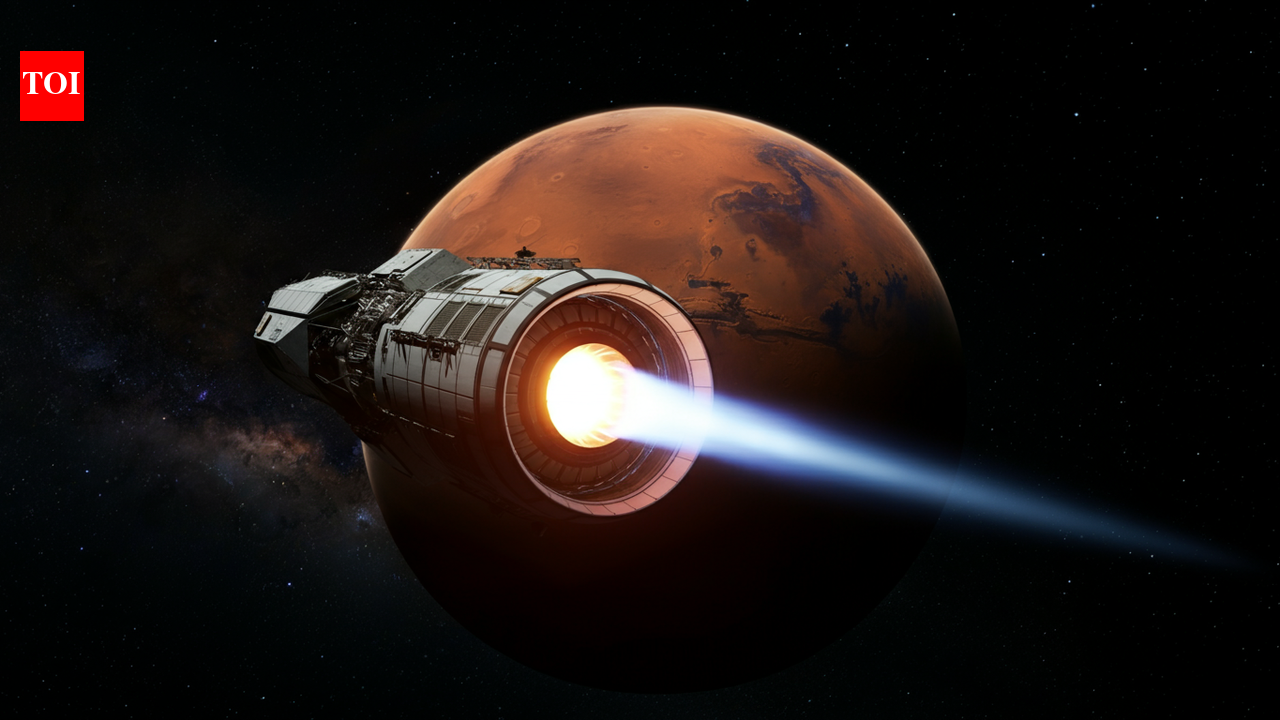
NASA recently conducted a test of advanced propulsion technology that could support future crewed missions to Mars, according to a report from the Times of India. The test focused on a thruster system designed to provide the power needed for long-duration human spaceflight and robotic exploration across the solar system.
Details about the specific hardware or performance metrics remain limited in the initial coverage. The report indicates the technology was evaluated at a NASA facility, though no exact date, location, or thrust measurements were provided in the available summary.
Officials have long stated that next-generation propulsion will be essential for reducing travel times to Mars and enabling more ambitious robotic missions. The recent test aligns with ongoing efforts at NASA to mature such systems for operational use.
According to the Times of India Science Desk, the thruster represents a step toward capabilities that could carry both astronauts and automated spacecraft farther into the solar system than current chemical propulsion allows. The article frames the event as part of broader progress in space exploration technology.
Further information on the test results, including any data on efficiency or duration, has not yet been released publicly. NASA typically follows such ground tests with additional reviews before advancing to flight demonstrations.
Space agencies and private companies have pursued electric and nuclear propulsion concepts for decades to address the challenges of deep-space travel. This latest evaluation reportedly builds on prior research into high-power thrusters suitable for crewed vehicles.
The Times of India piece notes the potential applications for both human Mars missions and robotic probes, emphasizing the dual-use nature of the technology. No independent confirmation from NASA channels was included in the reporting.
Engineers involved in similar projects have previously highlighted the need for reliable, high-thrust systems that can operate for extended periods. The recent activity suggests continued investment in these areas despite the lack of detailed public data at this stage.
Observers in the space community will likely watch for official NASA updates or technical papers that could provide more context on the test parameters and outcomes. Such announcements often follow internal assessments.
The report positions the event as a notable development in propulsion research, though specifics on the testing team or collaborating institutions were not disclosed. Additional coverage may emerge as more information becomes available.