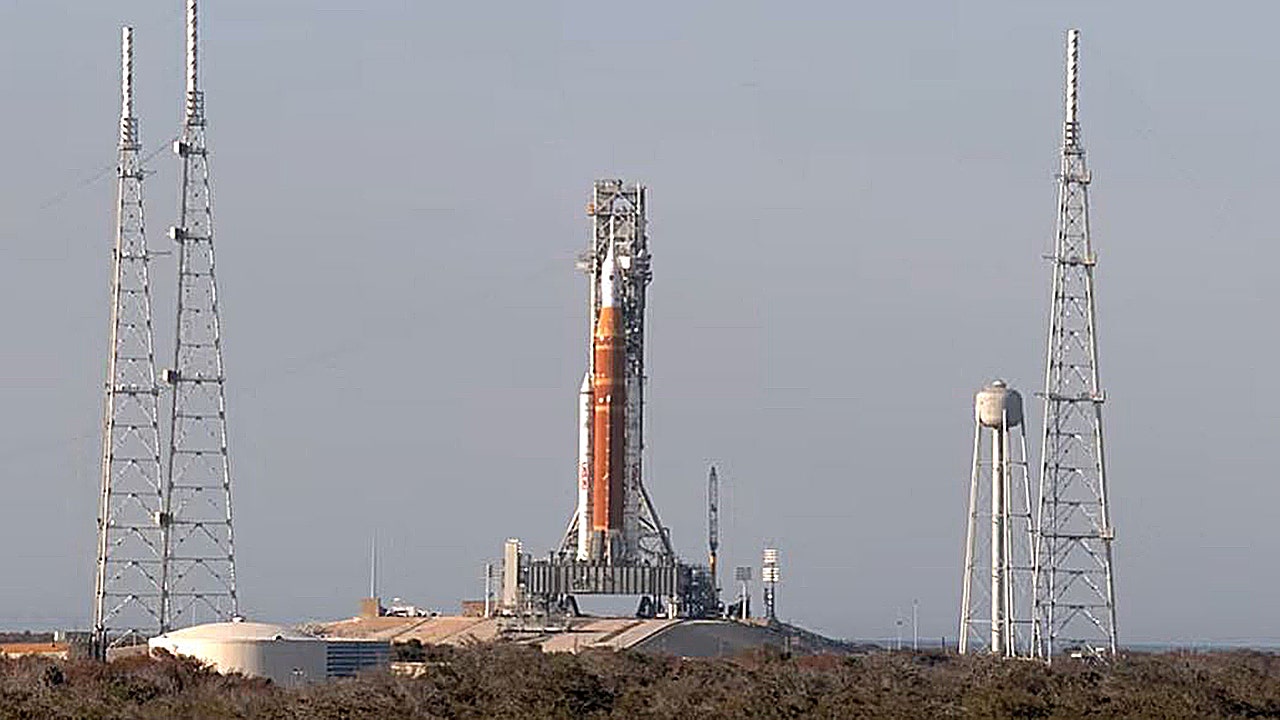
CAPE CANAVERAL, Fla. — NASA is poised to push back the launch of its Artemis II mission, the first crewed flight around the moon in more than half a century, after engineers encountered a snag with helium flow in the rocket's upper stage. The issue, detected overnight Friday during routine operations, has prompted the space agency to consider rolling the massive Space Launch System (SLS) rocket and Orion spacecraft back to the Vehicle Assembly Building at Kennedy Space Center for further inspection and potential repairs.
According to NASA officials, the problem arose after the completion of wet dress rehearsals on February 19. During these tests, which simulate a full launch countdown with propellants loaded, the helium system functioned as expected. However, when crews attempted to flow helium during subsequent normal operations, the process did not go as planned. Helium plays a critical role in the rocket's interim cryogenic propulsion stage, helping to maintain the proper environmental conditions for the stage’s engines and to pressurize the liquid hydrogen and liquid oxygen propellant tanks.
"Teams were not able to properly flow helium during normal operations" after the rehearsals, NASA stated in a Saturday update. The agency emphasized that the rocket remains in a safe configuration, with operators now relying on a backup method to preserve the necessary environmental conditions for the upper stage engines.
The timing of the discovery is particularly frustrating for the Artemis program, which has already faced multiple delays. NASA had targeted March 6 for the liftoff, aiming to capitalize on a narrow launch window. But with this latest hiccup, officials now say a March launch is off the table. "A rollback would mean NASA will not launch Artemis II in the March launch window," the agency announced Saturday. Still, there is some optimism: quick preparations could allow the mission to stay on track for an April slot, depending on the results of data analysis, repair work, and scheduling adjustments in the weeks ahead.
This isn't the first setback for Artemis II. Just last month, the mission was delayed following the discovery of fuel leaks during a test run. Those issues, combined with broader challenges in the program's development, have stretched the timeline for NASA's ambitious return to the moon. The Artemis initiative, part of a larger effort to establish a sustainable human presence on and around the lunar surface, builds on the success of Artemis I, an uncrewed test flight that successfully orbited the moon and splashed down in the Pacific Ocean in late 2022.
Artemis II represents a historic milestone. The crew of four — NASA astronauts Reid Wiseman, Victor Glover, and Christina Koch, along with Canadian Space Agency astronaut Jeremy Hansen — is set to undertake a 10-day journey that will take them farther from Earth than any previous human mission. Their flight path will loop around the moon without landing, testing the Orion spacecraft's systems in deep space and paving the way for future lunar landings, including the all-female Artemis III crewed touchdown targeted for no earlier than 2026.
"Operators are using a backup method to maintain the environmental conditions for the upper stage engines and the rocket, which remains in a safe configuration," NASA reported, underscoring the agency's focus on safety amid the technical troubleshooting. Engineers at Kennedy Space Center have been working around the clock since the anomaly was spotted, poring over telemetry data to pinpoint the root cause of the helium interruption.
The decision to potentially rollback the 322-foot-tall SLS rocket — a behemoth that weighs about 5.75 million pounds when fully fueled — is no small undertaking. It would involve detaching the stack from Launch Pad 39B and slowly transporting it the roughly 4 miles back to the Vehicle Assembly Building, where it was originally integrated. Such a move could add weeks to the schedule, but NASA officials believe it is necessary to ensure the reliability of the propulsion systems.
Background on the Artemis program's challenges provides important context for this delay. Since the Apollo era ended in 1972 with Apollo 17, no humans have ventured beyond low Earth orbit. The SLS rocket, developed over more than a decade at a cost exceeding $20 billion, is powered by four RS-25 engines from the space shuttle program, flanked by two solid rocket boosters. The Orion capsule, meanwhile, is designed for deep-space travel, featuring advanced life support and reentry capabilities to withstand speeds of up to 24,000 miles per hour upon returning to Earth.
Jeremy Hansen, the mission's Canadian participant, becomes the first non-American to travel to the moon under this international partnership. NASA and the Canadian Space Agency have collaborated closely, with Hansen training alongside his U.S. crewmates at facilities in Houston and elsewhere. Reid Wiseman, the mission commander, has flown in space before, logging 170 days aboard the International Space Station in 2013. Victor Glover and Christina Koch bring their own extensive experience; Glover walked in space during his ISS stint, while Koch holds the record for the longest single spaceflight by a woman at 328 days.
Experts familiar with the program, speaking on condition of anonymity due to ongoing investigations, noted that helium-related issues are not uncommon in cryogenic rocket systems, where precise pressure management is essential to prevent icing or structural stress. One engineer compared the situation to fine-tuning a high-performance engine, where even minor flow disruptions can cascade into larger problems if not addressed promptly.
NASA Administrator Bill Nelson has been vocal about the agency's commitment to getting Artemis right, even if it means enduring delays. In recent public statements, Nelson has drawn parallels to the Apollo program's own bumpy road, reminding audiences that innovation often comes with trial and error. The helium issue, while concerning, appears to be isolated to the upper stage and does not affect the core functionality of the SLS core stage or Orion, according to preliminary assessments.
Looking ahead, the implications of this delay extend beyond the immediate mission. Artemis II's success is crucial for validating the hardware that will support NASA's lunar Gateway outpost and eventual Mars ambitions. Delays here could ripple through the entire architecture, potentially pushing back Artemis III and straining partnerships with private companies like SpaceX, which is developing the Human Landing System for moon landings.
For the astronauts and their families, the wait is bittersweet. Training for Artemis II has been intense, involving simulations of everything from launch aborts to lunar flybys. Christina Koch, who previously endured the harsh conditions of long-duration spaceflight, expressed excitement about the mission's exploratory spirit during a pre-launch briefing last year. "This is about pushing the boundaries of what humans can achieve," she said.
As NASA weighs its next steps, all eyes are on the data emerging from Kennedy Space Center. Whether the mission slips to April or faces further postponement, the agency remains steadfast in its goal: to return humans to the moon and inspire a new generation of explorers. The helium flow problem, though a hurdle, is just one chapter in the ongoing saga of humanity's quest to reach for the stars.