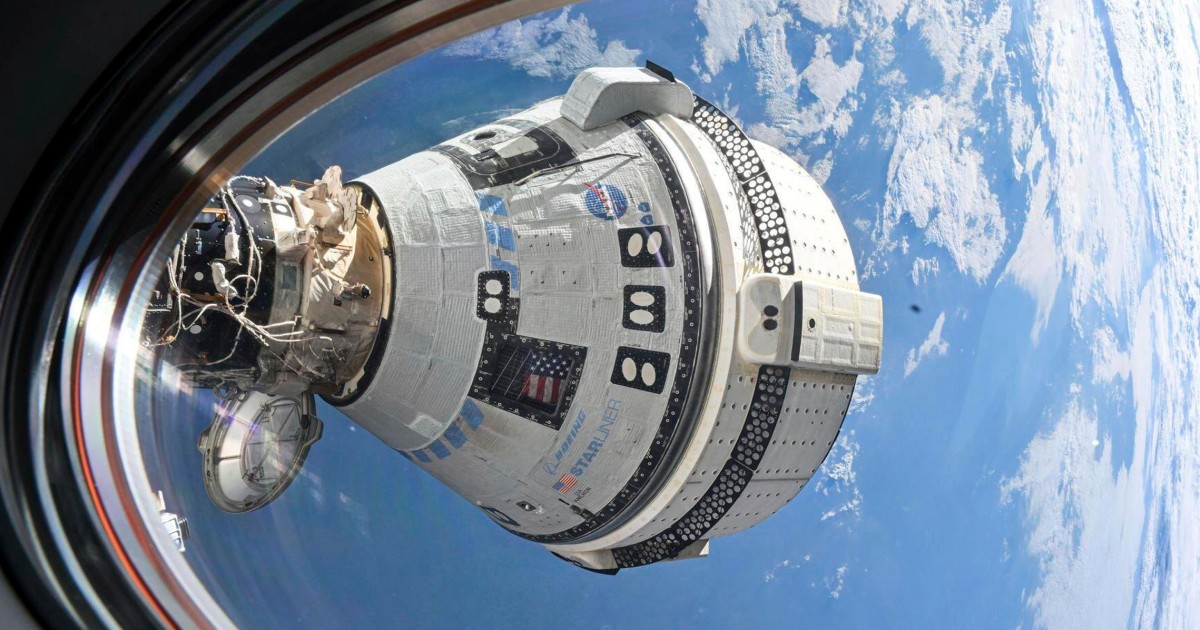
WASHINGTON — A newly released NASA investigation has delivered a scathing assessment of Boeing's troubled Starliner mission, which left two veteran astronauts stranded on the International Space Station for more than nine months in 2024. The report, unveiled on Thursday, labels the incident a "Type A mishap," the agency's highest severity rating, akin to the catastrophic loss of the space shuttle Columbia and its seven crew members in 2003.
The mission, launched on June 5, 2024, from Kennedy Space Center in Florida, was intended as a demonstration flight for Boeing's Starliner spacecraft under NASA's Commercial Crew Program. Astronauts Barry "Butch" Wilmore and Sunita "Suni" Williams, both NASA veterans with decades of experience, were aboard for what was supposed to be an eight-day test to certify the capsule for routine astronaut transport to the ISS. Instead, helium leaks in the propulsion system emerged shortly after liftoff, followed by the failure of several thrusters during docking attempts with the orbiting laboratory.
Weeks of troubleshooting ensued, but NASA ultimately decided in August 2024 to return the Starliner capsule to Earth uncrewed, splashing down off the California coast on September 7. Wilmore and Williams, undeterred, extended their stay on the ISS, contributing to station operations while awaiting an alternative ride home. Their prolonged mission, which stretched to over 270 days, highlighted the risks inherent in the burgeoning era of commercial spaceflight.
"We returned the crew safely, but the path we took did not reflect NASA at our best," said NASA Administrator Jared Isaacman during a briefing at the agency's headquarters in Washington. Sworn in as the 15th NASA administrator in December 2024, Isaacman was not in the role during the mishap but emphasized the incident's role in fostering a "culture of mistrust" between NASA and its contractors.
The 300-page report, compiled by an independent NASA team, details a cascade of failures, including inadequate pre-flight testing by Boeing, fractured communications, and leadership lapses on both sides. It describes "chaotic meeting schedules" during the crisis and perceptions that managers were "overly risk-tolerant and dismissive of dissenting views." The document places significant blame on Boeing for shortcomings in the spacecraft's design and validation, but it also faults NASA for approving the launch despite known issues.
"While Boeing built Starliner, NASA accepted it and launched two astronauts to space," Isaacman stated in a prepared release. He added that the agency must "own our mistakes and ensure they never happen again." Associate Administrator for the Commercial Crew Program Amit Kshatriya was more direct, acknowledging the peril faced by the astronauts. "The agency failed them," Kshatriya said at the briefing. "And even though they won’t say that, we have to say that. We have to recognize that our responsibility is to them and to all the crews that are coming and to the crews that we’re about to go fly."
Boeing, in a statement issued Thursday, expressed gratitude for NASA's thorough probe and highlighted progress made since the flight. "We’re grateful to NASA for its thorough investigation and the opportunity to contribute to it," the company said. "In the 18 months since our test flight, Boeing has made substantial progress on corrective actions for technical challenges we encountered and driven significant cultural changes across the team that directly align with the findings in the report."
To resolve the stranding, NASA turned to rival SpaceX, arranging for Wilmore and Williams to return aboard a Crew Dragon capsule alongside NASA astronaut Nick Hague and Russian cosmonaut Aleksandr Gorbunov. The quartet splashed down safely in the Gulf of Mexico off the Florida coast on March 18, 2025, concluding a six-month mission for Hague and Gorbunov while wrapping up the extended stay for the Starliner duo.
Wilmore, a retired Navy captain with 25 years at NASA, logged a career total of 464 days in space before announcing his retirement in August 2024. Williams, a former Navy test pilot with 27 years of service, followed suit last month, her career tally reaching 608 days in orbit. Both astronauts have remained publicly supportive of the programs involved, with Williams telling reporters post-landing that the experience, while unexpected, allowed her to contribute meaningfully to ISS research.
The Starliner saga is the latest chapter in Boeing's rocky commercial crew journey. The program's uncrewed debut in December 2019 ended prematurely due to software errors that prevented docking. Fuel valve problems then delayed crewed flights for years, with a successful orbital test not achieved until May 2022, when Starliner docked autonomously and returned safely. Despite these hurdles, NASA awarded Boeing $4.2 billion in 2014 to develop the vehicle, part of a post-shuttle initiative launched in 2011 to foster private-sector alternatives for crew transport.
In contrast, SpaceX's Crew Dragon has flown 13 operational missions since 2020, ferrying dozens of astronauts without major incidents under the same program, which received $2.6 billion from NASA. The disparity underscores the competitive landscape, where SpaceX's reliability has positioned it as NASA's primary provider, while Boeing grapples with certification delays now projected into 2026 at the earliest.
The report's release comes amid broader scrutiny of Boeing's aerospace division. In January 2024, a door plug panel blew out mid-flight on an Alaska Airlines Boeing 737 Max 9, prompting a nationwide grounding and federal investigations. This followed the 2018 and 2019 crashes of two 737 Max 8 jets in Indonesia and Ethiopia, which killed 346 people and led to a 20-month global fleet grounding. Boeing's space efforts, including Starliner, have faced similar cost overruns, with the program exceeding its budget by over $1.5 billion.
NASA officials outlined immediate next steps Thursday, committing to thruster modifications and rigorous re-testing. "We will not fly another crew on Starliner until technical causes are understood and corrected," Isaacman affirmed. The agency plans to convene joint review boards with Boeing to implement the report's 38 recommendations, focusing on enhanced risk assessment and communication protocols.
Industry experts view the mishap as a pivotal moment for commercial spaceflight's maturation. Dr. Laura Forczyk, a space policy analyst, noted in a recent interview that while the incident exposed vulnerabilities, it also demonstrated NASA's contingency planning. "The safe return via SpaceX shows the value of redundancy in the system," she said, though she cautioned that Boeing's path to redemption will require sustained transparency.
As NASA eyes ambitious goals like Artemis lunar missions and Mars exploration, the Starliner report serves as a stark reminder of the high stakes in human spaceflight. With Wilmore and Williams now earthbound and reflective, their ordeal underscores the human element in an industry racing toward the stars. Boeing and NASA, bound by contract and ambition, must now rebuild trust to ensure future missions launch without such shadows.