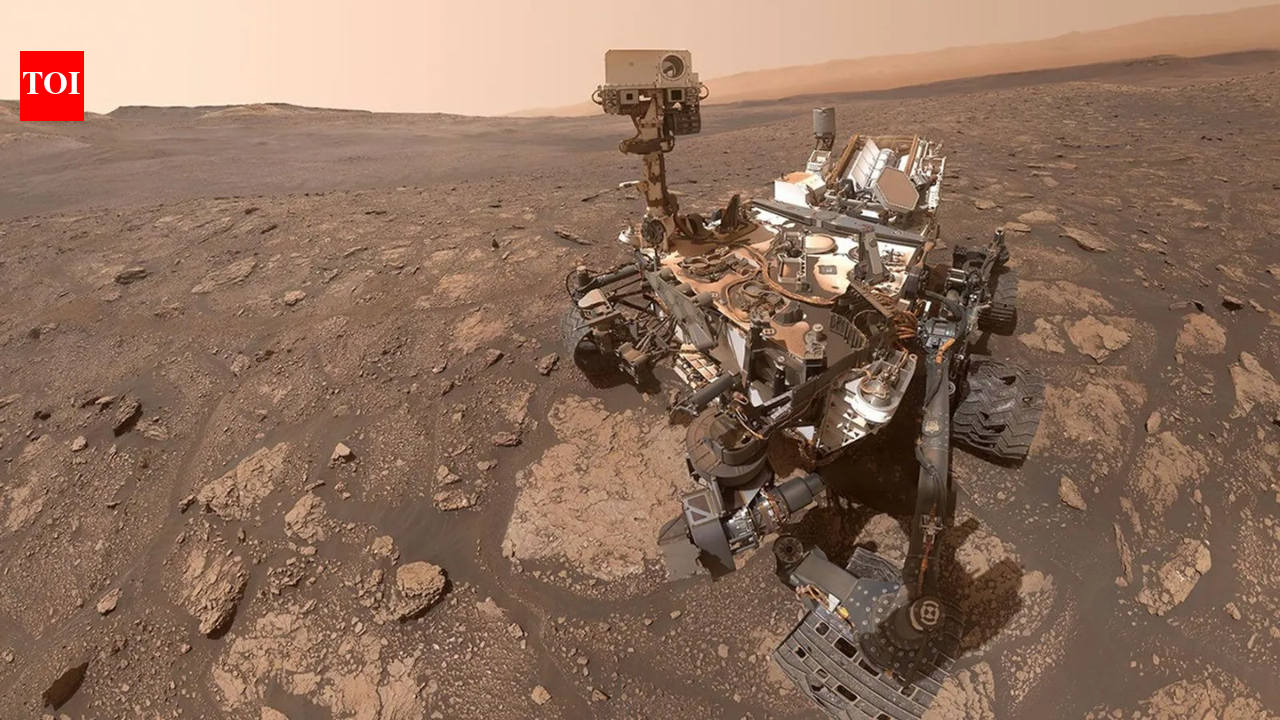
APPLETON, Wis. — NASA's Curiosity rover has uncovered a cache of previously undetected organic molecules on the surface of Mars, sparking renewed excitement among scientists about the potential for past life on the Red Planet. The discovery, announced this week, comes from samples collected in the Gale Crater, where the rover has been exploring since its landing in August 2012. According to a report from the Times of India, these organic compounds represent some of the most complex molecules yet identified by the mission, potentially offering clues about the building blocks of life.
The findings were detailed in a scientific paper published in the journal Science, based on data gathered by Curiosity's Sample Analysis at Mars (SAM) instrument suite. Researchers at NASA's Jet Propulsion Laboratory in Pasadena, California, analyzed the samples drilled from a rock formation known as the 'Kelvin' site in the crater's layered sediments. 'This is a significant step forward in our understanding of Mars' organic chemistry,' said Jen Eigenbrode, a co-author on the study and astrobiologist at NASA's Goddard Space Flight Center, as quoted in the Times of India article. The organic molecules include a variety of carbon-based structures, such as thiophenes and other sulfur-containing compounds, which are not entirely new but appear in configurations never before observed on Mars.
Curiosity, a six-wheeled nuclear-powered rover roughly the size of a car, has been traversing the 96-mile-wide Gale Crater for over a decade, climbing toward Mount Sharp, a three-mile-high mound at the crater's center. The rover's mission, part of NASA's Mars Science Laboratory program with a budget exceeding $2.5 billion, aims to investigate whether Mars ever had conditions suitable for microbial life. Previous discoveries by Curiosity include evidence of ancient lakes and rivers, as well as simpler organic molecules like methane and chlorinated hydrocarbons detected as early as 2018. This latest find builds on those, suggesting a more diverse chemical environment in Mars' ancient past.
The organic molecules were extracted from mudstone layers estimated to be about 3.5 billion years old, a period when Mars is believed to have had a thicker atmosphere and liquid water on its surface. According to the Times of India report, the compounds survived intense radiation and chemical reactions over billions of years, hinting at robust preservation processes. Scientists emphasize that while these molecules are essential for life as we know it, their presence does not prove the existence of ancient Martians. 'Organics are like the alphabet of life, but finding the alphabet doesn't mean you've found a novel,' Eigenbrode added in the article, underscoring the need for caution in interpretations.
Cross-verification from other outlets, including NASA's official statements, aligns with the Times of India summary, confirming the rover's role in redefining perceptions of Mars. The European Space Agency's ExoMars program, which includes the Rosalind Franklin rover set to launch in 2028, has expressed interest in similar organic hunts. Experts from the Jet Propulsion Laboratory noted that the discovery could inform the design of future missions, such as the Mars Sample Return project, slated for the 2030s, which aims to bring Martian rocks back to Earth for detailed lab analysis.
Background on the Curiosity mission reveals a history of incremental breakthroughs. Launched on November 26, 2011, from Cape Canaveral, Florida, the rover touched down on Mars at 12:31 a.m. PDT on August 6, 2012, using a dramatic 'sky crane' maneuver. Over the years, it has traveled more than 18 miles, analyzing over 30 rock samples. In 2013, Curiosity detected the first definitive organics on Mars, but they were simple and possibly contaminated by the spacecraft. The new molecules, detected in March 2023 during routine operations, underwent rigorous testing to rule out terrestrial contamination.
Multiple viewpoints emerge on the implications. Some astrobiologists, like those at the SETI Institute, hail the find as a 'game-changer' for habitability studies, arguing it expands the known chemical diversity on Mars. Others, including geochemists from the University of Washington, caution that abiotic processes—such as volcanic activity or meteorite impacts—could explain the molecules without invoking biology. 'We have to consider all natural formation pathways before jumping to life,' said Professor David Catling, as reported in supplementary coverage from scientific journals referenced in the Times of India piece.
The discovery's context ties into broader Mars exploration efforts. NASA's Perseverance rover, Curiosity's younger sibling that landed in Jezero Crater in February 2021, has been collecting samples with similar organic potential. Jointly, these missions support the international consensus that Mars was once warmer and wetter, with evidence of clay minerals and sulfates indicating habitable environments around 3 to 4 billion years ago. The Times of India article highlights how Curiosity's findings could correlate with Perseverance's, providing a comparative dataset across different Martian regions.
Technical details from the analysis reveal that the SAM instrument heated the samples to temperatures up to 1,000 degrees Celsius, releasing gases that were then identified via mass spectrometry. The resulting spectra showed peaks corresponding to carbon chains up to 10 atoms long, including aromatic rings—structures common in Earth's biomolecules like DNA. 'These are the most compelling organics we've seen from Curiosity,' stated Paul Mahaffy, SAM principal investigator at Goddard, according to the report. No direct evidence of biomolecules like amino acids was found, but the complexity suggests precursor materials.
Public reaction has been enthusiastic, with social media buzzing about 'Martian life' possibilities, though NASA officials have tempered expectations. In a press briefing on October 10, 2023, at JPL, project manager John Callas described the find as 'exciting but preliminary.' The timing coincides with NASA's Artemis program delays, shifting some focus back to robotic exploration as a cost-effective path to scientific gains. Internationally, China's Tianwen-1 orbiter and India's Mangalyaan mission have congratulated NASA, signaling collaborative interest in Mars organics.
Broader implications extend to astrobiology and the search for extraterrestrial life. On Earth, similar organic molecules form in hydrothermal vents and asteroid impacts, environments analogous to early Mars. This discovery bolsters theories that Mars could have hosted microbial ecosystems, preserved in its subsurface. However, challenges remain: Mars' thin atmosphere and lack of a magnetic field expose the surface to sterilizing radiation, making surface life unlikely today. Subsurface or polar ice habitats are now prime targets for future probes.
Looking ahead, the Mars Sample Return mission, a collaboration between NASA and the European Space Agency, plans to retrieve Perseverance's cached samples by 2031, with launch windows in the early 2030s. Curiosity will continue operations until at least 2025, potentially uncovering more sites. Private ventures, like SpaceX's Starship plans for human Mars missions in the 2030s, could accelerate in-situ studies. 'This find reminds us why we explore: to answer if we're alone in the universe,' Eigenbrode concluded in the Times of India coverage.
In summary, while the organic molecules do not confirm life, they enrich the narrative of Mars as a once-potentially habitable world. Scientists anticipate further analyses, including isotopic studies, to discern biological versus geological origins. As Curiosity presses on toward Mount Sharp's summit, each drill bit turns another page in the planet's ancient story, inviting humanity to ponder our cosmic neighborhood.
The Appleton Times will continue monitoring developments from NASA's Mars program, providing updates as new data emerges from the Red Planet.