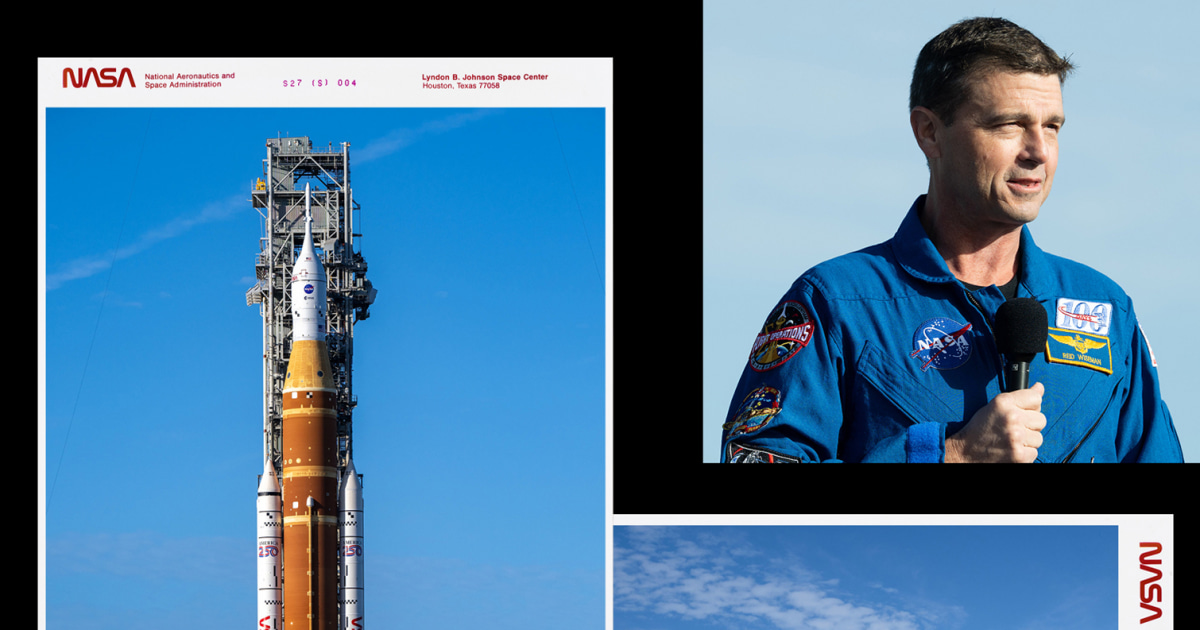
CAPE CANAVERAL, Fla. — For the first time in more than half a century, NASA is set to launch astronauts on a voyage around the moon, marking a pivotal moment in the agency's ambitious return to lunar exploration. The Artemis II mission, scheduled for liftoff at 6:24 p.m. ET on Wednesday from the Kennedy Space Center, will carry four crew members aboard the massive Space Launch System (SLS) rocket and Orion spacecraft. NASA astronauts Reid Wiseman, Christina Koch, and Victor Glover, along with Canadian Space Agency astronaut Jeremy Hansen, will embark on a 10-day journey that includes orbiting Earth before circling the moon without landing.
This flight represents the first human spaceflight for the SLS rocket and Orion capsule, both developed over more than a decade amid significant challenges. If successful, it will pave the way for NASA's long-term goals of establishing a sustainable human presence on the lunar surface and eventually venturing to Mars. The mission comes 52 years after the Apollo 17 crew last orbited the moon in December 1972, closing a chapter on an era of space exploration that captivated the world.
The Artemis program traces its origins to a 2017 directive signed by then-President Donald Trump, which instructed NASA to prioritize "the return of humans to the Moon for long-term exploration and utilization, followed by human missions to Mars and other destinations." Building on that, Vice President Mike Pence, in a 2019 speech, set an aggressive timeline to achieve a lunar landing by 2024. However, delays have pushed that target to at least 2028, according to NASA officials.
Development of the core technologies predates these directives. Work on the Orion spacecraft began in 2006, while Congress authorized the SLS rocket in 2010 as a successor to the Saturn V, the powerhouse that propelled Apollo missions. Designed to be the most powerful rocket ever built, the SLS stands at 322 feet tall when fully stacked with Orion—taller than the Statue of Liberty but shorter than the 365-foot Saturn V.
The rocket's journey to the launchpad has been anything but smooth. On March 20, the SLS core stage was slowly rolled four miles from its assembly hangar using a massive crawler-transporter, a process that took hours. This was the second such rollout; the rocket had been moved to the pad in January before being returned for repairs to fix hydrogen leaks and a helium flow blockage. NASA engineers have since addressed these issues, ensuring the vehicle is ready for its crewed debut.
At the heart of the mission is the Orion capsule, a gumdrop-shaped vehicle measuring 16.5 feet in diameter with a habitable volume of about 330 cubic feet—space enough for four astronauts but requiring careful management of daily activities. The crew will train to sleep, eat, exercise, and communicate in these tight quarters. A notable feature is the capsule's space toilet, equipped with a privacy door and a vacuum system that vents urine into space, while solid waste is stored for post-mission disposal.
To maximize space during the flight, astronauts will remove and stow two seats after launch, leaving more room to move until re-entry. Daily 30-minute workouts are planned, using a small flywheel device for exercises like squats and deadlifts, as outlined by the Canadian Space Agency. These routines are crucial for maintaining health in the microgravity of deep space.
Commanding the mission is Reid Wiseman, a veteran astronaut who spent six months on the International Space Station in 2014. Serving as pilot is Victor Glover, who flew on the first operational SpaceX Crew Dragon mission to the station in 2020. Christina Koch, another ISS alumna with 328 days in space from 2019—including NASA's first all-female spacewalk—will act as a mission specialist alongside Jeremy Hansen, the first Canadian to travel to the moon and the only rookie on this crew.
The astronauts arrived at Kennedy Space Center on Friday, undergoing final preparations ahead of the launch. Their journey will build on the uncrewed Artemis I test flight in 2022, a 26-day mission that successfully orbited the moon and returned with valuable data. During that flight, Orion captured stunning images of the lunar surface, including flyovers of Apollo landing sites like those of Apollo 12 and 14, and even "selfies" showing the spacecraft with Earth in the background.
Artemis I also highlighted challenges, particularly with Orion's heat shield. Upon splashdown in the Pacific Ocean, NASA discovered unexpected damage: cracks in the shield's outer material caused by improper venting that led to gas buildup and charred pieces breaking off. A subsequent investigation attributed the issue to these venting problems during re-entry.
To mitigate risks for Artemis II, mission managers have adjusted the capsule's re-entry trajectory. The spacecraft will take a steeper angle, speeding through the atmosphere to reduce exposure to peak temperatures. "If we stick to the new re-entry path that NASA has planned, then this heat shield will be safe to fly," Wiseman said last year, expressing confidence in the modifications.
The SLS rocket incorporates upgraded components from NASA's retired space shuttle program, including the RS-25 engines that powered the shuttle's main stage. Built by longtime NASA contractors, the rocket underscores the agency's reliance on proven technology while pushing boundaries with its power—capable of lifting 95 metric tons to low-Earth orbit on its debut configuration.
Despite these advancements, the Artemis program has faced criticism for its pace and costs. Development delays have stretched over years, with budget overruns exceeding billions of dollars, according to congressional reports. NASA has defended the investments as necessary for safe, sustainable exploration, emphasizing partnerships with international allies like Canada, which contributes Hansen and scientific expertise.
Looking ahead, Artemis II sets the stage for subsequent missions. Artemis III, now targeted for mid-2027, will test docking and landing technologies in low-Earth orbit using a reusable Orion. The program culminates with Artemis IV in 2028, aiming for the first crewed lunar landing since Apollo 17, potentially including the first woman and person of color on the moon's surface.
As the countdown begins, the eyes of the world turn to Florida's Space Coast, where history is poised to repeat itself in a new era. The success of this mission could reignite public enthusiasm for space travel, much like Apollo did in the 1960s, while addressing modern imperatives like climate monitoring from lunar vantage points and resource utilization for future Mars journeys. NASA officials remain optimistic, with launch director Charlie Blackwell-Thompson stating in recent briefings that the team is "ready to make this happen."