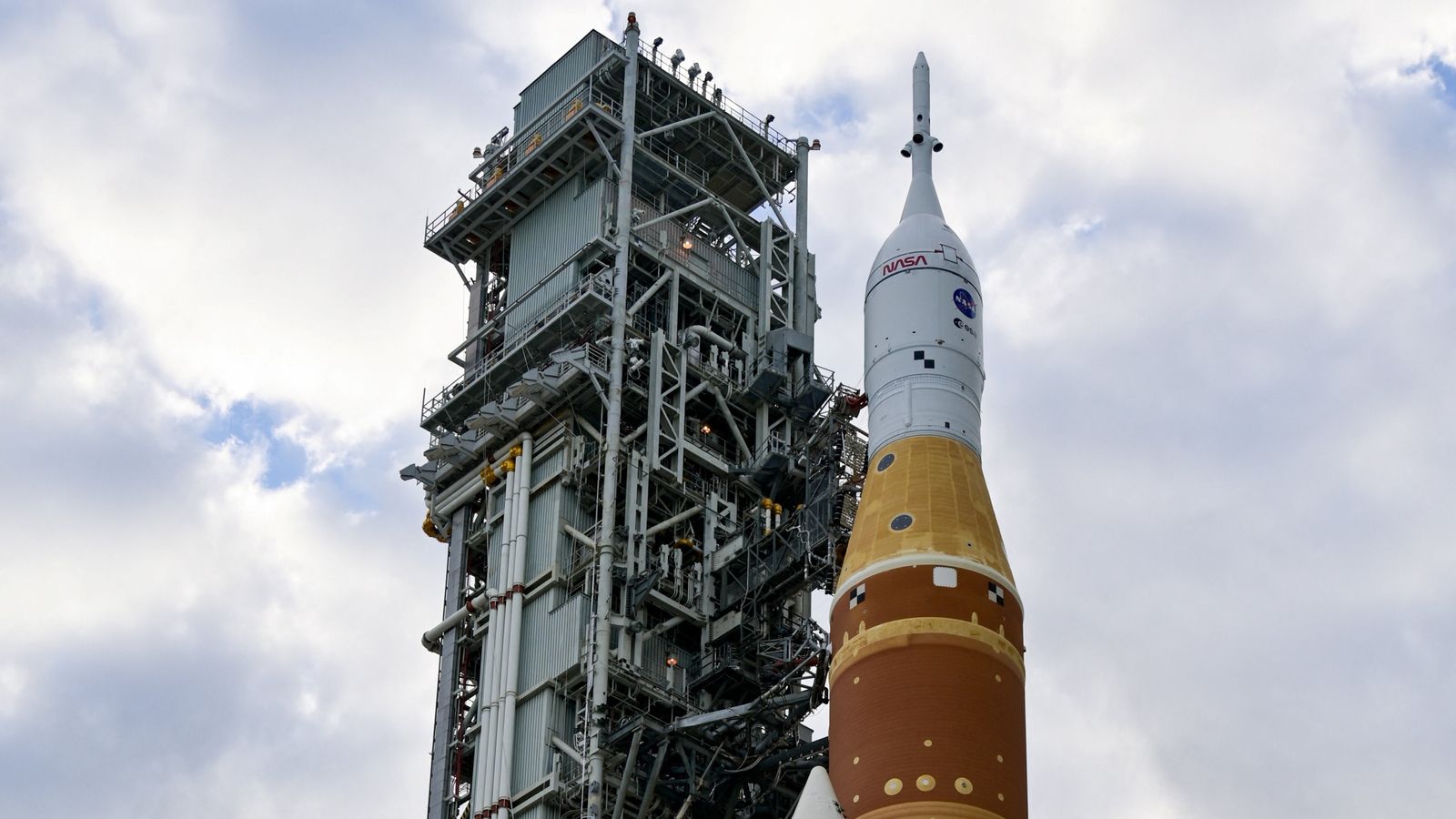
APPLETON, Wis. — NASA announced Friday that its long-awaited Artemis II mission, poised to send four astronauts around the moon for the first time in more than five decades, could lift off as early as March 6 from Florida's Kennedy Space Center. The crewed flight, part of the agency's ambitious push to return humans to lunar orbit, marks a pivotal step in America's space exploration renaissance, though officials cautioned that the schedule remains tentative pending final technical reviews.
The Artemis II mission represents NASA's first crewed deep-space endeavor since the Apollo program's final flight in 1972. According to the space agency, the four-person crew will orbit the moon without landing, testing systems for future missions that could include human boots on the lunar surface. Jared Isaacman, a key administrator at NASA, described the upcoming launch as "a big step toward America's return to the lunar environment." His comments underscore the mission's symbolic and scientific weight, evoking the era when Apollo 17 astronaut Eugene Cernan became the last person to walk on the moon.
Preparations for the launch have not been without hurdles. An initial dress rehearsal earlier this month was halted due to a hydrogen leak in the rocket's fueling system, prompting concerns among engineers about the reliability of the Space Launch System (SLS) rocket. Technicians swiftly addressed the issue by replacing two seals, and a subsequent 50-hour test conducted on Thursday proceeded smoothly, with no leaks detected. During that grueling simulation, the team loaded the SLS with approximately 730,000 gallons of propellant, mimicking the real fueling process that will power the 322-foot-tall behemoth skyward.
The crew for Artemis II includes NASA astronauts Reid Wiseman, Victor Glover, and Christina Koch, alongside Canadian Space Agency astronaut Jeremy Hansen. Wiseman, who will serve as commander, has spoken publicly about the mission's significance, noting in pre-launch briefings that it builds on uncrewed successes like Artemis I, which orbited the moon in late 2022 without incident. That prior mission validated the SLS and Orion spacecraft, paving the way for this human-rated flight. NASA officials emphasized that while the March 6 target date is aggressive, any delays would prioritize safety over speed.
The space agency is aiming to send four crew members around the moon and back. If successful, it would be the first time humans have travelled there in more than 50 years.This excerpt from NASA's official announcement highlights the historic gap since Apollo 17, a mission that captivated the world with its lunar rover explorations and geological samples. Back then, the Saturn V rocket propelled astronauts to the moon's surface; today, the SLS — evolved from shuttle-era technology — carries the torch with modern upgrades for sustainability and reusability.
Beyond the immediate thrill of the launch, Artemis II fits into a broader tapestry of NASA's lunar ambitions. The program envisions establishing the Lunar Gateway, a orbiting outpost that would serve as a staging point for deeper space travel. According to agency projections, the Gateway could host crews for months at a time, enabling scientific research and preparation for Mars missions in the 2030s. International partners, including the European Space Agency and Japan Aerospace Exploration Agency, are contributing modules and technology, fostering a collaborative spirit reminiscent of the International Space Station.
Yet, the path to March 6 has been fraught with scrutiny. Critics within the space community have pointed to past delays in the Artemis timeline, originally slated for 2024 but pushed back amid technical glitches and budget overruns. NASA's inspector general reported in 2023 that the SLS program alone has cost over $23 billion, drawing bipartisan questions in Congress about fiscal responsibility. Proponents, however, argue that the investments are essential for maintaining U.S. leadership in space amid rising competition from private players like SpaceX and international rivals such as China's lunar program.
From Kennedy Space Center, the launch site synonymous with humanity's greatest space achievements, teams are finalizing countdown procedures. The center, located on Florida's eastern coast, has undergone upgrades to handle the SLS's massive scale, including new mobile launchers and vibration-resistant platforms. Weather remains a wildcard; historical data shows that March launches from the Cape Canaveral area face about a 30% chance of delays due to thunderstorms or high winds, though NASA meteorologists are optimistic for clear skies around the target date.
The astronauts' training regimen has been exhaustive, spanning simulations in Houston's neutral buoyancy lab and high-altitude flights to mimic zero-gravity conditions. Christina Koch, who holds the record for the longest single spaceflight by a woman at 328 days aboard the ISS, brings invaluable experience to the crew. Her perspective, shared in interviews, emphasizes the mission's role in inspiring the next generation: "This isn't just about going to the moon; it's about what we learn there to go further."
Public excitement is building, with NASA planning live coverage from multiple angles, including drone footage of the SLS ignition. The launch window, reportedly spanning several days, allows flexibility if minor issues arise. Officials have not ruled out a slip to late March or early April, citing the complexity of integrating the Orion capsule with the European Service Module, provided by ESA for propulsion and life support.
Looking ahead, Artemis II's success would tee up Artemis III, targeted for 2026, which aims to land the first woman and person of color on the moon near the south pole — a region rich in water ice for future fuel production. This progression aligns with NASA's Artemis Accords, signed by over 40 nations, which outline principles for peaceful lunar exploration. Disagreements persist, however; Russia and China have pursued their own joint lunar station plans, potentially creating parallel tracks in cislunar space.
Environmental considerations also factor into the narrative. The SLS burn, while brief, releases significant emissions, prompting NASA to explore greener alternatives like methane-based engines in future iterations. Advocacy groups have called for more transparency on the mission's carbon footprint, but agency spokespeople maintain that the scientific gains outweigh short-term impacts.
As the world watches, the Artemis II crew prepares for a 10-day journey covering about 1.4 million miles round-trip. Upon return, a Pacific Ocean splashdown awaits, with recovery ships positioned off Australia's coast. If all goes as planned, this mission will not only bridge past glories with future horizons but also reaffirm humanity's enduring quest to explore the cosmos.
In Appleton and beyond, local space enthusiasts are abuzz. The Fox Cities Planetarium has scheduled viewing parties, reflecting how NASA's endeavors continue to unite communities. For now, all eyes turn to the stars, awaiting the roar of engines that could echo through history once more.