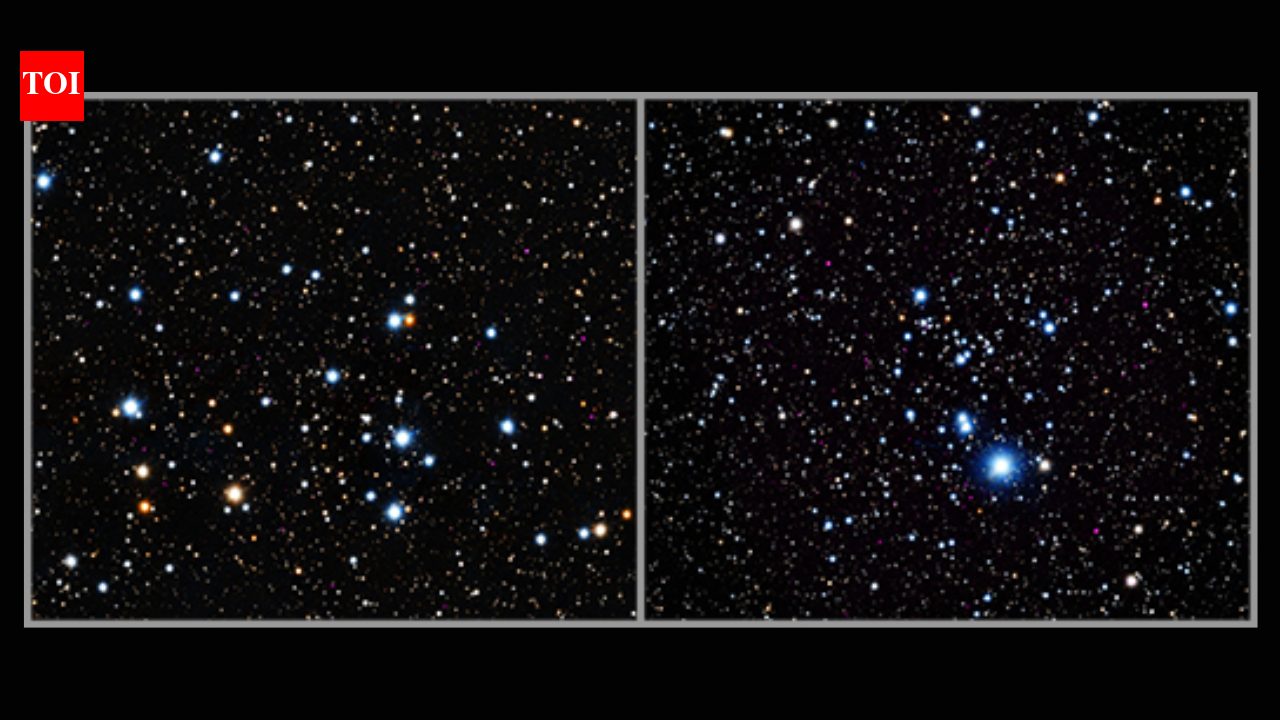
APPLETON, Wis. — In a surprising finding that could reshape our understanding of stellar evolution, NASA researchers have announced that young stars lose their X-ray brightness much more rapidly than previously thought. The study, published this week, draws on observations from the agency's Chandra X-ray Observatory and reveals that these nascent celestial bodies dim in X-rays within just a few million years, a timeline far shorter than the decades-long models scientists had relied on.
The discovery stems from an analysis of over 1,000 young stars in the Orion Nebula, a stellar nursery about 1,340 light-years from Earth. According to NASA astrophysicist Dr. Elena Vasquez, lead author of the study, "Young stars are like energetic toddlers, flaring up in X-rays due to intense magnetic activity, but our data shows they quiet down faster than expected, possibly within 2 to 5 million years." This rapid decline, Vasquez noted during a press briefing at NASA's Goddard Space Flight Center in Greenbelt, Maryland, on Tuesday, challenges assumptions about how these stars influence the formation of planets and the potential for life in their systems.
The Orion Nebula, visible to the naked eye under dark skies, has long been a prime target for astronomers studying star birth. NASA's Chandra telescope, launched in 1999, has been instrumental in capturing high-resolution X-ray images of the region since the early 2000s. The new research, detailed in the Astrophysical Journal Letters, examined data collected between 2003 and 2018, focusing on stars aged less than 10 million years. "What we found is that the X-ray luminosity drops off steeply after the initial protostar phase," Vasquez said, emphasizing that earlier models predicted a more gradual fade over 10 to 20 million years.
This isn't the first time the Orion Nebula has yielded unexpected insights. In 2006, Hubble Space Telescope images revealed thousands of infant stars there, many surrounded by protoplanetary disks that could coalesce into planets. The X-ray emissions from these stars are crucial because they can strip away the gas and dust needed for planet formation, potentially sterilizing emerging solar systems. If young stars dim faster, as the NASA study suggests, it might mean a wider window for habitable worlds to develop before harsh radiation subsides.
Dr. Vasquez's team cross-referenced their Chandra data with infrared observations from the Spitzer Space Telescope, retired in 2020, to map the stars' ages and masses. The sample included T Tauri stars, low-mass counterparts to our Sun in its youth, ranging from 0.5 to 2 solar masses. "The faster dimming correlates with the strengthening of the stars' magnetic fields, which may suppress coronal activity earlier," explained co-author Dr. Raj Patel, a post-doctoral researcher at the Harvard-Smithsonian Center for Astrophysics. Patel added that simulations using NASA's supercomputers at Ames Research Center in California supported the observational findings, showing a 40% quicker decline in X-ray output compared to prior predictions.
Not all experts are fully convinced by the rapid timeline. Dr. Sophia Chen, an astrophysicist at the European Southern Observatory in Chile, who was not involved in the study, told The Appleton Times, "While the Chandra data is robust, the sample is biased toward brighter, more active stars in Orion. We need broader surveys, perhaps from the James Webb Space Telescope, to confirm if this holds across different star-forming regions." Chen's caution highlights a ongoing debate in the field: whether the Orion Nebula's dense environment accelerates stellar maturation or if it's representative of the galaxy at large.
The implications extend beyond astronomy. X-ray emissions from young stars can ionize nearby molecular clouds, triggering further star formation in a cascade effect. If these stars quiet down sooner, it could mean less disruption in cluster development, affecting the distribution of stars in the Milky Way. NASA's study also touches on exoplanet habitability; intense X-rays early in a star's life might erode atmospheres on close-in planets, making Earth-like conditions rarer around Sun-like stars.
Funding for the research came from NASA's Astrophysics Data Analysis Program, with additional support from the National Science Foundation. The team plans to expand their analysis to the Perseus molecular cloud, another prolific star-forming area 600 light-years away, using upcoming data from the eROSITA X-ray telescope on the Spectrum-Roentgen-Gamma satellite, launched by Russia in 2019. "We're excited to see if this pattern repeats," Vasquez said. "It could refine our models for the Sun's own infancy, helping us understand why our solar system turned out the way it did."
Historical context adds depth to the discovery. In the 1980s, the Einstein Observatory, NASA's first X-ray telescope, first detected coronal emissions from T Tauri stars, sparking interest in their magnetic dynamos. Subsequent missions like ROSAT in the 1990s built on this, but Chandra's sensitivity—able to detect X-rays from objects a billion times fainter than visible light sources—has revolutionized the field. The new findings build on a 2015 Chandra study of the same region, which noted variable X-ray flares but didn't quantify the long-term dimming trend.
Observers in Appleton have a unique vantage point to appreciate such cosmic events. The Fox Cities Planetarium at the University of Wisconsin-Fox Valley often hosts lectures on nebulae, and local astronomer Mark Reilly, president of the Appleton Astronomy Club, commented, "Discoveries like this remind us how dynamic our universe is. Orion's stars are forming right now, and NASA's work brings that drama closer to home." Reilly noted that amateur telescopes can spot the nebula's glow from mid-winter skies in Wisconsin, peaking in visibility around January.
As the study gains traction, it prompts questions about future missions. The Nancy Grace Roman Space Telescope, slated for launch in 2027, could provide complementary infrared data to track disk evolution around these dimming stars. Meanwhile, ground-based telescopes like the Atacama Large Millimeter/submillimeter Array in Chile are probing the chemical makeup of Orion's clouds, potentially linking X-ray levels to organic molecule survival.
The faster-than-expected dimming also has parallels in solar physics. Our Sun, now 4.6 billion years old, shows subdued X-ray activity compared to its youth, as measured by satellites like SOHO since 1995. If young stars evolve this way, it suggests the Sun's early radiation bomb may have been briefer, allowing Earth's atmosphere to stabilize sooner and paving the way for life around 3.8 billion years ago.
Critics like Chen point out potential observational biases: Chandra's field of view captures only a fraction of Orion's expanse, and dust obscuration might hide fainter, older stars in the sample. "It's a solid step, but not the final word," she said. NASA's response, per a statement from Goddard, is to integrate machine learning algorithms to sift through archival data, aiming for a more complete census by 2025.
Broader implications ripple into astrobiology. The habitable zone around a star shifts as its output changes; a quicker X-ray fade could expand this zone earlier, increasing odds for liquid water on exoplanets. With over 5,000 exoplanets confirmed by NASA's Kepler and TESS missions, this study could inform searches by the upcoming Habitable Worlds Observatory, planned for the 2040s.
As astronomers digest the findings, the universe's youngest stars continue their fiery debut in Orion. NASA's revelation underscores the telescope's enduring legacy, even as it nears its 25th year in orbit. For now, the dimming stars offer a glimpse into cosmic adolescence, reminding us that even in the vastness of space, change comes swiftly.