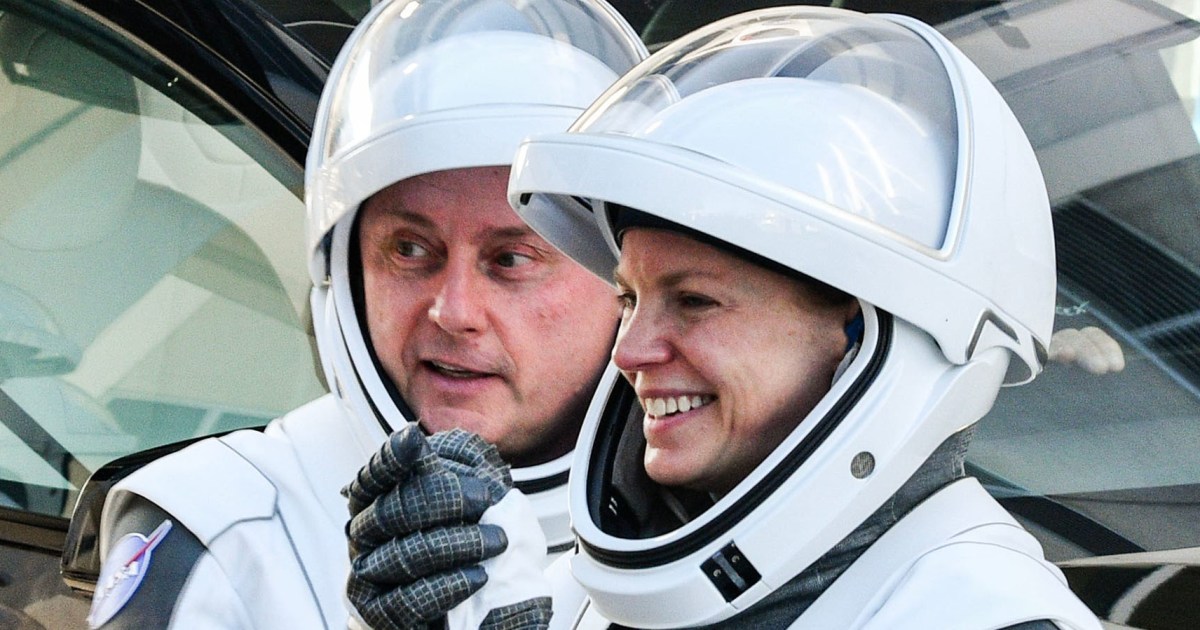
In a surprising development for NASA's space program, the agency announced Thursday that it will return four astronauts from the International Space Station more than a month ahead of schedule due to an undisclosed medical issue affecting one crew member. This marks the first time in the space station's 25-year operational history that a crew has been evacuated early for health reasons, highlighting the challenges of maintaining medical care in the harsh environment of low-Earth orbit.
The affected astronauts, part of the Crew-11 mission, include NASA astronauts Zena Cardman and Mike Fincke, Japanese astronaut Kimiya Yui, and Russian cosmonaut Oleg Platonov. They launched to the ISS aboard a SpaceX Crew Dragon spacecraft in early August and were originally slated to remain on the orbiting laboratory until late February. NASA officials emphasized that the situation is stable and not an emergency, but the decision was made out of caution to ensure the well-being of the crew.
During a news briefing, NASA Administrator Jared Isaacman explained the rationale behind the early return. “After discussions with chief health and medical officer Dr. JD Polk and leadership across the agency, I’ve come to the decision that it’s in the best interest of our astronauts to return Crew-11 ahead of their planned departure,” Isaacman said. He added that the agency would provide further updates within the next 48 hours, though no exact timeline for undocking or splashdown has been released. The astronauts are expected to head home in the coming days.
Details about the medical issue remain closely guarded due to privacy concerns. NASA has not disclosed the identity of the affected astronaut, the nature of the problem, or its severity. Dr. JD Polk, the agency's chief health and medical officer, addressed this during the briefing, noting the limitations of onboard medical facilities. “We have a very robust suite of medical hardware onboard the International Space Station, but we don’t have the complete amount of hardware that I would have in the emergency department, for example, to complete a workup of the patient,” Polk said. “And in this particular incident, the medical incident was sufficient enough that we were concerned about the astronaut that we would like to complete that workup.”
Polk stressed that the evacuation is precautionary rather than urgent. “The situation is stable and that the evacuation is not considered an emergency,” he clarified. “Rather, he said, the decision was made to err on the side of caution for the affected astronaut’s health and welfare.” This approach underscores NASA's commitment to astronaut safety, especially given the complexities of space medicine, where even routine procedures can be complicated by microgravity and isolation.
The announcement came on the heels of another disruption: NASA revealed the medical issue publicly on Wednesday by postponing a spacewalk that Cardman and Fincke were set to conduct on Thursday. The spacewalk was intended to perform maintenance and science tasks outside the station, but it was scrubbed to prioritize the crew's health. This is not the first time mission plans have been altered for medical reasons, though early returns of entire crews are unprecedented for the ISS.
For context, the International Space Station has been continuously inhabited since November 2000, serving as a hub for international collaboration in space research. Crew rotations typically last six months, with teams arriving via a mix of American, Russian, and international vehicles. Crew-11's early departure will leave the station temporarily understaffed from the U.S. side. After they undock, only NASA flight engineer Chris Williams will remain to oversee American science experiments and operations. Williams arrived on November 27 aboard a Russian Soyuz spacecraft and is part of a multinational crew that also includes Russian cosmonauts Oleg Platonov, Sergey Kud-Sverchkov, and Sergey Mikaev.
Platonov, interestingly, is both departing with Crew-11 and listed among the remaining crew in some rotations, but NASA clarified that the departing cosmonaut shares the name with one staying behind— a coincidence that has caused minor confusion in reporting. The station's current complement relies on seamless handovers, and this abrupt change could strain operations during the interim period.
Looking ahead, the next scheduled crew, known as Crew-12, is set to launch to the ISS in mid-February. Isaacman indicated that NASA is evaluating whether to accelerate that mission to restore full staffing sooner. “NASA will evaluate whether to bump up that mission, known as Crew-12,” he said. Such adjustments are not uncommon in spaceflight, where flexibility is key to managing unexpected events, but they require coordination with international partners like SpaceX, Roscosmos, and JAXA.
This incident represents an early challenge for Isaacman, who was sworn in as NASA Administrator on December 18. A billionaire entrepreneur and private astronaut himself—having commanded the Inspiration4 mission in 2021—Isaacman's appointment brought fresh perspectives to the agency. His decision to prioritize the early return demonstrates a hands-on approach to leadership during his first major orbital crisis.
The ISS program has long been a symbol of U.S.-Russia cooperation in space, even amid geopolitical tensions. The involvement of Russian cosmonauts in both departing and remaining crews highlights the program's resilience. Yui, from Japan's Aerospace Exploration Agency, adds to the international flavor, as the station hosts experiments benefiting multiple nations, from microgravity biology to materials science.
Astronauts like Cardman, a geologist selected in NASA's 2017 class, and Fincke, a veteran with multiple spaceflights including a previous ISS stint, bring specialized expertise. Fincke, who has logged over 353 days in space, was on track for another milestone with this mission. Yui, with experience from Expedition 44 in 2015, and Platonov, a rookie cosmonaut, round out a team that was conducting routine maintenance and research until the medical concern arose.
Broader implications of this event extend to NASA's commercial crew program, which relies on SpaceX for transport. The Crew Dragon's reliability has been proven, but returning early means reallocating resources and potentially delaying other missions. Experts note that while the ISS's medical capabilities are advanced— including telemedicine links to Earth doctors— they can't match terrestrial hospitals, justifying the return.
As the agency monitors the situation, questions linger about long-term effects on crew morale and program timelines. NASA has a history of adapting to health issues; for instance, astronauts have undergone surgeries on orbit or managed conditions like kidney stones with onboard tools. Yet, this case's uniqueness as a full-crew evacuation prompts reflection on enhancing in-space healthcare for future deep-space missions, like those to Mars.
In the coming days, all eyes will be on the splashdown of Crew-11, likely off the Florida coast, where recovery teams from NASA and SpaceX will assist the astronauts. Updates from the agency are anticipated soon, as Isaacman promised transparency while respecting privacy. For now, the focus remains on safely bringing the crew home, ensuring the ISS continues its vital work uninterrupted.