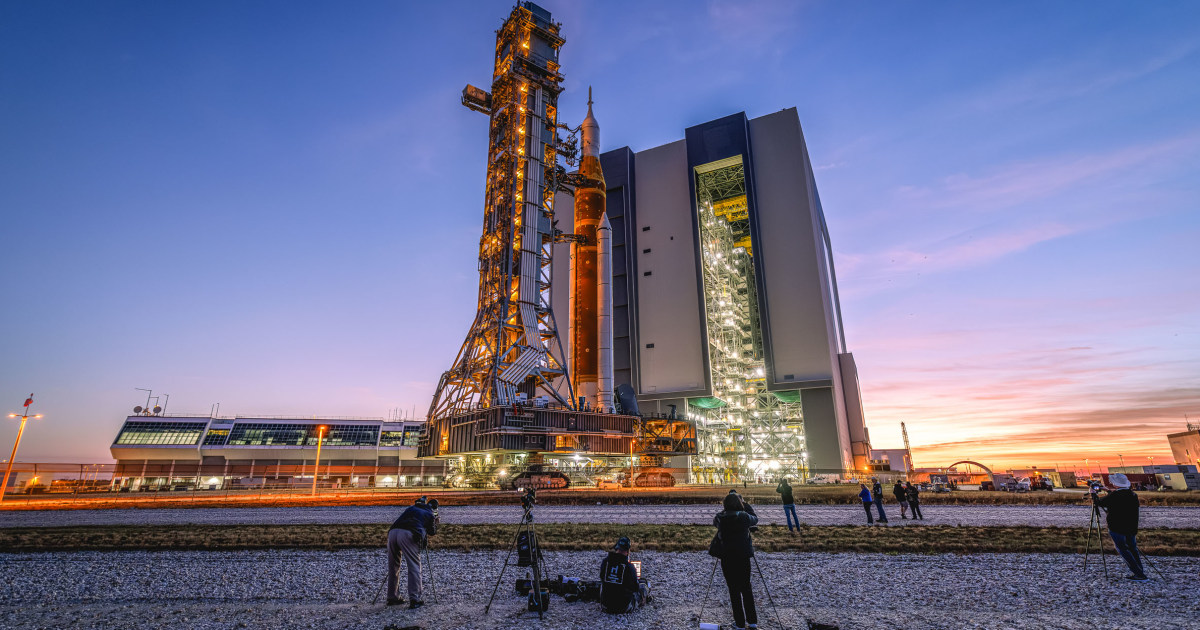
CAPE CANAVERAL, Fla. — NASA is preparing to roll its massive Space Launch System rocket back to the launchpad at Kennedy Space Center this evening, marking a key step toward the first crewed mission around the moon in over half a century. The 322-foot-tall rocket, stacked with the Orion spacecraft, will begin its slow journey from the Vehicle Assembly Building at 8 p.m. ET on Thursday, with the process expected to take about 12 hours to cover the 4-mile distance. This rollout sets the stage for the Artemis II mission, targeted for liftoff as early as April 1, carrying four astronauts on a 10-day voyage that will push the boundaries of human space exploration.
The mission's crew includes NASA astronauts Reid Wiseman, Christina Koch, and Victor Glover, along with Canadian Space Agency astronaut Jeremy Hansen. Artemis II will be the first time the Space Launch System, or SLS, and Orion spacecraft fly with humans aboard, following the successful uncrewed Artemis I flight that looped around the moon in late 2022. During the mission, the astronauts will not land on the lunar surface but will swing around the far side of the moon, potentially traveling farther from Earth than any previous human mission, surpassing the Apollo program's records from the 1960s and 1970s.
This isn't the rocket's first trip to the pad. The 11-million-pound behemoth was initially rolled out in mid-January for preparations, but engineers discovered a blockage in the helium flow system during subsequent tests. According to NASA officials, the issue was identified after a wet dress rehearsal — a full-scale simulation of launch day procedures, including fueling — which had to be halted early due to a separate hydrogen leak at the rocket's base. The helium problem prompted the agency to haul the stack back to the Vehicle Assembly Building for repairs, delaying the timeline but ensuring the vehicle's readiness.
Engineers addressed the helium blockage by replacing a seal in the line that supplies helium from ground support equipment to the rocket, NASA reported. While the vehicle was in the hangar, teams also swapped out batteries in both the SLS and Orion, and performed a series of tests to verify the fixes. "We were able to resolve the helium flow issues while the rocket was in the Vehicle Assembly Building," NASA spokesperson Jeremy Graeber said in a statement, emphasizing the thoroughness of the repair process.
The rollout will be powered by the iconic crawler-transporter, a massive moving platform that has ferried rockets to the pad since the Apollo era. Traveling at a leisurely pace of about 1 mile per hour, the transporter will navigate the sandy roads of Kennedy Space Center, a journey that underscores the painstaking care involved in preparing for deep-space missions. Public viewing opportunities are limited, but space enthusiasts can follow live updates on NASA's website and social media channels as the stack inches toward Launch Pad 39B.
The Artemis program, NASA's flagship effort to return humans to the moon and establish a sustainable presence there, has faced its share of hurdles since its inception. Artemis II builds directly on the lessons from Artemis I, which launched on November 16, 2022, and completed a 25-day test flight, validating the SLS and Orion's performance in space. That mission splashed down off the California coast on December 11, 2022, after traveling more than 1.4 million miles. However, the crewed follow-up has been plagued by technical glitches, including the fueling issues that twice interrupted wet dress rehearsals.
Last week, NASA convened a two-day flight readiness review at Kennedy Space Center, bringing together mission managers, the astronaut crew, and agency representatives to assess risks and timelines. Discussions covered everything from the recent repairs to the overall flight plan, with participants weighing the challenges of sending humans beyond low-Earth orbit for the first time since Apollo 17 in 1972. "The agency has decided to press ahead with a launch attempt in April, formally certifying the rocket and spacecraft for flight," according to a NASA summary of the review.
Reid Wiseman, the mission commander, has expressed confidence in the team's preparations. In a recent interview, he noted the crew's excitement about the upcoming flight, describing it as a "pivotal moment" in NASA's return-to-the-moon efforts. Christina Koch, who holds the record for the longest single spaceflight by a woman at 328 days aboard the International Space Station, will serve as pilot. Victor Glover, a Navy test pilot and the first Black astronaut slated for a lunar mission, and Jeremy Hansen, representing international partners in the Artemis Accords, round out the diverse crew.
The international collaboration is a cornerstone of Artemis, with more than 20 countries signed on to the Artemis Accords, which outline principles for peaceful lunar exploration. Hansen's inclusion highlights Canada's contributions, including the Canadarm3 robotic system for the planned Lunar Gateway station. NASA Administrator Bill Nelson has touted the mission as a step toward "exploring the moon with sustainable practices," aiming to inspire future generations while laying groundwork for Mars missions in the 2030s.
Despite the optimism, the program hasn't been without criticism. Some lawmakers and watchdog groups have pointed to ballooning costs — the SLS alone has exceeded $20 billion in development — and delays that have pushed back the timeline from initial 2024 goals. A Government Accountability Office report last year flagged ongoing technical risks, though NASA maintains that the investments are necessary for safe, reliable deep-space travel. Officials have not commented on potential further slips, but the April 1 target remains the current baseline.
As the rocket makes its way to the pad, ground teams will conduct final checks, including another round of tanking tests if needed. The Orion capsule, designed to carry astronauts through the harsh radiation of deep space, features advanced life support and abort systems tested rigorously during Artemis I. Once at the pad, the stack will undergo countdown simulations and weather assessments, as Florida's launch window is sensitive to conditions like high winds or lightning.
The broader implications of Artemis II extend beyond the moonshot itself. Success here will pave the way for Artemis III, slated for 2026, which aims to land the first woman and first person of color on the lunar surface near the moon's south pole. That mission will involve SpaceX's Starship as a lander, adding another layer of complexity to the program's partnerships with private industry. NASA's ultimate vision includes a lunar base camp to support Mars exploration, fostering technologies like in-situ resource utilization for producing fuel from lunar ice.
For the astronauts, the mission represents personal milestones as well. Victor Glover, in a pre-rollout briefing, reflected on the historic nature of the flight: "This is about pushing humanity forward, one step at a time." The crew's 10-day itinerary includes flybys of the moon's far side, where communication blackouts will test their autonomy, and high-definition photography to map potential landing sites for future missions.
Looking ahead, NASA eyes a busy schedule post-Artemis II, with the Europa Clipper mission launching in October to study Jupiter's icy moon and the Psyche spacecraft already en route to a metal-rich asteroid. But all eyes are on the moon rocket's slow procession tonight, a symbol of renewed ambition in American spaceflight. As the crawler-transporter rumbles to life, it carries not just hardware, but the hopes of a new era in exploration.
With the rollout underway, NASA invites the public to engage through virtual tours and educational resources, emphasizing the mission's role in STEM inspiration. Officials say weather forecasts are favorable for the move, though minor delays could arise from the terrain. Once secured at the pad, the countdown to April 1 will begin in earnest, bringing the dream of lunar orbits a giant leap closer.