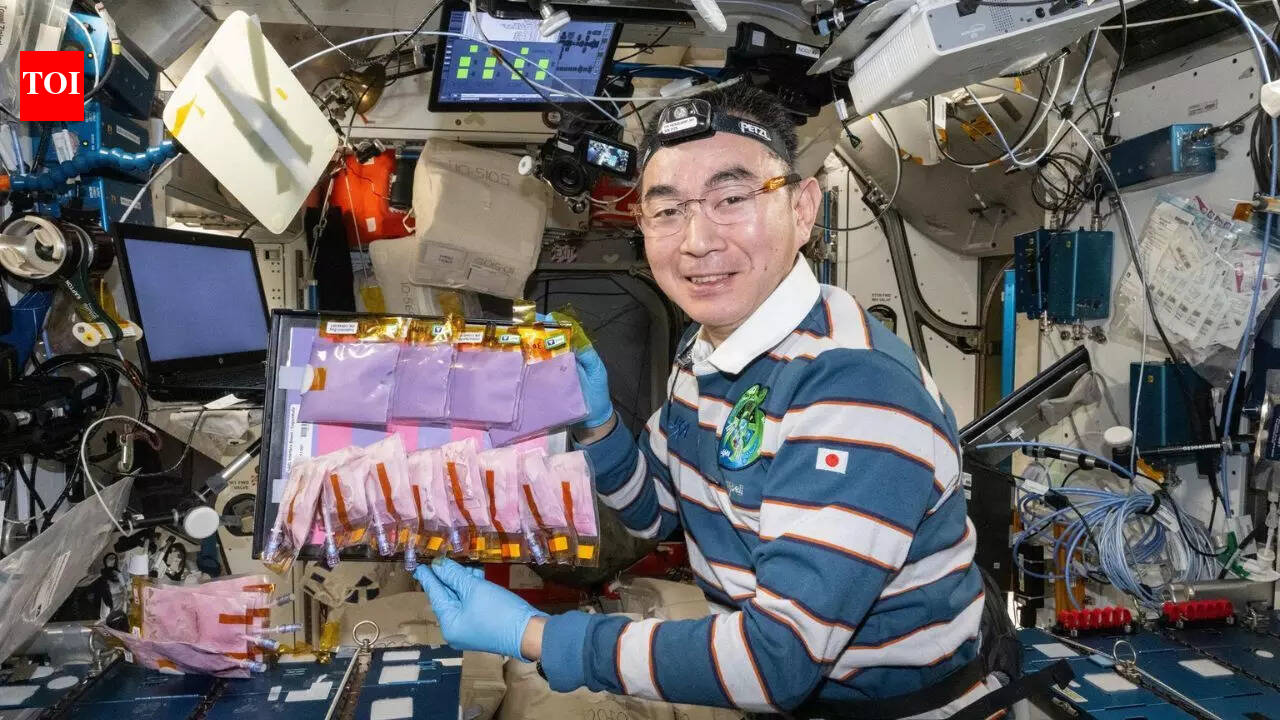
In a bid to ensure astronauts on future Mars missions have access to nutritious, gut-friendly foods, NASA has transformed part of the International Space Station into an unconventional laboratory focused on yogurt production. The experiment, known as the Fermented Foods study, aims to explore how probiotic-rich foods like yogurt behave in microgravity and their potential benefits for crew health during long-duration spaceflights. According to a report from The Times of India, this initiative marks a significant step in NASA's preparations for deep-space exploration, where traditional food supplies may not suffice for the journey to the Red Planet.
The study, which began earlier this year, involves crew members on the ISS cultivating yogurt using specialized equipment shipped from Earth. Researchers are particularly interested in how fermentation processes—typically reliant on gravity for even mixing—adapt to the weightless environment. 'We're looking at how these foods can support the microbiome of astronauts, which is crucial for maintaining health over months or years in space,' said a NASA spokesperson in the Times of India article, highlighting the project's focus on preventing issues like weakened immune systems or digestive problems that could arise from extended isolation.
Background on the ISS's role in food research dates back to the station's early days, but this yogurt experiment represents a more targeted approach tailored to Mars ambitions. NASA's Artemis program and the broader goal of landing humans on Mars by the 2030s have spurred innovations in sustainable food systems. The space station, orbiting about 250 miles above Earth, serves as a testing ground where variables like radiation, confinement, and zero gravity can be simulated for planetary missions. The Times of India report notes that the study builds on previous experiments with hydroponic vegetables and 3D-printed meats, but fermented dairy products introduce a new dimension due to their live bacterial cultures.
Details of the experiment reveal that astronauts are using a compact bioreactor to ferment milk with specific probiotic strains, monitoring pH levels, bacterial growth, and texture changes over several days. The process, which takes about 24 to 48 hours on Earth, may extend in space due to the lack of sedimentation. According to the source, samples are being returned to Earth via SpaceX cargo missions for detailed analysis at NASA's Johnson Space Center in Houston, Texas. This back-and-forth is expected to continue through 2024, with initial results anticipated by mid-year.
Experts involved in the project emphasize the nutritional angle. Fermented foods like yogurt are rich in vitamins, proteins, and beneficial bacteria that aid digestion and boost immunity—essentials for astronauts facing high-stress conditions. 'In the confined quarters of a Mars habitat, fresh food options will be limited, so we need resilient, space-stable alternatives,' stated Dr. Kate Willett, a microbiologist at NASA, as quoted in related coverage. The Times of India summary underscores that the study also examines shelf life, with yogurt potentially serving as a base for other fermented items like kefir or sauerkraut, diversifying the menu beyond rehydrated packets.
While the primary focus is scientific, the experiment carries cultural implications for space travel. Crew members have reported enjoying the hands-on aspect, providing a morale boost amid rigorous schedules. One astronaut, speaking anonymously in the report, described the yogurt-making as 'a taste of home in orbit,' reminiscent of everyday routines on Earth. This human element is vital, as psychological well-being is as critical as physical health for long missions. The ISS, a collaboration between NASA, Roscosmos, ESA, JAXA, and CSA, hosts multinational crews, and food studies like this foster international cooperation on practical challenges.
Challenges in microgravity fermentation have been noted by researchers. Without gravity, bacteria may distribute unevenly, affecting flavor and safety. The Times of India article mentions that preliminary tests showed slower acidification rates, prompting adjustments in starter cultures. NASA's team is cross-referencing data with ground-based analogs at facilities like the Glenn Research Center in Cleveland, Ohio, to isolate space-specific effects. If successful, this could lead to guidelines for onboard food production, reducing reliance on pre-packaged supplies that weigh heavily on launch costs—estimated at $10,000 per pound to orbit.
Broader context includes NASA's partnership with private entities. SpaceX and Blue Origin are developing technologies for in-situ resource utilization on Mars, where local ingredients might one day supplement Earth shipments. The yogurt study aligns with the agency's Mars Food System roadmap, outlined in a 2022 white paper, which prioritizes probiotic integration. According to officials, integrating such foods could cut resupply needs by up to 20 percent, freeing payload for other essentials like scientific instruments or habitat modules.
Critics, however, question the prioritization amid budget constraints. Some space policy analysts argue that while innovative, food experiments divert resources from propulsion or life-support advancements. A report from the Congressional Budget Office, referenced in secondary analyses, notes NASA's fiscal year 2023 allocation of $25 billion, with human exploration taking a significant share. Proponents counter that health sustainability is non-negotiable for missions lasting 500 to 1,000 days round-trip to Mars.
Looking ahead, the findings from this ISS yogurt lab could influence menu planning for the Artemis lunar missions, set to return humans to the Moon by 2026. Lunar Gateway, the planned orbital outpost, will host similar experiments before Mars ventures. The Times of India piece suggests that if probiotics prove viable, NASA might scale up to automated fermenters, potentially producing enough for a crew of four on the journey to Mars.
International partners are also engaged. The European Space Agency contributed bacterial strains from its labs in Noordwijk, Netherlands, while Japan's JAXA provided fermentation monitoring tech developed in Tsukuba. This collaborative effort underscores the ISS's legacy as a platform for shared knowledge, with over 3,000 experiments conducted since 1998. As the station nears its planned deorbit in 2031, projects like this ensure its data endures for future endeavors.
The yogurt study's implications extend beyond NASA. On Earth, insights into microgravity fermentation could advance biotechnology, such as developing sturdier probiotics for extreme environments like the Arctic or deep-sea vents. Universities like MIT and Stanford have expressed interest in partnering for follow-on research, potentially leading to commercial spin-offs in functional foods.
In summary, NASA's transformation of the ISS into a yogurt lab is more than a culinary curiosity—it's a pragmatic step toward making humanity multi-planetary. As officials prepare for the challenges of Mars, this experiment reminds us that even in the vastness of space, the basics of nutrition remain grounded in innovation and resilience. With results trickling in, the space agency continues to blend science and sustenance in pursuit of the stars.