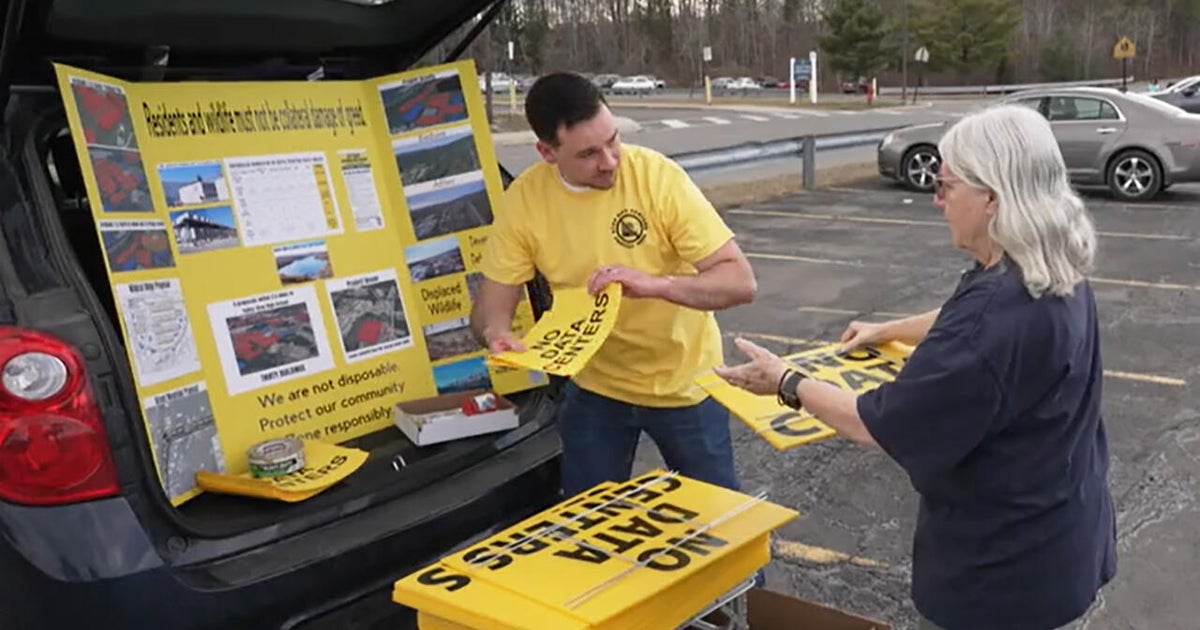
In the quiet borough of Archbald, Pennsylvania, a once-coal-dependent community of about 7,000 residents is facing a transformative wave of development that has residents up in arms. Half a dozen data centers, massive facilities designed to power the artificial intelligence revolution, have been proposed in this northeastern Pennsylvania town, sparking fierce local opposition over environmental impacts, rising energy costs, and the potential erosion of the area's small-town charm.
Kayleigh Cornell, a local teacher, and Sarah Gabriel, an ICU nurse, lead a neighborhood association fighting the influx. "It is a really nice small town," Gabriel said. "It feels like home." Cornell echoed the sentiment, adding, "I just really love it, and I can't imagine being anywhere else." But the pair, along with many neighbors, worry that the sprawling data centers could upend their way of life. Gabriel expressed alarm about the environmental toll: "It's gonna just completely change the landscape. Anywhere there's trees, there's probably not going to be any any longer."
The resistance has already influenced local politics. At a borough meeting on March 10, dozens of residents brandished signs reading "No data centers" and shouted down representatives from the proposed projects. "We made up our minds: go home!" one woman yelled, capturing the crowd's frustration. One particularly ambitious proposal—a campus of 18 data centers—has stalled amid the backlash, highlighting the challenges developers face in communities wary of rapid change.
Cornell and Gabriel insist they're not opposed to technological progress outright. "We're not against AI data centers," Gabriel clarified. "But because the industry is so new and unregulated, it is concerning that if we just keep moving forward, we're gonna get to, like, a point of no return." Their determination is unwavering: "We'll stop it if we could help it," Cornell said. Gabriel added, when asked about their chances, "Yeah, absolutely." For Cornell, the stakes are personal: "We have no other alternative. I mean, it's our home. We have to fight."
The pushback in Archbald is part of a nationwide surge in resistance to the data center boom. Tech giants, racing to meet the voracious computing demands of AI, are constructing these behemoths across the country. According to reports, more than 4,000 data centers are already operational in the United States, with thousands more under construction globally. These facilities, often anonymous and fortress-like, require vast amounts of land, water, and electricity, drawing them to areas like Archbald that offer abundant resources.
In Loudoun County, Virginia—dubbed "Data Center Alley"—the structures have become a fixture of the landscape. One facility there spans more than one million square feet, roughly the size needed to park two aircraft carriers side by side. The county's proliferation of these centers underscores the scale of the industry, which industry leaders say is worth hundreds of billions of dollars and drives innovations in fields like medicine.
Andy Power, president and CEO of Digital Realty, which operates hundreds of data centers worldwide, defends the sector's importance. "The data center sector... represents the breakthroughs that cure new diseases, that'll, say, essentially improve quality of life," he said. Addressing community concerns, Power acknowledged the unease: "I would say, 'I completely understand it. Let me tell you why this location makes the most sense for the data centers. And this infrastructure's gonna help change the world you're living in today and for years to come.'"
Yet critics argue that the benefits come at too high a cost, particularly to the environment and local utilities. In communities hosting data centers, electric bills have reportedly spiked due to the immense power demands—some facilities consume as much electricity as small cities. This has fueled calls for greater oversight, especially as AI's energy footprint grows unchecked.
The debate has reached the nation's capital, where lawmakers are divided. Last month, Vermont Independent Sen. Bernie Sanders and New York Democratic Rep. Alexandria Ocasio-Cortez introduced the Artificial Intelligence (AI) Data Center Moratorium Act, proposing a pause on new constructions until Congress enacts stricter AI regulations. "I fear that Congress is totally unprepared for the magnitude of the changes that are already taking place," Sanders said, warning of the unchecked expansion.
On the other side, President Trump and many Republicans view data centers as essential to America's economic future and global competitiveness, particularly against rivals like China. Pennsylvania Republican Sen. Dave McCormick, who has advocated for bringing data center investments to his state, called AI leadership "the most important question facing our country." He emphasized the potential upsides: "I think the net benefit for Pennsylvania is enormous."
McCormick stressed the need for collaboration between developers and communities. "There's got to be a covenant," he said. "There's got to be a promise that goes from the community to those that are developing in the community of what kind of job creation; how they're going to protect the environment; how they're going to protect water supply; how they're going to protect energy costs." He painted a picture of broader gains: "When a community looks at the totality of the jobs, the tax revenue, the new roads, the libraries, the schools, the opportunity of jobs for their kids, I think these are pretty compelling."
McCormick's perspective highlights a key tension: while proponents tout job creation and infrastructure improvements, opponents like those in Archbald fear the trade-offs. The senator also noted that data centers must "work with—not against—communities," a point that resonates amid reports of strained local resources in established data center hubs.
Across the country, the data center expansion is accelerating, with developers eyeing rural and suburban areas for their available power grids and lower land costs. In states like Virginia and Georgia, the facilities have boosted tax revenues but also prompted lawsuits over water usage and noise pollution. Environmental groups have raised alarms about the carbon emissions tied to the energy-intensive operations, especially as many centers rely on fossil fuels.
Back in Archbald, the fight continues as proposals inch forward despite the opposition. For residents like Cornell and Gabriel, the quality of life is non-negotiable. "People live here 'cause of the quality of life," Cornell said. "Yes, obviously you need jobs. But, again, this would be intrinsically changing the character of Archbald Borough."
As the AI boom propels the need for more computing power, the clash between innovation and preservation is likely to intensify. Lawmakers in Washington may soon face pressure to balance economic growth with regulatory safeguards, while communities like Archbald grapple with decisions that could redefine their futures. For now, the residents' resolve remains firm, a testament to the human stakes in the digital age.