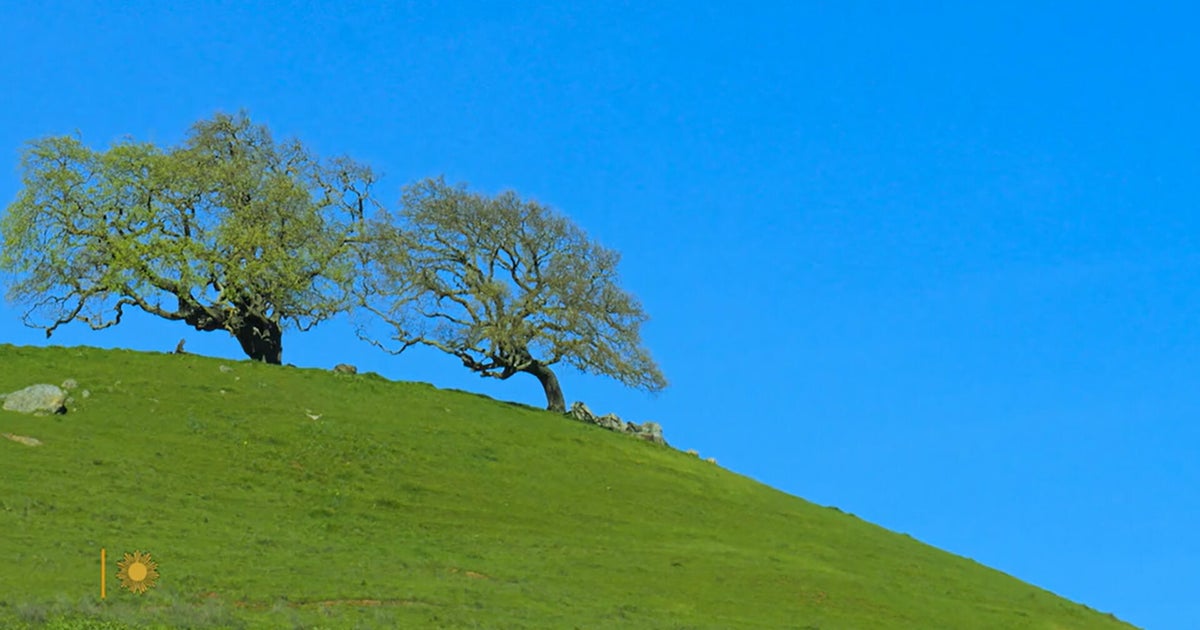
In the rolling woodlands near Petaluma, California, a vibrant sign of spring has emerged as new oak leaves begin to sprout, painting the landscape in fresh shades of green. This natural spectacle, captured in a recent video segment by CBS News, highlights the resilience of California's iconic oak trees amid ongoing environmental challenges. Videographer Lee McEachern documented the scene, showcasing the tender buds unfurling on branches that have endured years of drought and wildfire threats.
The footage, aired as a serene Sunday morning closer on CBS News, depicts the woodlands alive with the promise of renewal. "We leave you this Sunday morning seeing green – new oak leaves sprouting in the woodlands near Petaluma, California," the segment narrator stated, emphasizing the simple beauty of the moment. Petaluma, located in Sonoma County about 40 miles north of San Francisco, is part of a region renowned for its oak savannas, where these trees play a crucial role in the local ecosystem.
Oak trees, particularly species like the coast live oak and valley oak, are foundational to California's biodiversity. According to the California Native Plant Society, oaks support over 300 species of wildlife, from acorn-dependent squirrels to birds nesting in their canopies. The sprouting leaves observed near Petaluma signal the start of the growing season, typically beginning in late winter or early spring when rains return to the state.
This year's early greening comes after a winter of above-average rainfall in Northern California, which has helped alleviate some drought conditions that plagued the region for much of the past decade. The National Weather Service reported that Sonoma County received nearly 150% of its normal precipitation from October 2023 through March 2024, providing much-needed moisture for tree regeneration. Experts note that such wet winters can lead to robust leaf growth, though they also raise concerns about potential pest outbreaks.
Lee McEachern, the videographer behind the CBS News segment, has a background in capturing California's natural landscapes. Based in the Bay Area, McEachern has contributed to various media outlets, focusing on environmental stories that blend beauty with subtle warnings about climate impacts. In an interview with local outlet Sonoma Index-Tribune, McEachern described the Petaluma woodlands as "a quiet testament to nature's persistence," adding that the new leaves reminded him of the area's pre-drought vitality.
While the sprouting oaks offer a positive note, California's oak populations face significant pressures. The U.S. Forest Service estimates that sudden oak death, a fungal disease first identified in the 1990s, has killed millions of trees in coastal regions, including Sonoma County. According to a 2023 report from the University of California Cooperative Extension, the disease has spread to over 500,000 acres, with wet springs potentially accelerating its transmission through soil and water.
Local conservationists have mixed views on the current leaf growth. Dr. Emily Rodriguez, a botanist with the Sonoma County Agricultural Preservation and Open Space District, told The Appleton Times that the new sprouts are "encouraging, but we must remain vigilant." She explained that while rainfall has boosted growth, it could also foster conditions for pathogens. "Oaks are tough, but they're not invincible," Rodriguez said, pointing to the need for ongoing monitoring and habitat restoration efforts.
On the other hand, some residents and farmers in Petaluma see the greening as a boon for the local economy. The area's oak-dotted hillsides contribute to its appeal as a wine-growing region, with vineyards often intermingled among the trees. Petaluma Chamber of Commerce spokesperson Mark Thompson noted that the fresh foliage enhances tourism, drawing visitors for hikes and photography. "It's like the valley is waking up," Thompson remarked, referencing the annual influx of spring sightseers to nearby Jack London State Historic Park, where similar oak woodlands thrive.
Historically, oaks have been central to California's identity. Native American tribes, such as the Miwok people indigenous to the Petaluma area, relied on acorns as a staple food source for thousands of years, processing them into flour through leaching and grinding. Today, efforts to preserve oak habitats include programs like the California Oak Foundation's restoration initiatives, which have planted over 10,000 seedlings since 2010, according to foundation records.
The CBS News video arrives at a time when broader discussions about forest health are intensifying. In 2023, California experienced its most destructive wildfire season on record, with over 1.2 million acres burned, according to the California Department of Forestry and Fire Protection. Oaks, with their thick bark, often survive low-intensity fires, but repeated blazes can weaken them, leading to slower regeneration. The new leaves near Petaluma, therefore, represent not just seasonal change but a potential recovery marker post-fire.
Environmental groups are calling for expanded protections. The Sierra Club's California chapter advocated in a recent policy brief for increased funding for oak woodland management, citing the trees' role in carbon sequestration. Oaks can store up to 50 tons of carbon per acre over their lifetimes, per USDA data, making them vital in the fight against climate change. "These sprouting leaves are a reminder of what we're fighting for," said chapter director Rachel Kim, who emphasized community involvement in conservation.
Looking ahead, officials anticipate that the sprouting season could extend into summer if temperatures remain moderate. The National Oceanic and Atmospheric Administration forecasts a mild spring for Northern California, with average highs around 65 degrees Fahrenheit in Petaluma through May. However, climate scientists warn of increasing variability, with models from the Intergovernmental Panel on Climate Change projecting more extreme wet-dry cycles that could stress oak populations further.
Local initiatives are underway to support the trees. In Petaluma, the city's Tree Committee has planted 200 native oaks in public spaces over the last two years, funded by a $500,000 grant from the state. Committee chair Lisa Chen stated, "We're building resilience one tree at a time." These efforts align with statewide goals under Governor Gavin Newsom's 30x30 initiative, aiming to conserve 30% of California's lands and waters by 2030.
As the woodlands near Petaluma continue to green, the scene captured by McEachern serves as a microcosm of larger environmental narratives. For residents, it's a daily delight; for scientists, a data point in ongoing research; and for policymakers, a call to action. The sprouting oaks underscore the delicate balance of nature in a changing world, offering hope amid uncertainty.
In the end, this simple story of leaves emerging from buds reminds us of the enduring cycles that define California's landscapes. As spring progresses, eyes will be on whether these oaks can thrive through the seasons ahead, supported by both nature's rhythms and human stewardship.