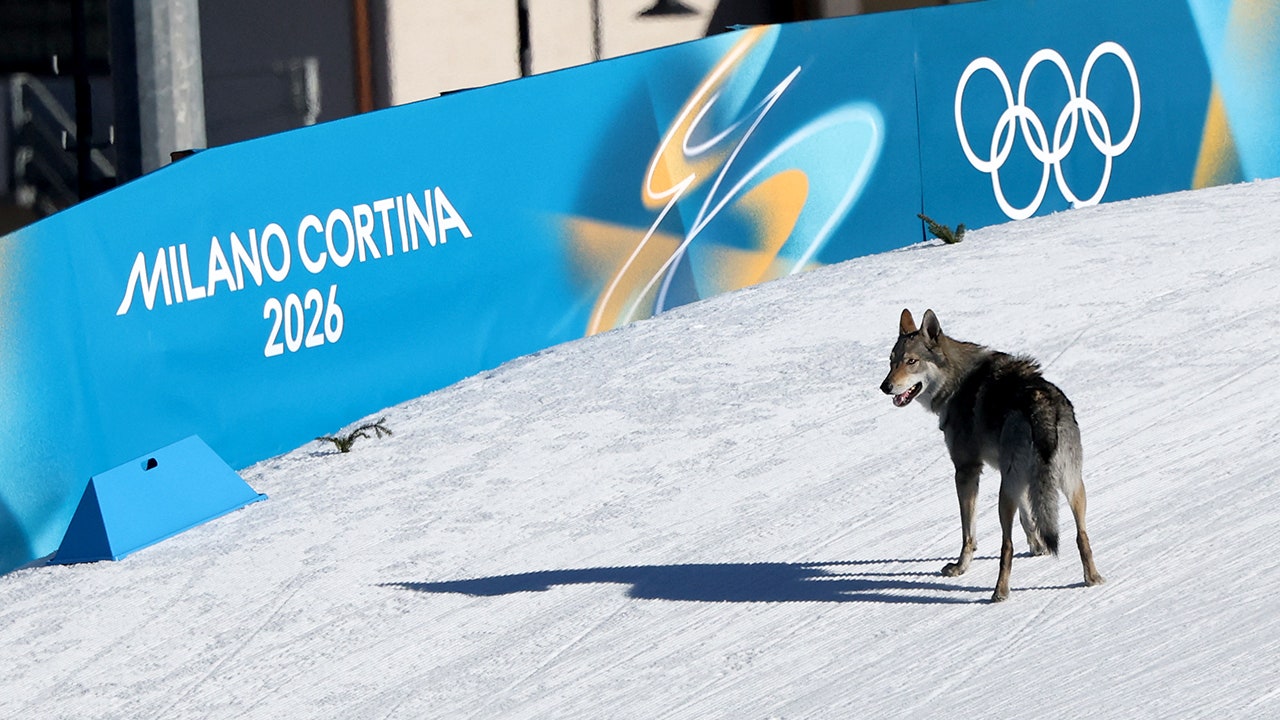
In a surprising twist at the 2026 Milan Cortina Winter Olympics, a Czechoslovakian wolfdog named Nazgul stole the spotlight during the women's team sprint cross-country race on February 18, 2026, at the Tesero Cross-Country Skiing Stadium in Lago di Tesero, Val di Fiemme, Italy. As the final racers approached the finish line, the silver-gray dog darted onto the course, crossing it alongside the athletes and delighting the crowd with its unexpected cameo. The incident, which quickly went viral, turned a routine Olympic event into a heartwarming, if chaotic, moment that highlighted the unpredictable charm of the games.
Nazgul's owners, Alice and Ernesto Varesco from nearby Tesero, Italy, were three hours away by train, en route to Anterselva to watch the biathlon, when they first learned of their pet's adventure. Friends began sending them videos of the dog on the track, sparking immediate panic. "We were on the train to Anterselva to watch the biathlon," Alice Varesco told Reuters. "We were three hours from home when friends started sending us videos. That was the panic moment. We realized we could not do anything."
The Varesco family, who are related to an event official according to NPR, described Nazgul's escape as a first in his young life. The dog, known for his loyalty and affinity for people, reportedly grew unusually distressed that morning as the family prepared to leave. "He was crying this morning more than normal because he was seeing us leaving — and I think he just wanted to follow us," one of the owners told NPR earlier this week. "He always looks for people."
According to the Varescos, Nazgul likely activated the front door's lever mechanism himself in an attempt to trail after them, a path he often takes during family walks. "He wanted to look for us I think because he's used ... to going in that direction with us when we go for a walk," Alice Varesco said. "He likes to stay with his crew." The dog's journey led him straight to the Olympic venue, where he lingered near the track before noticing the approaching skiers and joining them at the finish.
Spectators initially mistook Nazgul for a wolf due to his striking appearance, adding a touch of wild intrigue to the scene. An official photo finish later confirmed his identity to the Varescos, easing some of their worries but not all. "Concern, for sure," Alice Varesco said of her initial reaction. "It was with us the whole day actually. Even after they told us he was safe, we kept thinking about what could have gone wrong."
The intrusion had no significant impact on the race outcomes, as the top medal contenders had already crossed the finish line before Nazgul's arrival. Officials quickly secured the dog inside the venue, and he was returned home within half an hour, according to reports from the event. The Milan Cortina Olympics, marking Italy's third time hosting the Winter Games after Cortina d'Ampezzo in 1956 and Turin in 2006, have featured a mix of high-stakes competition and lighter moments, with Nazgul's dash fitting into the latter category.
For at least one competitor, the dog's presence added an element of uncertainty. Croatian skier Tena Hadzic, who was navigating the final heats, later shared her startled reaction. "I was like, 'Am I hallucinating?'" Hadzic said, according to NPR. "I don't know what I should do, because maybe he could attack me, bite me." Her comments underscored the brief tension amid the otherwise joyful crowd response, where cheers erupted as Nazgul bounded across the line.
The viral videos of the event spread rapidly across social media, amassing millions of views and turning Nazgul into an overnight sensation. Images from Reuters and the Olympic Broadcasting Services captured the dog mid-stride on the snow-covered track, his ears perked and tail wagging, juxtaposed against the determined faces of the elite athletes. One photo, taken by Kai Pfaffenbach for Reuters on February 20, 2026, shows Nazgul relaxed at home in Tesero, a stark contrast to his Olympic escapade just days earlier.
Background on the women's team sprint cross-country event provides context for Nazgul's untimely entrance. Held as part of the Nordic combined disciplines, the race featured teams of two women completing multiple 1.2-kilometer laps in a free technique format, with qualifying heats leading to the finals. The competition at Tesero, a historic venue in the Val di Fiemme region known for its challenging terrain, drew international attention, but Nazgul's appearance overshadowed the results for many viewers online.
The Varescos emphasized that Nazgul, despite his wolfdog heritage, is a gentle companion not prone to aggression. Breed experts note that Czechoslovakian wolfdogs, a cross between German Shepherds and Carpathian wolves developed in the 1950s for border patrol, are intelligent and energetic but require secure enclosures due to their exploratory nature. In this case, the family's lever door—a convenience for daily use—proved to be the unwitting culprit in the escape.
Event organizers at the Milan Cortina Olympics have not issued formal statements on the incident beyond confirming Nazgul's safe removal, but sources close to the venue described heightened security measures around animal control for future races. The games, running from February 6 to 22, 2026, across multiple Italian sites including Milan and Cortina d'Ampezzo, continue to blend athletic excellence with the occasional surprise, much like past Olympics where wildlife interruptions—from pigeons in Barcelona 1992 to a cat in Sochi 2014—have become folklore.
Looking ahead, the Varescos plan to reinforce their home's security to prevent future escapades, while Nazgul's fame has sparked interest from local media and even Olympic merchandise ideas. Alice Varesco reflected on the ordeal with a mix of relief and amusement, noting how the dog's loyalty nearly turned a family outing into an international headline. As the Olympics progress, with events like Mikaela Shiffrin's gold-medal slalom performance drawing parallel acclaim, Nazgul's story serves as a reminder of the human—and canine—elements that make the games memorable.
The incident also highlights broader discussions on pet safety during large-scale events in rural Olympic host areas like Val di Fiemme, where local wildlife and domestic animals occasionally intersect with venues. Officials have reportedly reviewed perimeter fencing at Tesero following the event, though no disruptions to the overall schedule occurred. For the Varesco family, the experience reinforced their bond with Nazgul, who, according to Alice, has been extra clingy since his return.
In the end, Nazgul's Olympic cameo, while startling, ended without harm and added a wholesome footnote to the 2026 games. As videos continue to circulate, the wolfdog's tale underscores the unpredictable joy that can accompany even the most structured spectacles, leaving athletes, officials, and fans alike with a story they'll recount for years.