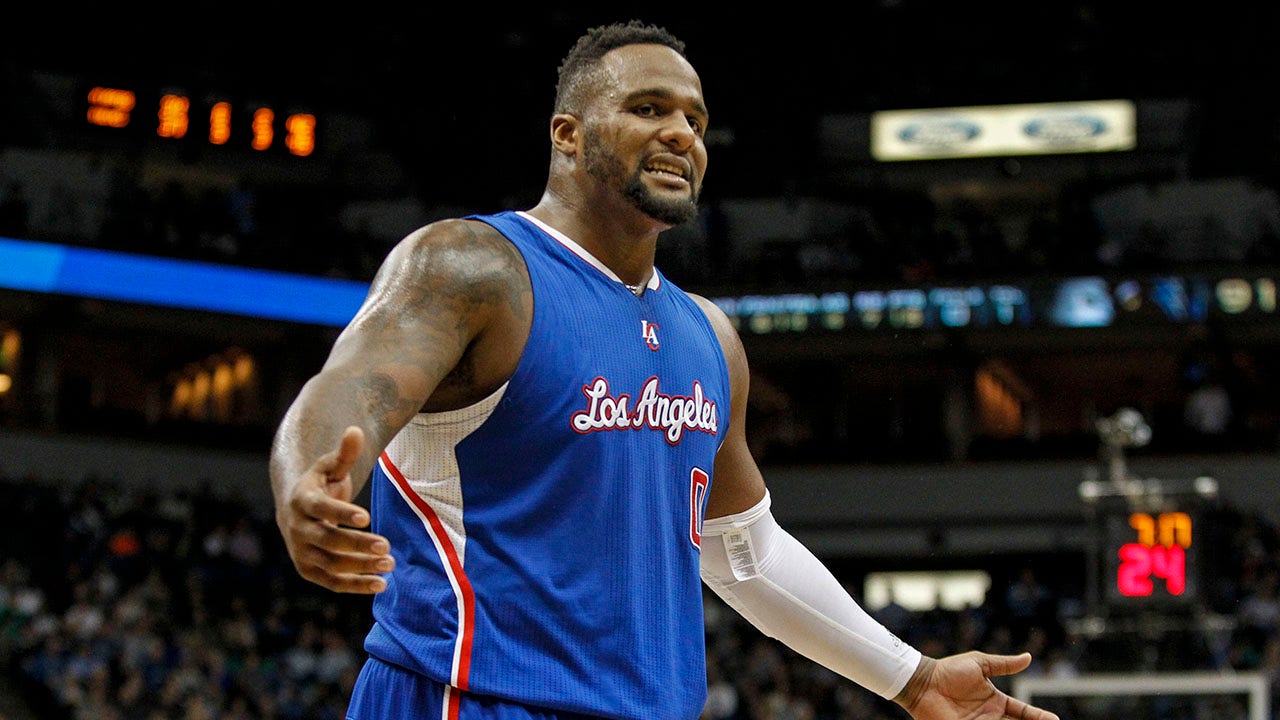
APPLETON, Wis. — Former NBA champion Glen 'Big Baby' Davis walked free from federal prison on Thursday, more than a year ahead of his original release date, following a conviction for his role in a multimillion-dollar fraud scheme targeting the league's health benefits plan.
Davis, a key contributor to the Boston Celtics' 2008 NBA championship team, had been sentenced to 40 months in prison in November 2023 after being found guilty of conspiracy to commit health care fraud. He served just 17 months of that term before his early release, according to his attorney, Brendan White. The former forward, who also played for the Orlando Magic and Los Angeles Clippers during a nine-year career, weighed an average of 290 pounds in his playing days, per NBA records.
The release marks a significant turn for Davis, who was one of 20 individuals charged in a sprawling conspiracy that involved submitting false dental and medical claims to the NBA Players’ Association Health and Welfare Benefit Plan. Prosecutors alleged the scheme bilked the plan out of millions, with participants fabricating treatments and procedures that never occurred. Davis was accused of filing a fraudulent claim for $25,000 related to dental work that investigators said was nonexistent.
White, speaking to The Athletic, praised his client's efforts during incarceration.
"He used his time productively while serving his sentence and took many programs during that time," White said. "He’s ready to become a productive member of society again."Davis himself confirmed the news in a video posted to X, the social media platform formerly known as Twitter.
"They tried to hold me down. You know what I’m saying? But I’m back, man. I’m back, baby,"he declared, flashing a broad smile to the camera.
Davis's path to prison was not straightforward. Although convicted in November 2023, he was originally scheduled to surrender in September 2024. A federal judge in New York granted him a nearly two-month delay—specifically seven weeks—to complete work on a documentary film about his life and career. He ultimately reported to the Federal Correctional Institution in Otisville, New York, in late October 2023, according to court records and reports from The Athletic.
Upon his release from prison, Davis was transferred to a halfway house, from which he is expected to be fully discharged in early July. As conditions of his freedom, he faces three years of supervised release, during which he must complete a financial management class and participate in mandatory drug treatment programs. Additionally, Davis has been ordered to pay $80,000 in restitution to the victims of the fraud scheme.
The case against Davis and his co-defendants unfolded over several years, with federal authorities in New York launching an investigation into suspicious claims submitted to the NBA's benefit plan as far back as 2019. The indictment, unsealed in 2021, detailed how players, trainers, and others exploited the system by claiming reimbursements for services that were either exaggerated or entirely fictitious. Among the co-conspirators were former players like Terrence Williams, who received a 10-year sentence, and others who got prison terms ranging from one to over eight years.
Davis, then 43, was arrested in Florida in 2021 while dining at a restaurant in Boca Raton. He pleaded not guilty at the time but was convicted after a bench trial in federal court. U.S. District Judge Nicholas G. Garaufis, who presided over the case, emphasized the betrayal of trust in the NBA community when handing down the sentence. "This was a serious crime that undermined the integrity of the benefits plan meant to support players' health," Garaufis said during the November 2023 hearing, according to court transcripts.
Supporters of Davis have highlighted his personal struggles post-retirement, including battles with addiction and financial mismanagement, as contributing factors to his involvement. In the documentary he was finishing at the time of his surrender, Davis reportedly delves into these issues, offering a candid look at life after the spotlight of professional basketball. The film, tentatively titled something along the lines of his comeback story, aims to inspire others facing similar challenges, per statements from his legal team.
During his time in prison, Davis participated in various rehabilitative programs, including educational courses and vocational training, which his attorney credited for the early release recommendation from the Bureau of Prisons. Federal guidelines allow for sentence reductions for good behavior and program completion, and Davis qualified under those provisions after serving about 85% of his term—a common outcome for non-violent offenders.
The NBA, through a spokesperson, declined to comment on Davis's release but reiterated its commitment to protecting the integrity of its benefits programs. The league has since implemented stricter oversight measures for claims, including enhanced verification processes, in response to the scandal. "The health and welfare plan is a vital resource for our players, past and present, and we take any abuse very seriously," the statement read.
Davis's NBA career was marked by highs and physicality. Drafted 13th overall by the Celtics in 2007 out of Providence College, he quickly earned the nickname 'Big Baby' for his baby-faced appearance and robust build. He averaged 8.4 points and 4.3 rebounds over 324 games, contributing significantly off the bench during Boston's 2008 title run alongside stars like Kevin Garnett and Paul Pierce. Later stints with the Magic (2010-2012) and Clippers (2014-2015) saw him as a role player, but injuries and weight issues curtailed his prime.
Post-retirement, Davis ventured into acting, appearing in films like "The Inside Story" and reality TV, while also playing in leagues like the BIG3. A 2019 photo from a BIG3 playoff game in New Orleans shows him shooting free throws for the Power team, a far cry from the federal courtroom where his fortunes reversed. His fraud involvement came to light amid these endeavors, painting a picture of a man navigating fame's aftermath.
Looking ahead, Davis plans to focus on family and philanthropy, according to White. The attorney mentioned potential speaking engagements where Davis could share his story of redemption. "He's got a lot to give back," White added, emphasizing the former player's resilience.
The early release has sparked mixed reactions online, with some fans celebrating his return and others questioning the leniency. On X, posts ranged from supportive messages like "Welcome home, Big Baby—keep grinding" to skeptical comments about the fraud's impact on fellow players. No official response from the Celtics organization was immediately available, though the team has a history of standing by its alumni through tough times.
As Davis transitions back to civilian life, his case serves as a reminder of the pitfalls awaiting retired athletes in managing post-career finances. With supervised release stretching into 2027, he will need to adhere strictly to conditions to avoid further legal troubles. For now, the man who once rebounded against the New York Knicks in the 2011 playoffs at Madison Square Garden is rebounding in a different arena—one of second chances and societal reintegration.