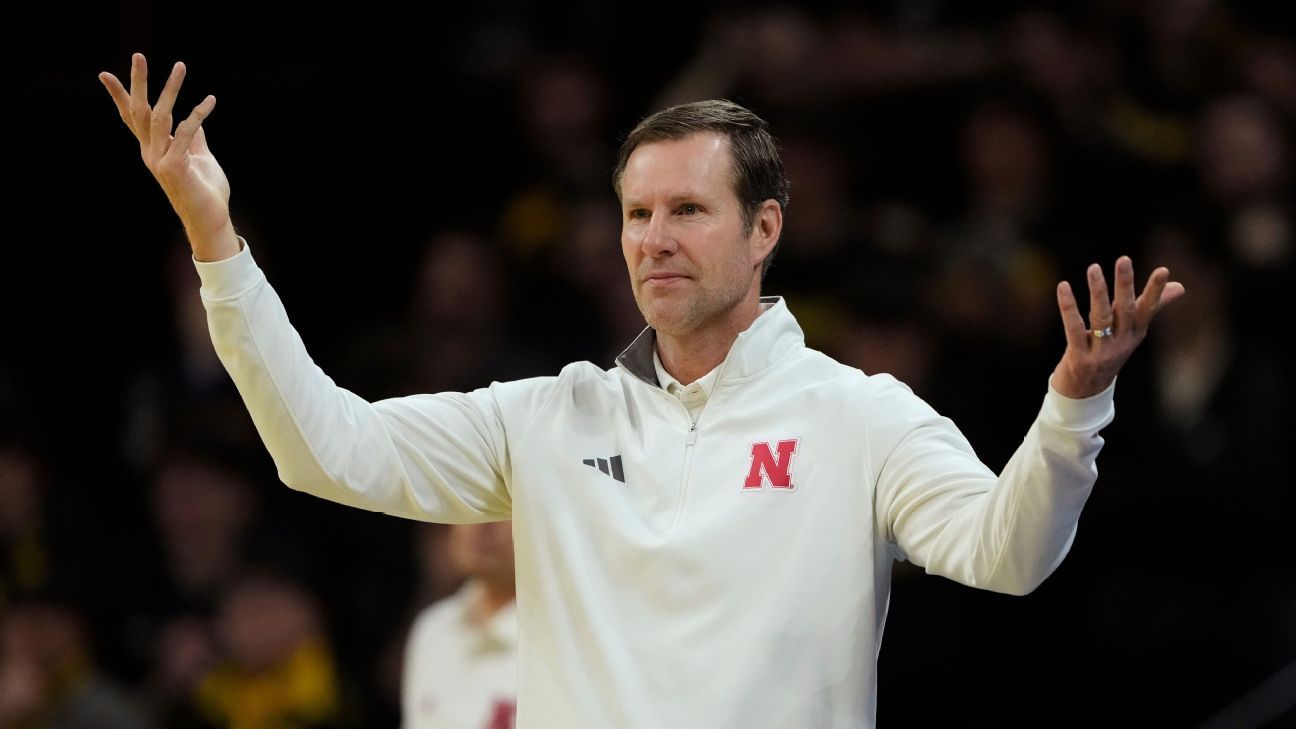
Lincoln, Neb. — In the aftermath of a tense Big Ten basketball rivalry game, Nebraska Cornhuskers head coach Fred Hoiberg found himself at the center of a viral controversy after videos surfaced showing him swiping at a fan's cellphone during postgame handshakes. The incident occurred on Wednesday night following Nebraska's narrow 57-52 loss to the ninth-ranked Iowa Hawkeyes at Carver-Hawkeye Arena in Iowa City. Hoiberg, a seventh-year coach for the Cornhuskers, explained Friday that his reaction was not one of anger but a instinctive response tied to his reliance on a pacemaker, which he fears could be disrupted by close proximity to electronic devices.
The altercation unfolded amid the chaos of a court-storming celebration by Iowa fans after their hard-fought victory. As Hoiberg moved through the traditional handshake line to congratulate the opposing coaches, a young Iowa fan rushed toward him, pointing a cellphone camera directly at the coach's chest. Social media clips captured Hoiberg extending his arm in a swiping motion to ward off the device, inadvertently striking a member of the Iowa staff in the process. The moment quickly spread online, drawing scrutiny and speculation about Hoiberg's behavior in the heated postgame environment.
Speaking to reporters in Lincoln on Friday, Hoiberg provided context that he said was missing from the brief video snippets. "I am 100% reliant on a pacemaker," Hoiberg said, emphasizing the gravity of his medical condition. He recounted a pivotal conversation with his doctor that has shaped his vigilance around cellphones. "I'll never forget a conversation with my doctor. A cellphone can put it off. If anything ever happens, I'm done. I will not survive if something ever happens to a pacemaker. I'm very cognizant of that, so when somebody rushes up on me with a cellphone, of course I'm going to react."
Hoiberg's health history adds significant weight to his explanation. The 51-year-old coach underwent open-heart surgery in 2015 while serving as head coach of the Chicago Bulls in the NBA, during which doctors discovered and addressed a rare heart block. Though he noted the odds of such a complication were slim—much like the low probability of pacemaker interference from a cellphone—he remains acutely aware of the risks. "The probability of anything happening was unlikely, but the chance of me developing heart block in my first open heart surgery was also slim," Hoiberg said.
The coach was quick to express regret over striking the Iowa staff member, describing the individual as understanding and forgiving. Hoiberg said he apologized immediately on the court and followed up in the days after the game. "The staff member was understanding and said he would've done the same," Hoiberg recounted. He stressed that his intent was solely to protect himself from potential device interference, not to engage in any aggressive confrontation with fans.
Hoiberg also addressed the broader issue of court-storming in college basketball, a tradition that has grown increasingly common and controversial in recent years. While he stated he has no inherent objection to fans celebrating victories by rushing the floor, he drew a firm line at scenarios that endanger players and coaches. "I don't have a problem with court storms, but I'm against putting players and coaches in danger," he said. The incident at Iowa highlighted ongoing concerns about security protocols during such exuberant fan interactions, especially in high-stakes rivalry games like this one between the neighboring states' teams.
Iowa's athletic department responded swiftly to the controversy, issuing a statement on Thursday that acknowledged shortcomings in their crowd control measures. "We apologize for this incident and will conduct a review of our procedures and security measures to determine what adjustments may be needed to further strengthen our protocols and help prevent similar incidents in the future," the statement read. Hoiberg praised the response, calling it a positive step toward improving safety across the sport. "I appreciated Iowa's statement, and it's a learning opportunity," he said.
The game itself was a defensive battle emblematic of the intense Iowa-Nebraska rivalry, which dates back decades in the Big Ten Conference. The Hawkeyes, ranked ninth nationally at the time, held off a late Cornhuskers rally to secure the five-point win, improving their record to 15-4 overall and 6-2 in conference play. Nebraska, sitting at 13-6 and 3-5 in the Big Ten, showed resilience but couldn't overcome Iowa's stout defense, which limited them to just 52 points—their lowest output of the season.
Hoiberg, who returned to college basketball in 2019 after stints in the NBA as both a player and coach, has been instrumental in rebuilding Nebraska's program. His tenure has brought the Cornhuskers to national relevance, including a current ninth-place ranking and a berth in the top 25 for much of the season. However, moments like Wednesday's loss underscore the pressures of coaching in a competitive conference, where every game carries emotional weight, particularly against in-state rivals like Iowa.
Reactions from the college basketball community have been mixed, with some analysts viewing Hoiberg's swipe as an overreaction in the heat of the moment, while others sympathize with his health concerns. "It was a heated moment," Hoiberg reflected. "I was going through the handshake line congratulating Iowa coaches on a hard-fought win, and all of a sudden, out of nowhere, this kid rushes up on me, and I reacted to it. I think anybody in my position, after a game like that, would've reacted in a similar way." No formal complaints or disciplinary actions have been reported against Hoiberg or the fan involved.
This incident is part of a larger conversation in college sports about fan behavior and venue safety. Court-storming celebrations have led to injuries in the past, including twisted ankles for players navigating the crowds and even more serious altercations. The Big Ten, like other conferences, has discussed potential rule changes, such as delaying storms until teams clear the floor or imposing fines on schools that fail to control crowds. Iowa's commitment to reviewing its procedures aligns with these broader efforts to balance tradition with participant protection.
Hoiberg's candor about his pacemaker has also shed light on the personal challenges faced by coaches in high-pressure environments. As someone who transitioned from professional basketball to college ranks, he has often spoken about managing his health while leading young athletes. His explanation has garnered support from peers and fans who understand the invisible risks of medical devices in everyday situations, let alone chaotic postgame scenes.
Looking ahead, Nebraska aims to rebound quickly from the loss. The Cornhuskers are set to host Penn State on Saturday at Pinnacle Bank Arena in Lincoln, a matchup that could help them regain momentum in conference standings. With Hoiberg at the helm, the team continues to focus on development amid the distractions of recent events. Iowa, meanwhile, prepares for its next challenge, buoyed by the win but mindful of the security lessons learned.
The episode serves as a reminder of the fine line between passion and peril in college athletics. As Hoiberg and his counterparts navigate these dynamics, incidents like this one underscore the need for enhanced protocols to ensure that the thrill of victory doesn't come at the expense of safety for all involved. For now, both programs move forward, with apologies exchanged and reflections shared, hoping to prevent future misunderstandings on the court—or just off it.