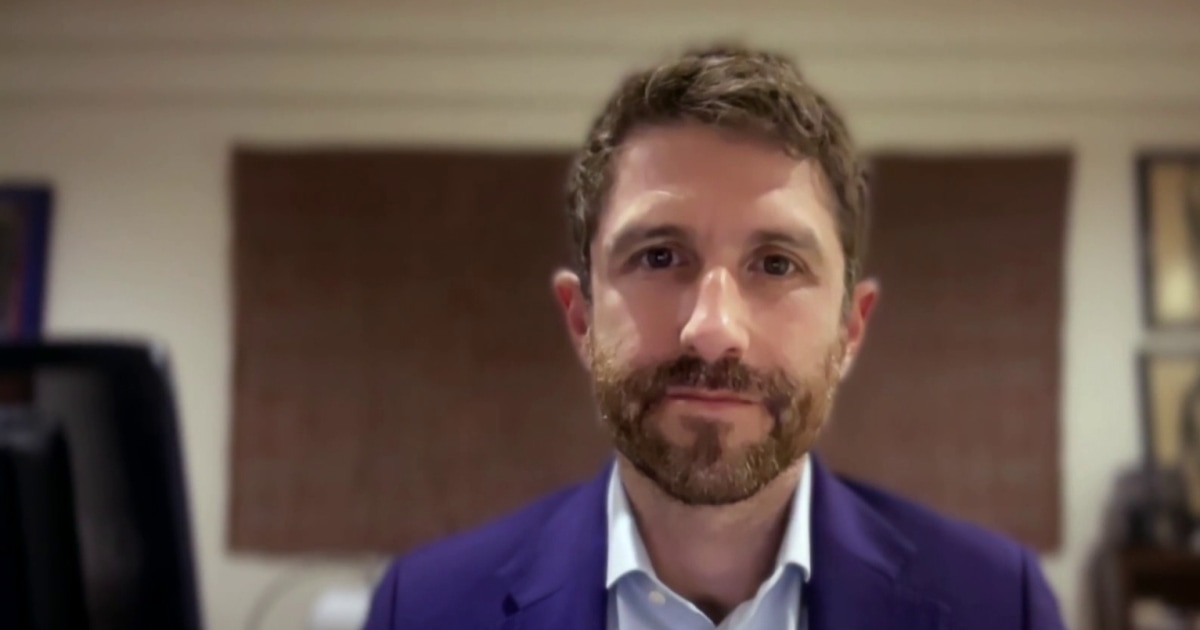
In a timely exploration of one of the most pressing technological frontiers, a new documentary titled "The AI Doc: Or How I Became an Apocaloptimist" delves into the potential futures shaped by artificial intelligence and its profound effects on human society. Premiering amid growing debates over AI's role in daily life, the film promises to blend optimism with cautionary tales, as highlighted in a recent segment on NBC News. Directed by an independent filmmaker whose identity remains under wraps in initial announcements, the documentary aims to unpack whether humanity is on the brink of an AI-driven utopia or dystopia.
According to NBC News, the film features interviews with leading AI researchers, ethicists, and policymakers who grapple with the technology's double-edged sword. "The AI Doc" reportedly traces the evolution of artificial intelligence from its conceptual roots in the mid-20th century to today's generative models like ChatGPT, which have captivated public imagination since their launch in November 2022 by OpenAI. The documentary's subtitle, "Or How I Became an Apocaloptimist," suggests a personal journey for the director, evolving from apocalyptic fears to a balanced hopefulness about AI's trajectory.
NBC News correspondent Gadi Schwartz, who covered the film's announcement, described it as a "thought-provoking examination" in a video segment aired last week. Schwartz noted that the documentary includes footage from Silicon Valley hubs like Palo Alto, California, where tech giants such as Google and Meta are pushing boundaries in machine learning. "It's not just about the doom and gloom; it's about finding a path forward," Schwartz said, quoting the director anonymously during the preview.
The film's release comes at a pivotal moment for AI regulation. Just last month, on October 30, 2023, President Joe Biden signed an executive order aimed at managing AI risks, directing federal agencies to develop standards for safety and equity in AI systems. This backdrop provides crucial context for "The AI Doc," which reportedly critiques the rapid commercialization of AI without sufficient oversight. Experts featured in the film, according to NBC's summary, warn of job displacements—projecting that up to 800 million global jobs could be automated by 2030, per a 2017 McKinsey Global Institute report cited in related discussions.
One viewpoint presented in the documentary, as relayed by NBC News, comes from AI pioneer Yoshua Bengio, a Turing Award winner from the University of Montreal. Bengio, who co-signed an open letter in March 2023 calling for a pause on advanced AI experiments, reportedly tells the filmmakers, "We are creating systems more powerful than ourselves without fully understanding the consequences." This perspective underscores the film's exploration of existential risks, including scenarios where superintelligent AI could outpace human control, a concern echoed in works like Nick Bostrom's 2014 book "Superintelligence."
Contrasting this caution is the optimistic stance from industry leaders. Sam Altman, CEO of OpenAI, who testified before Congress in May 2023, is said to appear in the film advocating for proactive governance rather than outright fear. "AI can solve climate change, cure diseases, and unlock human potential," Altman stated in his congressional remarks, a sentiment the documentary amplifies through clips of innovative applications, such as AI-assisted drug discovery that accelerated COVID-19 vaccine development in 2020.
The production of "The AI Doc" began in early 2023, amid a surge in AI-related media following the viral success of tools like Midjourney for image generation and DALL-E for art creation. Filming locations spanned from the Massachusetts Institute of Technology (MIT) in Cambridge, where early neural network research took place in the 1980s, to international conferences like the NeurIPS gathering in New Orleans in December 2022. These settings allow the film to contextualize AI's global reach, including its adoption in China, where companies like Baidu have integrated AI into everything from search engines to autonomous vehicles.
Critics of the documentary's approach, though not yet reviewed, may question its balance, given the polarized nature of AI discourse. On one side, advocacy groups like the Center for Humane Technology, founded by ex-Facebook executive Tristan Harris, push for AI aligned with human values, citing risks to mental health from algorithmic feeds. Harris, in a 2022 TED Talk, warned, "We're programming reality itself," a theme likely woven into the film's narrative. On the other, free-market proponents argue that overregulation could stifle innovation, pointing to the U.S. tech sector's $1.8 trillion valuation in AI stocks as of September 2023.
According to NBC News, the documentary also addresses ethical dilemmas, such as bias in AI systems. A notable example is the 2018 revelation that Amazon's recruiting tool discriminated against women due to skewed training data, leading to its scrapping. The film reportedly includes testimony from affected individuals, like a software engineer from Seattle who said, "AI promised fairness but delivered exclusion," highlighting disparities in hiring algorithms that favor certain demographics.
Beyond individual stories, "The AI Doc" examines broader societal shifts. It covers the rise of AI in education, where tools like Khan Academy's AI tutor have reached millions since 2022, potentially democratizing learning but raising concerns over cheating and diminished critical thinking. In healthcare, the documentary spotlights successes like IBM Watson's oncology applications, which analyzed patient data to suggest treatments, though a 2018 STAT News investigation reported inaccuracies in its recommendations.
The film's title reflects a neologism blending "apocalypse" and "optimist," capturing the director's reported transformation after months of research. Initial screenings are slated for film festivals in early 2024, with a wider release targeted for spring via platforms like Netflix or HBO, though distribution details remain unconfirmed. NBC News indicated that the project involved collaboration with the AI Now Institute at New York University, which has published reports on AI's labor impacts since 2017.
As AI integrates deeper into economies— with global spending projected to hit $110 billion in 2024 by Gartner analysts— the documentary arrives as a public service primer. It reportedly features a timeline of key milestones: Alan Turing's 1950 paper on machine intelligence, the 1997 Deep Blue chess victory over Garry Kasparov, and the 2016 AlphaGo triumph, each marking leaps in AI capability.
Viewpoints diverge on AI's net impact. While some experts, like MIT's Max Tegmark in his 2017 book "Life 3.0," foresee transformative benefits alongside perils, others, including Elon Musk, have called AI "the biggest existential threat" in a 2023 tweet. Musk's xAI venture, launched in July 2023, aims to counterbalance perceived biases in existing models, a tension the film explores through archival footage of his warnings.
Looking ahead, "The AI Doc" could influence ongoing policy debates, such as the European Union's AI Act, finalized in March 2024, which classifies AI by risk levels from minimal to unacceptable. U.S. lawmakers, inspired by similar frameworks, are considering bills like the 2023 NO FAKES Act to protect against AI-generated deepfakes. The documentary's release may amplify calls for international cooperation, echoing the 2023 Bletchley Park AI Safety Summit in the UK, attended by over 25 countries.
In closing, as artificial intelligence reshapes industries from finance—where algorithmic trading handles 80% of U.S. stock transactions—to entertainment, with AI scripts aiding Hollywood writers' strikes in 2023, "The AI Doc: Or How I Became an Apocaloptimist" offers a lens on navigating this new era. Whether it sways public opinion toward guarded enthusiasm remains to be seen, but its timely probe into AI's promise and pitfalls underscores the urgency of informed discourse.