In a promising sign for law enforcement safety, deaths among on-duty officers in the United States fell by nearly 25% in 2025 compared to the previous year, according to the latest annual report from the National Law Enforcement Officers Memorial Fund. The report, shared with The Associated Press ahead of its official release on Tuesday, documented a total of 111 fatalities last year, down from 148 in 2024. This decline spanned all major categories of officer deaths, offering a glimmer of progress amid ongoing challenges in the profession.
The Fund's data highlights a particularly notable reduction in firearm-related fatalities, which dropped to 44 in 2025—a 15% decrease from 52 the year before and the lowest figure in at least a decade, based on the organization's historical records. "I always like to see that firearms deaths are down. They are the tip of the spear for egregious acts," said Bill Alexander, the chief executive officer of the Washington, D.C.-based nonprofit, which focuses on honoring fallen officers, raising public awareness about policing, and enhancing officer safety measures.
Traffic-related incidents, which include fatal crashes and officers struck by vehicles—often during traffic stops—also saw a substantial decrease of nearly 23% between 2024 and 2025. Alexander attributed this improvement in part to heightened national discussions on roadway safety for police. "Even one officer fatality is too many, and our ultimate goal is to have none. But we’re heartened by any decrease in those numbers," he added.
Efforts to protect officers on the roads have gained traction in recent years, with more states enacting "move-over" laws. These require drivers to shift out of the lane nearest to emergency vehicles or accident scenes when passing. Additionally, Alexander pointed to training initiatives encouraging officers to approach vehicles from the passenger side during stops, keeping them out of active traffic lanes. Such changes, he said, are likely contributing to the lower numbers.
Pinpointing the reasons for the drop in firearm deaths proves more elusive. Alexander noted that while many police departments have ramped up safety training and equipped officers with advanced tools for treating gunshot wounds, other factors like proximity to medical facilities or sheer chance may also be at play. "Some of it could come down to an officer being shot close to a hospital or maybe the officers had a tactical emergency kit or better blood stopping equipment," he explained.
Importantly, the reduction in fatalities does not necessarily reflect fewer assaults on officers. The National Fraternal Order of Police, in its separate 2025 report released this week, tracked a slight uptick in officers shot while on duty—from 342 in 2024 to 347 last year. That tally covers only instances where officers were hit by gunfire, excluding cases where shots were fired at them but missed.
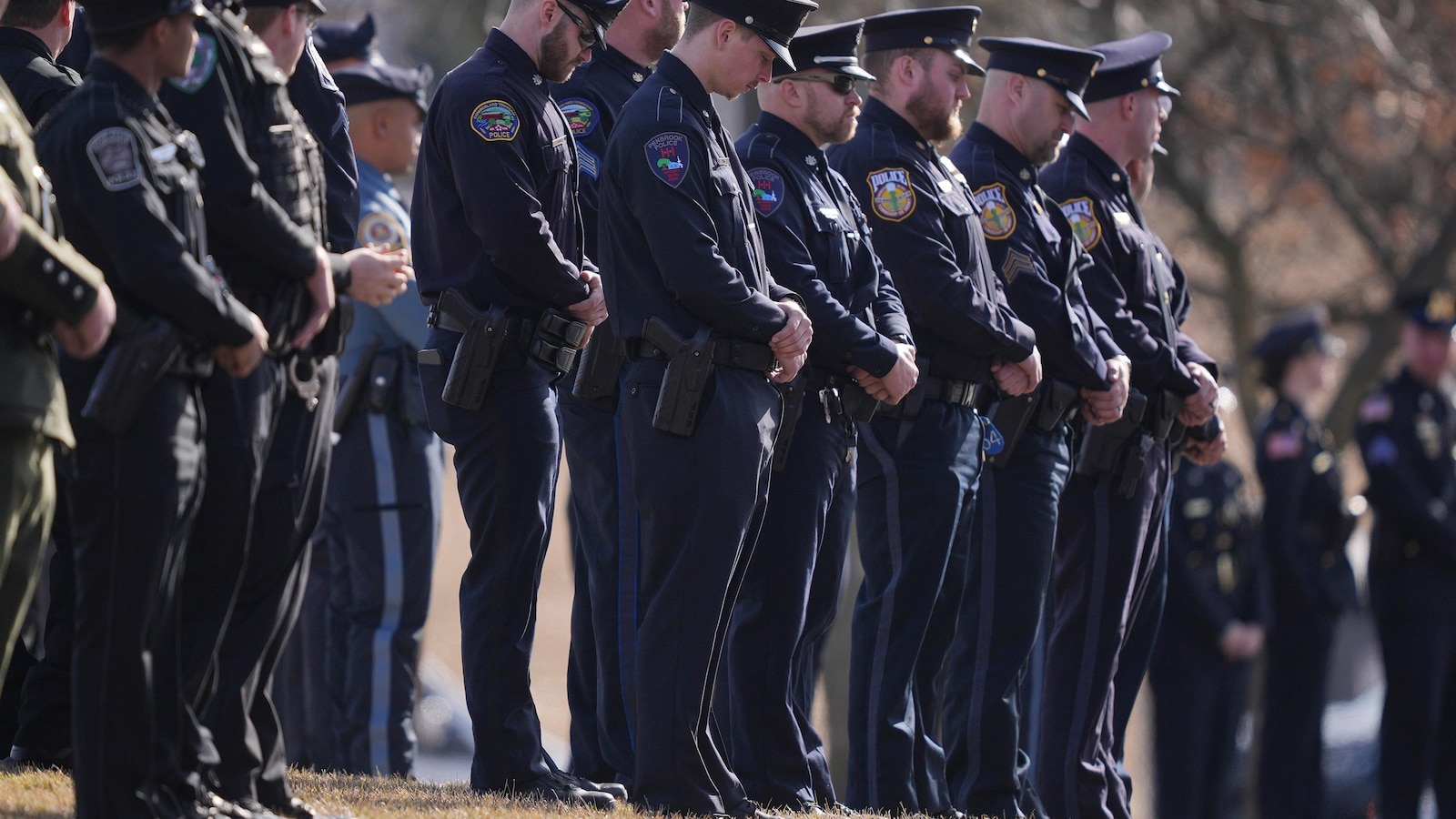
Among the tragic highlights of 2025 were the deaths of two officers in high-profile incidents. In February, West York Borough Police Department Officer Andrew Duarte was shot and killed while responding to a hostage situation at a hospital in York, Pennsylvania, where a man had taken several people captive. More recently, law enforcement personnel from across the country gathered for funeral services on Monday for Delaware State Trooper Matthew “Ty” Snook. Snook, 31, was fatally shot on December 23 while working an overtime shift at a Department of Motor Vehicles office; he had heroically pushed a DMV employee out of the gunman's path moments before.
The Memorial Fund's report also revealed stark regional variations, with no on-duty officer fatalities recorded in 17 states and the District of Columbia last year. Similarly, there were zero deaths among federal and tribal law enforcement agencies nationwide. These figures underscore the uneven distribution of risks faced by officers, influenced by local crime rates, departmental resources, and community dynamics.
Another category showing improvement was "other" fatalities, which encompass a range of causes like physical injuries from on-duty events, stabbings, drownings, or even plane crashes. This group fell by 37%, from 52 deaths in 2024 to 33 in 2025. Included in that total were 14 officers who succumbed to illnesses linked to their responses to the September 11, 2001, terrorist attacks, a somber reminder of long-term health impacts from major incidents.
Notably absent from recent reports are deaths due to COVID-19, which had dramatically inflated fatality counts in 2020 and 2021. Alexander confirmed that the Fund has excluded such cases from on-duty classifications over the past two years, aligning with evolving understandings of occupational hazards in policing. The organization is also grappling with how to address officer suicides, which are not currently included but are under discussion for potential future recognition and support initiatives.
This year's report comes at a time when law enforcement faces scrutiny over training, use of force, and community relations, yet the data suggests that targeted safety interventions are yielding results. The Memorial Fund's work, including its annual tallies, provides a critical benchmark for assessing progress. As Alexander emphasized, the goal remains zero fatalities—a challenging but vital aspiration.
Looking ahead, the Fund and groups like the Fraternal Order of Police plan to continue advocating for legislative and procedural changes. Expanded move-over laws, advanced medical kits in patrol cars, and de-escalation training could further drive down numbers. Meanwhile, the slight rise in shootings reported by the FOP serves as a cautionary note that underlying threats persist, even as survival rates improve.
For families of fallen officers and departments nationwide, these statistics offer mixed emotions: relief at the declines, but grief for those still lost. Events like the funerals for Duarte and Snook draw attention to the human cost, fostering solidarity among the ranks. As the profession evolves, the hope is that 2025's trends mark the beginning of a sustained downward trajectory in officer deaths.
The full report's release on Tuesday will likely spark further analysis from policymakers and advocacy groups. With no fatalities in so many areas, it also highlights successful local strategies that could be replicated elsewhere. Ultimately, the data reinforces the need for ongoing investment in officer well-being, from roadway precautions to ballistic protections.
In Appleton, where local police departments mirror national patterns, officials echoed the Fund's optimism while stressing vigilance. "We're grateful for the overall drop, but every incident reminds us to stay proactive," said Appleton Police Chief Elena Ramirez in a statement to The Appleton Times. As the year progresses, communities and law enforcement alike will watch closely for continued improvements.