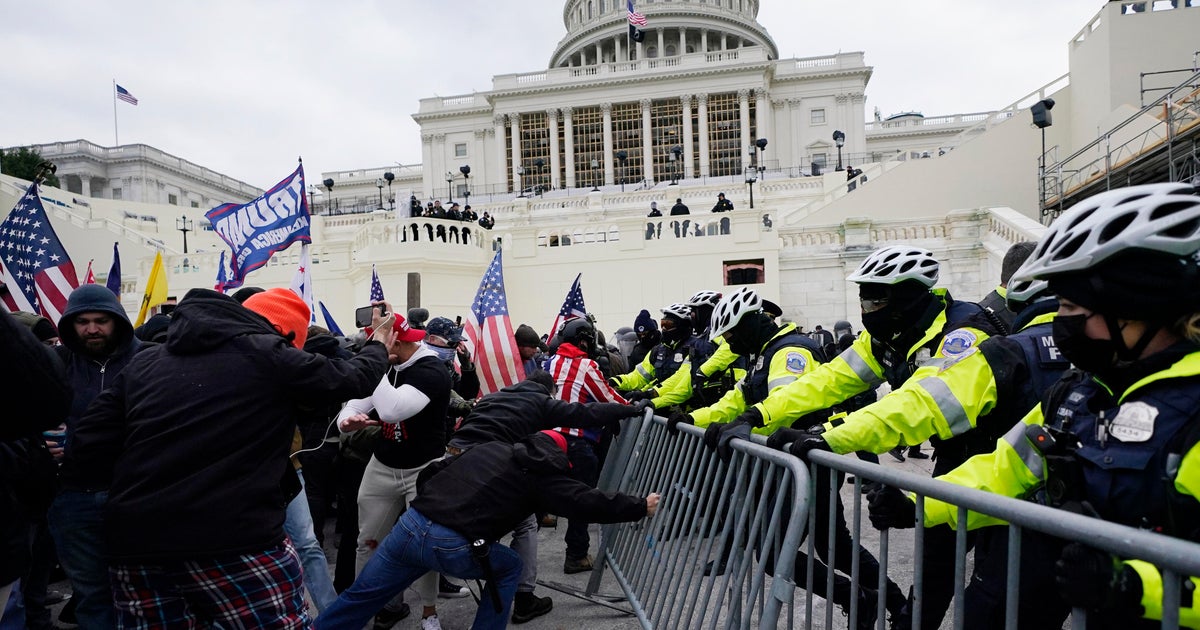
Washington — Five years after the violent breach of the U.S. Capitol on January 6, 2021, the White House has launched a new webpage on its official site that presents a starkly revised account of the events surrounding the certification of Joe Biden's 2020 presidential election victory. Titled under the whitehouse.gov domain, the page describes the day's occurrences as a "peaceful march" by supporters of then-President Donald Trump, while attributing escalating tensions to Capitol Police actions and reiterating long-standing claims that the 2020 election was stolen from Trump.
The webpage, which appeared online this week amid Trump's second term, asserts that "The Democrats masterfully reversed reality after January 6, branding peaceful patriotic protesters as 'insurrectionists' and framing the event as a violent coup attempt orchestrated by Trump—despite no evidence of armed rebellion or intent to overthrow the government." White House spokesperson Steven Cheung promoted the site on social media, posting a link with the caption, "Want to know the TRUTH? Get all the facts here." The official White House X account echoed this, sharing the link and stating, "Now see the REAL Jan. 6 story."
These claims contrast sharply with the documented events of that day, when thousands of Trump supporters gathered in Washington, D.C., following a rally near the White House where Trump urged the crowd to "fight like hell" to contest the election results. By early afternoon, protesters had overwhelmed barriers and smashed through first-floor windows of the Capitol, leading to a breach that forced lawmakers and staff to evacuate. The rioters vandalized offices, assaulted more than 150 police officers using flagpoles, bear spray, and other improvised weapons, and disrupted the joint session of Congress certifying Biden's electoral win.
According to reports from the time, the violence resulted in significant injuries and deaths. Five police officers who responded to the Capitol died in the days and weeks following the attack, either by suicide or related complications. Among the rioters, Ashli Babbitt, a 35-year-old Air Force veteran from California, was fatally shot by a Capitol Police officer as a mob attempted to break into the House chamber. Three other Trump supporters—Rosanne Boyland, Kevin Greeson, and Benjamin Philips—died amid the chaos, with Boyland trampled in the crowd and the others suffering medical emergencies.
The new White House narrative shifts much of the blame to law enforcement, stating that when the crowd arrived, "Capitol Police aggressively fire tear gas, flash bangs, and rubber munitions into crowds of peaceful protesters, injuring many and deliberately escalating tensions." It further claims, "Video evidence shows officers inexplicably removing barricades, opening Capitol doors, and even waving attendees inside the building—actions that facilitated entry—while simultaneously deploying violent force against others. These inconsistent and provocative tactics turned a peaceful demonstration into chaos."
However, this portrayal omits testimony from officers who were on the scene. One Capitol Police officer, in congressional hearings shortly after the riot, described the interior as "a war scene," with rioters chanting threats and overpowering defenses. Republican Sen. Susan Collins of Maine, who was on the Senate floor during the breach, pushed back against the webpage's depiction of police actions. "I disagree with that completely," Collins told reporters this week. "I was there that day. I was on the floor. I heard the rioters going past the chamber chanting 'hang Mike Pence, hang Mike Pence.' I saw him being rushed out, they clearly put him in danger. And I thought the Capitol Police were heroic."
The webpage also targets former House Speaker Nancy Pelosi for security shortcomings, alleging that lapses under her leadership "invited the chaos [Democrats] later exploited to seize and consolidate power." On January 6, rioters broke into Pelosi's office, chanting "Where's Nancy?" as her staff hid in fear. Footage captured by her daughter, documentary filmmaker Alexandra Pelosi, showed the speaker later taking "full responsibility" for inadequate preparations, amid revelations of coordination failures between Capitol Police, the National Guard, and other agencies.
Another focal point of the page is the role of then-Vice President Mike Pence, who presided over the certification. The site contends that Pence "could have rejected the electoral votes but chose 'not to exercise that power in an act of cowardice and sabotage,'" despite the vice president's role being ceremonial and lacking legal authority to unilaterally discard states' electors. As rioters stormed the building, some chanted "Hang Mike Pence" outside the chamber, prompting Secret Service agents to prepare to evacuate him under threat of lynching.
Marc Short, Pence's former chief of staff, responded to the White House post on X, reposting the link with a pointed remark: "And I guess yall would have been okay if Kamala had refused to certify the 2024 results?" This exchange highlights ongoing partisan divides over the events, which led to Trump's second impeachment by the House for incitement of insurrection—a charge the Senate acquitted him of in February 2021.
Legal repercussions from January 6 extended into Trump's post-presidency, with a federal grand jury indicting him in 2023 on charges related to efforts to overturn the election, including the Capitol attack. Those charges were dropped last year upon his return to the White House. On Inauguration Day for his second term, January 20, 2025, Trump issued pardons to more than 1,500 individuals convicted or charged in connection with the riot, including those found guilty of assaulting officers and seditious conspiracy.
The White House webpage frames these pardons positively, declaring that Trump freed "January 6 defendants who were unfairly targeted, overcharged, and used as political examples. They were not protected by the leaders who failed them. They were punished to cover incompetence." Yet, Republican Sen. Thom Tillis of North Carolina challenged this view during a Senate floor speech on Tuesday, standing beside a plaque honoring the officers who defended the Capitol. "We let bad people go," Tillis said, pointing out that some pardoned rioters have since been rearrested for new offenses.
The launch of the webpage comes at a time when reflections on January 6 remain politically charged, especially as Trump consolidates power in his second administration. Historians and legal experts have long documented the attack as the deadliest assault on the Capitol since 1814, with over 1,200 individuals charged and more than 700 convicted by late 2024. The event spurred bipartisan investigations, including the House select committee that uncovered Trump's involvement in pressuring officials to alter election outcomes in states like Georgia and Arizona.
Critics of the new narrative argue it minimizes the documented violence and ignores evidence from body cameras, surveillance footage, and court records showing premeditated intent among some rioters. For instance, leaders of groups like the Proud Boys and Oath Keepers were convicted of seditious conspiracy for plotting to use force against the government. Supporters of Trump's version, however, point to selective videos circulating online that depict peaceful elements of the crowd or apparent police leniency.
As the fifth anniversary approaches, the webpage's appearance has reignited debates over historical accountability. Democratic leaders have condemned it as an attempt to whitewash the past, while some Republicans, like Tillis and Collins, express discomfort with the revisionism. The White House has not responded to requests for further comment beyond the social media promotions.
Looking ahead, the pardons and reframing could influence ongoing discussions about Capitol security reforms, which Congress passed in 2022 but have faced implementation challenges. With Trump back in office, questions persist about how this official recounting might shape public memory and policy on election integrity, potentially deepening divisions as the 2028 cycle looms.