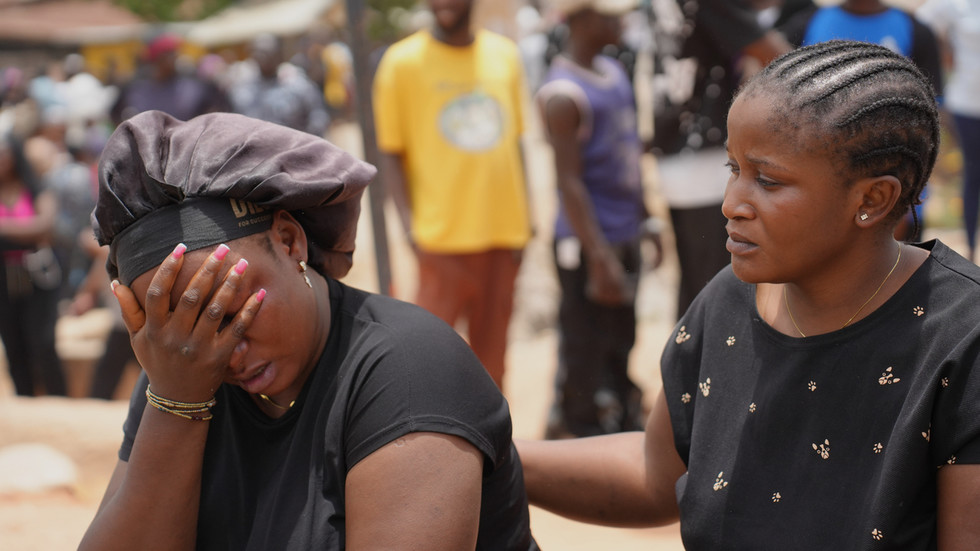
JOS, Nigeria — At least 28 people were killed and several others wounded in a late-night shooting attack on a community in Nigeria's central Plateau State, prompting local authorities to impose a 48-hour curfew to curb potential further violence. The assault occurred on Palm Sunday evening in the Gari Ya Waye community of Angwan Rukuba, in the Jos North local government area, according to the Plateau State government.
The attack unfolded around 8:30 p.m., when gunmen raided the area, firing indiscriminately at residents who were engaged in their evening routines. Plateau State police initially reported a lower death toll, confirming 12 fatalities — including ten men and two women — in their first statement. By Monday morning, as officers combed through nearby bushes, two additional bodies were discovered, raising the police-confirmed count to 14. However, the state government has cited a higher figure of 28 deaths, highlighting the chaos and ongoing recovery efforts in the aftermath.
Police spokesperson Alabo Alfred, in a statement released shortly after the incident, described how security forces received a distress call reporting gunfire in the Angwan Rukuba area. A joint operation involving police, military, and other agencies was swiftly launched to pursue the attackers, though the gunmen managed to escape into the surrounding terrain. "The victims were law-abiding citizens going about their normal activities when the enemies of peace unleashed this senseless attack," Plateau State Governor Caleb Manasseh Mutfwang said in a Facebook post on Monday, condemning the violence as "barbaric and unprovoked."
In response to the bloodshed, Governor Mutfwang announced the curfew for Jos North, effective immediately and set to last until April 1. The measure, he explained, would allow security operatives to conduct thorough searches and restore calm. "This curfew is necessary to enable security agencies to carry out their operations without hindrance and to ensure the safety of all residents," the governor stated, urging the public to comply while assuring them that normalcy would return soon.
The incident has deepened concerns in Plateau State, a volatile region in Nigeria's Middle Belt long plagued by communal clashes. These conflicts often stem from disputes over land and resources, exacerbated by ethnic and religious divides between predominantly Muslim Fulani herders and mostly Christian farming communities. Such tensions have fueled cycles of reprisal attacks, turning rural and semi-urban areas into flashpoints for violence.
Just weeks earlier, on March 13, gunmen ambushed a joint security patrol in the Kanam area of Plateau State, killing at least 20 personnel, including two senior military officers and several vigilantes. That attack underscored the precarious security situation, with assailants targeting those tasked with maintaining order. Authorities have linked such incidents to broader insurgent activities, though motives in the latest raid remain under investigation.
According to state officials, one suspect connected to the Gari Ya Waye attack has already been arrested, providing a potential lead in the probe. Police continue their manhunt for the remaining perpetrators, deploying additional forces to the area. The operation has involved combing remote bushes and villages, where attackers are believed to have fled under the cover of darkness.
Witness accounts from the community paint a harrowing picture of the assault. Residents described hearing bursts of gunfire echoing through the night, followed by screams as people sought shelter in their homes. One local, speaking on condition of anonymity due to fear of reprisals, told reporters that the gunmen arrived on motorcycles and appeared organized, suggesting a premeditated strike. "We were preparing for the Easter holidays when the shooting started; it was terrifying," the witness said.
The Plateau State government has vowed to bring all those responsible to justice, with Governor Mutfwang emphasizing unity in the face of division. "We must not allow these acts to divide us further; our shared humanity demands that we stand together against such barbarity," he added in his statement. Community leaders from both herder and farmer groups have called for dialogue to address underlying grievances, though skepticism remains high amid repeated failures of past peace initiatives.
This attack comes amid a broader surge in violence across Nigeria since November, particularly in the north-central and northwestern regions. The federal government has struggled to contain the unrest, which includes banditry, kidnappings, and ethno-religious clashes. International attention has intensified, with the United States designating Nigeria as a Country of Particular Concern over religious freedom violations. Reports from advocacy groups allege that more than 7,000 Christians were killed in the country in 2025 alone, though these figures are disputed by Nigerian officials who cite a mix of criminal and communal motives rather than purely sectarian ones.
In a related development, U.S. President Donald Trump has overseen increased American involvement in Nigeria's security landscape. Washington has deployed military personnel in a non-combat capacity to offer training, technical support, and intelligence sharing to Nigerian forces. This follows U.S. airstrikes against Islamic militants in the country's northwest on December 25, aimed at disrupting militant networks that have spilled over into areas like Plateau State.
Experts on Nigerian security affairs point to the interplay of poverty, climate change-induced resource scarcity, and weak governance as root causes fueling these conflicts. Dr. Fatima Ibrahim, a researcher at the Abuja-based Institute for Peace and Conflict Resolution, noted in a recent interview that "without addressing the socio-economic drivers, curfews and arrests will only provide temporary relief." She advocated for federal investment in community mediation programs to prevent escalation.
Human rights organizations have raised alarms over the humanitarian toll in Plateau State. The latest attack has displaced dozens of families, with many seeking refuge in nearby towns. Aid groups are mobilizing to provide food, medical care, and psychological support, but access remains limited due to the curfew. The United Nations has called on Nigerian authorities to protect vulnerable populations and ensure impartial investigations into all such incidents.
As the curfew lifts on April 1, residents of Jos North are bracing for what comes next. Security analysts warn that without sustained efforts to resolve land disputes and bolster local policing, similar attacks could recur, perpetuating the cycle of violence. Governor Mutfwang's administration has promised enhanced patrols and community engagement, but the path to lasting peace in the Middle Belt remains fraught with challenges.
The international community continues to monitor the situation closely, with calls for Nigeria to prioritize inclusive development in conflict zones. For now, the people of Gari Ya Waye mourn their dead and rebuild shattered lives, hoping that this Palm Sunday tragedy marks a turning point rather than another chapter in an enduring saga of strife.