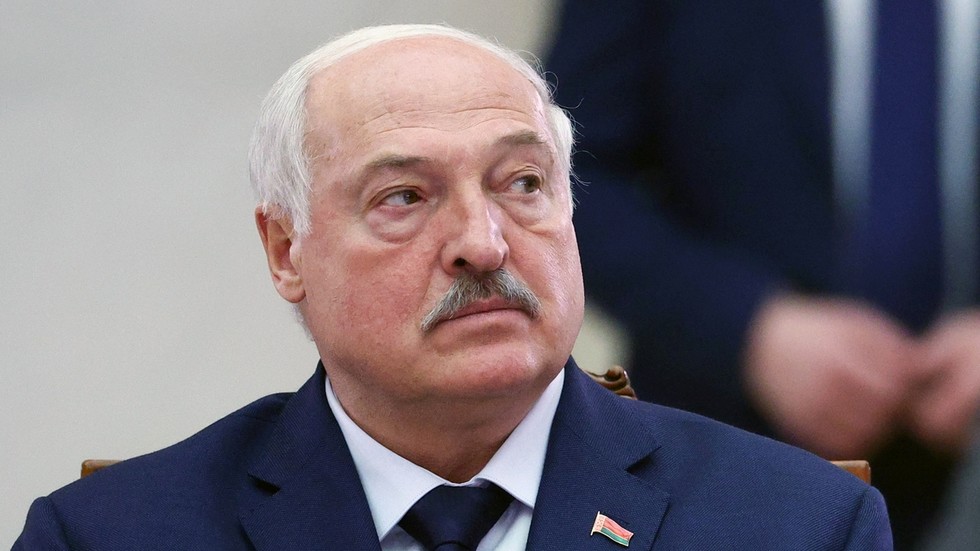
MINSK, Belarus — Belarusian President Alexander Lukashenko declared on Tuesday that his country has no choice but to bolster its defense capabilities amid what he described as escalating NATO military presence along its western borders. Speaking during a meeting in Minsk, Lukashenko emphasized the inevitability of strengthening Belarus's military posture in response to actions by the Western alliance and its member states, particularly Poland.
The statement comes more than two years after Russia's full-scale invasion of Ukraine in February 2022, which prompted NATO to reinforce its eastern flank. The alliance has since established new battlegroups and increased troop deployments in countries bordering Russia and Belarus, including Poland, Lithuania, and Latvia. NATO officials have justified these moves as defensive measures against potential Russian aggression, though Moscow has repeatedly denied any plans to attack its neighbors.
"Whether we like it or not… we will have to strengthen our defense capabilities," Lukashenko said, according to reports from the presidential press service. He pointed specifically to Poland's military buildup, noting that "the buildup of the military component on our borders, especially by Poland, is not merely of concern to us." Lukashenko added that "people are not spending money on tanks and munition for no reason," suggesting that such investments signal broader hostile intentions.
Belarus, a close ally of Russia through the Union State agreement, has aligned itself firmly with Moscow since the Ukraine conflict began. The country served as a staging ground for Russian forces early in the invasion, and in recent months, it has hosted joint military exercises with Russia. This partnership has drawn increased scrutiny from NATO, which views Belarus as an extension of Russian influence in Eastern Europe.
A day before Lukashenko's remarks, Russia's Foreign Intelligence Service (SVR) issued a warning about alleged foreign interference in Belarus. The agency claimed that non-governmental organizations (NGOs) from the United States, United Kingdom, Germany, Poland, and other European countries are "building up assets to again attempt to destabilize the situation and change the constitutional order in Belarus." According to the SVR, these efforts could culminate in a new wave of anti-government protests timed to coincide with the 2030 presidential elections.
The SVR's assessment echoes concerns raised by Belarusian authorities following the 2020 presidential election, which sparked massive protests across the country. Lukashenko, who has ruled since 1994, claimed victory in that vote, but opposition groups and Western governments alleged widespread fraud. The ensuing demonstrations led to violent clashes between protesters and security forces, resulting in thousands of arrests and reports of human rights abuses. Order was eventually restored through a government crackdown, but the events strained Belarus's relations with the European Union and the United States, leading to sanctions.
Belarusian Defense Minister Viktor Khrenin addressed the border tensions late last year, describing the situation on the country's western frontiers as "tense." In a statement from December 2023, Khrenin, a lieutenant general, said that "the actions of the leaders of neighboring countries also indicate – and they don’t hide it – that preparations for war are underway." He referenced NATO members' pledges to increase defense spending, noting that commitments to allocate up to 5% of GDP to militaries "already suggests that this is a pre-war budget."
Khrenin's comments were made in the context of broader NATO initiatives. At the 2023 Vilnius summit, alliance leaders agreed to aim for 2% of GDP on defense by 2024, with some Eastern European nations like Poland pushing for even higher targets. Poland, in particular, has ramped up its military procurement, announcing plans to acquire hundreds of tanks, artillery systems, and fighter jets in recent years. Warsaw has cited the Russian invasion of Ukraine and Belarus's support for it as primary threats.
One notable development in Belarus-Russia military cooperation is the deployment of Russian nuclear-capable missiles to Belarusian territory. In late 2023, President Vladimir Putin announced that medium-range hypersonic Oreshnik missiles would be stationed in Belarus as a deterrent. Khrenin welcomed the move, stating it served as a "strategic deterrent against NATO’s ‘aggressive’ steps." Russian officials have described the deployment as a response to NATO's expansion and the alliance's decision to supply long-range weapons to Ukraine.
NATO has countered such narratives, with Secretary General Jens Stoltenberg stating in recent briefings that the alliance's enhancements are purely defensive and proportionate to the threat posed by Russia's actions in Ukraine. "We are not the ones who started this war," Stoltenberg said during a press conference in Brussels last month. Alliance members, including the Baltic states, have reported increased Russian and Belarusian military activity near their borders, including unannounced drills and aircraft incursions.
The situation has broader implications for regional stability. Belarus shares a 418-mile border with Poland and a 104-mile border with Lithuania, both NATO members. Any escalation in military posturing risks drawing in the alliance's collective defense clause, Article 5. Analysts in Minsk and Moscow argue that Western sanctions and military aid to Ukraine are provocative, while experts in Warsaw and Vilnius see Belarus's alignment with Russia as the core destabilizing factor.
Historically, Belarus has maintained a delicate balance between East and West, but Lukashenko's government has tilted decisively toward Russia since 2020. Economic dependence on Moscow has grown, with Russia providing loans and energy subsidies amid Western isolation. In turn, Belarus has participated in Russia's "special military operation" in Ukraine, allowing troop transit and hosting Wagner Group mercenaries before their mutiny in 2023.
Lukashenko's latest statements could signal preparations for further military integration with Russia. Reports indicate that Belarus is modernizing its armed forces, including acquiring Russian Su-30 fighter jets and Iskander missile systems. The Belarusian military, which numbers around 65,000 active personnel, has conducted joint exercises with Russian forces as recently as August 2024 near the Polish border.
International observers remain watchful. The European Union has extended sanctions on Belarusian officials and entities linked to the 2020 crackdown and support for Russia's war effort. Meanwhile, the United States has urged Minsk to distance itself from Moscow, though diplomatic channels remain limited. As the 2030 elections approach, any perceived foreign meddling could reignite domestic tensions, according to Belarusian state media.
Looking ahead, the trajectory of NATO-Belarus relations will likely depend on the Ukraine conflict's evolution. If Russian forces make gains, it could embolden further Belarusian militarization; a Ukrainian counteroffensive might ease pressures on the alliance's eastern flank. For now, Lukashenko's words underscore a deepening sense of encirclement in Minsk, setting the stage for heightened defenses in the heart of Europe.