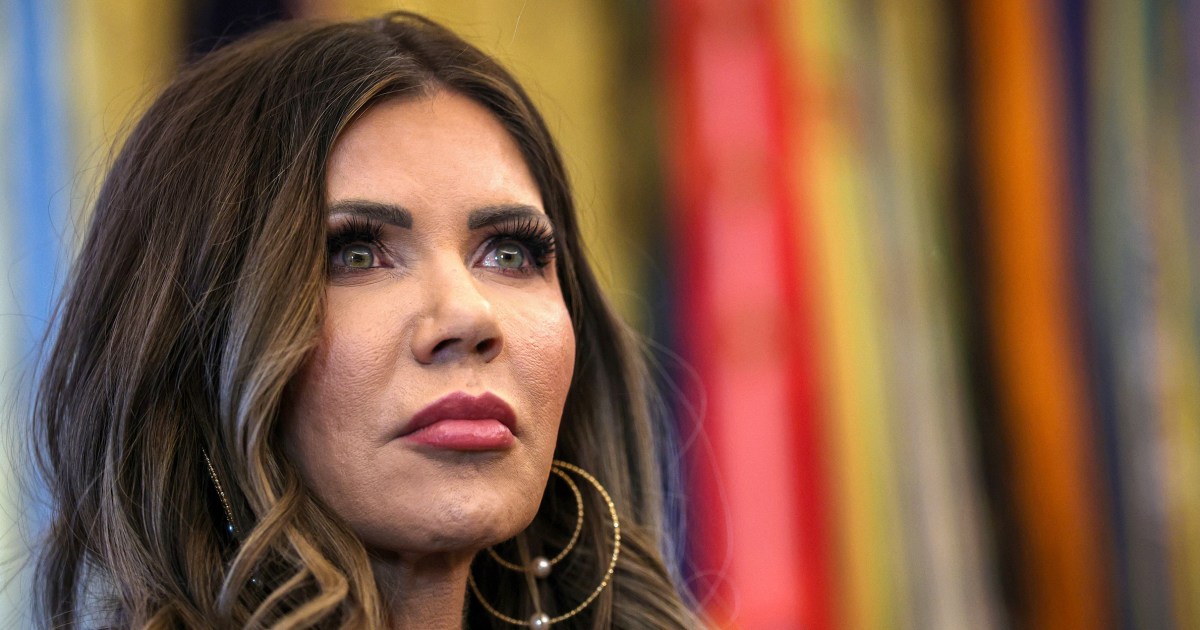
WASHINGTON — Homeland Security Secretary Kristi Noem stated on Sunday that authorities believe the suspect in a fatal shooting involving National Guard members was radicalized while in the United States, amid heightened scrutiny over the nation's asylum processes following the incident.
The remarks came during an appearance on NBC News' "Meet the Press," where Noem addressed the shooting that claimed the life of National Guard member Sarah Beckstrom and left fellow Guardsman Andrew Wolfe hospitalized. The suspect, identified as Rahmanullah Lakanwal, an Afghan national, allegedly opened fire on the pair last week in what officials described as a targeted attack. Lakanwal, who had served alongside U.S. troops in Afghanistan, will face charges of first-degree murder, according to U.S. Attorney Jeanine Pirro.
Noem emphasized that the radicalization occurred domestically, saying, "We do believe it was through connections in his home community and state, and we’re going to continue to talk to those who interacted with him." She linked the incident to broader concerns about migrant vetting, arguing that initial screenings at the border had been neglected under the previous administration.
The shooting has intensified debates over immigration policy, particularly as President Trump announced plans to "permanently pause" migration from what he termed "third world countries." This follows reports that Lakanwal entered the U.S. in 2021 during the Biden administration but was granted asylum earlier this year under the Trump administration's oversight.
In response to questions about the asylum approval process, Noem defended the current framework while criticizing past practices. "Vetting is happening when they come into the country, and that was completely abandoned under Joe Biden’s administration," she said. She added that the administration is now reviewing existing asylum cases to apply stricter standards, with the process set to resume only after clearing a backlog.
The U.S. Citizenship and Immigration Services director confirmed last week via a post on X that all asylum decisions have been halted "until we can ensure that every alien is vetted and screened to the maximum degree possible." Noem elaborated that individuals already in the country under the program would undergo re-vetting, and those who do not meet the new criteria could face immediate removal.
Asked directly about deporting those with pending claims, Noem was unequivocal: "We will if they should be. Absolutely, yes." This stance reflects the Trump administration's aggressive approach to immigration enforcement, which has included expanding detention facilities and accelerating deportation proceedings since taking office.
Democratic critics, however, have pushed back against what they see as scapegoating. Sen. Mark Kelly, D-Ariz., who also appeared on "Meet the Press," accused the administration of deflecting blame. "The Trump administration is going to blame Joe Biden on everything," Kelly said. "It is almost getting comical at this point."
Kelly acknowledged potential shortcomings in the vetting process but suggested improvements could be bipartisan. "It sounds like there was some vetting done in the last administration," he noted. "It sounds like they did not do enough vetting before they gave him his asylum claim. She talked about changing the vetting process. I think that’s a good idea."
The incident unfolded last week in the Washington area, where Lakanwal, 32, reportedly approached Beckstrom and Wolfe during a routine patrol near a military installation. Beckstrom, 28, a mother of two from Minnesota, succumbed to her injuries at a local hospital. Wolfe, 30, underwent surgery and remains in critical but stable condition, according to Guard officials.
Investigators have uncovered evidence suggesting Lakanwal's motives were tied to extremist ideologies, though details remain under wraps pending further inquiry. Noem's comments mark the first official assertion that the radicalization happened post-arrival in the U.S., shifting focus from overseas threats to domestic influences within immigrant communities.
This development comes against a backdrop of rising tensions over asylum seekers. Since the U.S. withdrawal from Afghanistan in August 2021, tens of thousands of Afghans who aided American forces have resettled in the country, often through expedited programs. Lakanwal's case highlights vulnerabilities in these pathways, as he was among those who qualified for special immigrant visas before transitioning to asylum status.
Immigration advocates have expressed concern over the pause in asylum processing, warning it could strand vulnerable individuals in dangerous situations abroad. The backlog Noem referenced includes thousands of applications from diverse regions, many fleeing persecution or violence. Under the Trump administration's new standards, which emphasize national security and cultural assimilation, approvals are expected to drop significantly.
Broader implications extend to U.S. foreign policy, particularly relations with Afghanistan's Taliban-led government. Trump's migration pause echoes his first-term travel bans, which targeted several Muslim-majority nations and faced legal challenges. Legal experts anticipate similar court battles, with groups like the ACLU already preparing lawsuits.
As the investigation continues, federal authorities are interviewing Lakanwal's associates in his adopted community, believed to be in the Midwest. Noem indicated that the probe could lead to wider counter-radicalization efforts, potentially involving local law enforcement and community leaders.
Looking ahead, the administration's vetting overhaul may reshape the asylum landscape for years. While Noem promised a swift return to processing once the backlog is addressed, timelines remain unclear. For now, the shooting serves as a stark reminder of the intersection between immigration, security, and national tragedy, with both sides of the aisle calling for enhanced safeguards without consensus on how to achieve them.
In the wake of Beckstrom's death, tributes have poured in from across the military and civilian sectors. Her family described her as a dedicated servant who balanced Guard duties with family life. Wolfe's recovery is being monitored closely, with hopes for his full rehabilitation.
The episode underscores ongoing challenges in integrating former allies from conflict zones, where gratitude for service abroad sometimes clashes with domestic security imperatives. As policymakers deliberate, the human cost of the shooting lingers, prompting questions about how to balance compassion with caution in an era of global instability.