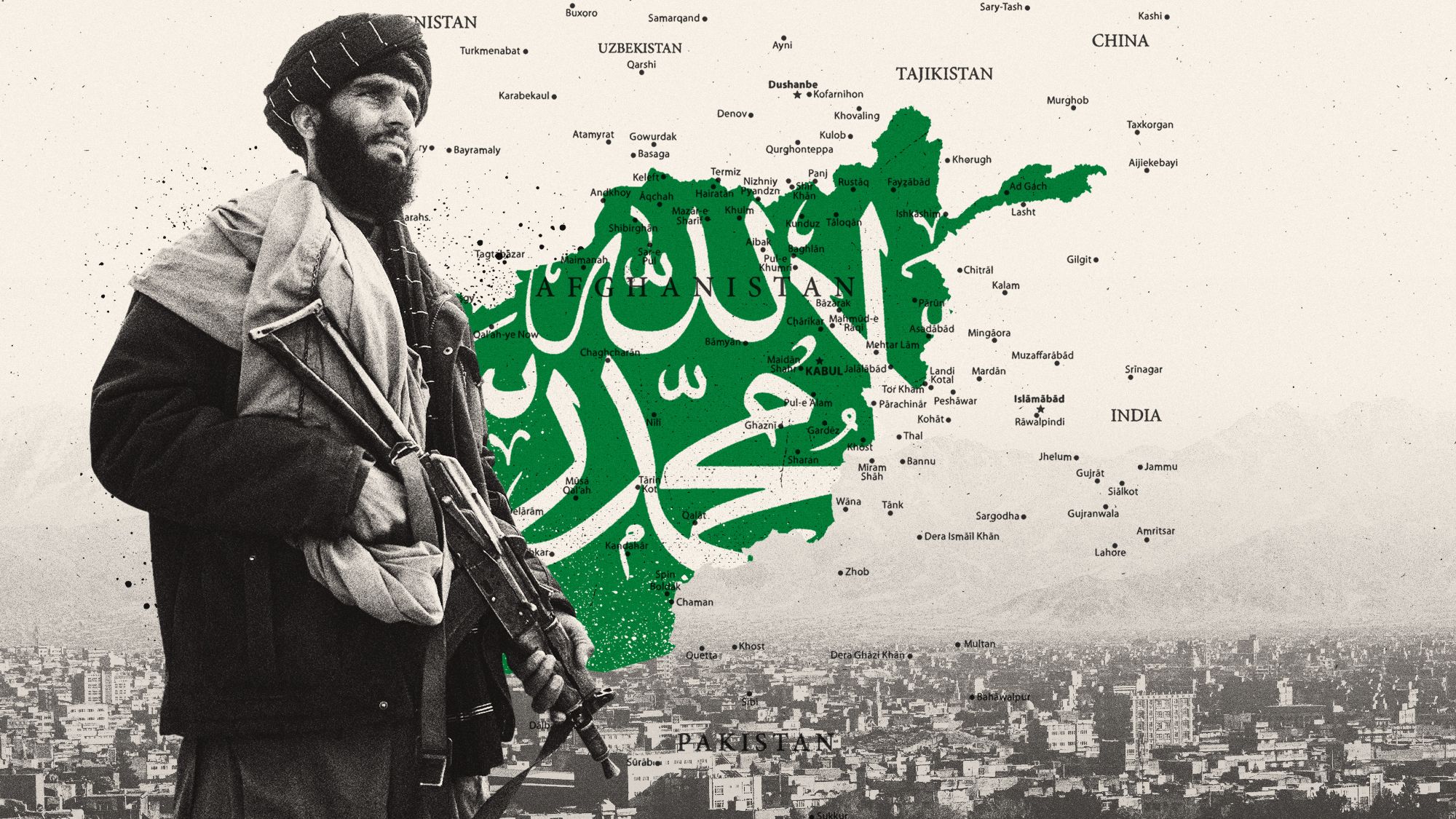
In a significant shift in international diplomacy, India has taken steps to normalize relations with the Taliban government in Afghanistan, hosting a senior official from the regime in October and announcing plans to upgrade its diplomatic presence in Kabul. This move comes amid a broader trend where countries are increasingly engaging with the Taliban, driven by pragmatic interests in trade, counterterrorism, and regional stability, despite ongoing concerns over human rights abuses. The Taliban's return to power in August 2021 prompted widespread condemnation and diplomatic isolation, but recent developments suggest a thawing of relations.
The Taliban's swift takeover of Afghanistan in 2021 led most nations to sever ties, with the United Nations Security Council imposing strict sanctions and freezing substantial assets, citing the regime's implementation of what it described as a 'gender apartheid' through severe restrictions on women and girls. Despite initial hopes that this 'Taliban 2.0' would adopt a more moderate stance, the group reinstated draconian policies, drawing international outrage. However, as the Financial Times reported, the regime has begun to emerge from diplomatic isolation in recent months, with countries viewing Afghanistan as a potential partner in counterterrorism, trade, and migrant deportations.
India, which long regarded the Taliban as a threat due to its extremist ideology and close ties to Pakistan—India's arch-rival—has pivoted toward engagement. In October, New Delhi hosted Taliban Foreign Minister Amir Khan Muttaqi, marking the first official diplomatic visit by a senior Taliban figure since the group's resurgence. Muttaqi traveled on a visa waiver necessitated by UN sanctions, but he received what the Financial Times called a 'rapturous reception,' signaling a warming global attitude toward the Taliban.
Following the visit, Indian officials announced the upgrading of India's technical mission in Kabul to a full-fledged embassy, as reported by Al Jazeera. Indian Foreign Minister Subrahmanyam Jaishankar emphasized the benefits of closer ties, stating, 'Closer cooperation between us contributes to your national development, as well as regional stability and resilience.' Muttaqi, speaking to reporters after the meetings, expressed openness to dialogue, saying, 'We want good relations; we keep our doors open for talks – for all!'
Experts attribute India's approach to a pragmatic assessment of the geopolitical landscape. Chietigj Bajpaee, from Chatham House's South Asia, Asia-Pacific Programme, described the Taliban as a 'lesser evil' compared to more extreme groups like al-Qaida and the Islamic State Khorasan Province (Isis-K). India seeks to prevent Afghanistan from again becoming a hub for militancy and terrorism that could spill over its borders. A senior Pakistani diplomat told the Financial Times that Indians are being 'very pragmatic, having realised that the Taliban is the only game in Kabul and that they are not going anywhere.' The diplomat added that New Delhi views the situation through the lens of 'the enemy of my enemy could be my friend,' with the Taliban capitalizing on this shift.
This engagement contrasts with the 1990s, when India, along with Iran and Russia, supported anti-Taliban forces. Today, with virtually no armed opposition remaining in Afghanistan, such strategies are obsolete. Russia's formal recognition of the Taliban government in July marked it as the first country to do so explicitly. The Russian foreign ministry highlighted opportunities for 'commercial and economic' cooperation, according to the BBC. Moscow's interest intensified after the deadly Islamic State attack on a concert hall in March 2024, which killed over 140 people in the suburbs of the Russian capital, prompting a desire for joint counterterrorism efforts and expanded trade.
China has taken a more subtle path, becoming the first nation to accredit a Taliban ambassador and pursuing what analysts call 'durable de facto recognition.' Beijing's motivations center on Afghanistan's vast reserves of critical minerals and natural resources, essential for its economic ambitions. In the West, while full recognition remains elusive, there are signs of cooperation. The United States has commended the Taliban's efforts to suppress Isis-K activities. Sebastian Gorka, a counterterrorism adviser to former President Donald Trump, disclosed in August that Washington and the Taliban were 'working together' to combat Islamist militancy.
European nations have also shown willingness to engage, praising the Taliban's destruction of opium poppy fields—a major source of heroin production—and seeking collaboration on migrant repatriation. Germany, Switzerland, and Austria have recently dispatched delegations or hosted Taliban officials. Germany, in particular, has expressed interest in direct dealings with the group to facilitate the deportation of convicted Afghan nationals. These interactions reflect a growing European focus on practical issues like narcotics control and border management.
For the Taliban, these diplomatic overtures offer a lifeline amid Afghanistan's dire humanitarian crisis. The country grapples with endemic poverty, worsened by natural disasters such as the August earthquake that killed over 1,000 people in the southeast, and sharp reductions in U.S. aid following the 2021 withdrawal. Neighboring Iran and Pakistan have forcibly repatriated more than four million Afghans in the past two years, according to the International Organization for Migration, leading to chaos at borders and further straining limited resources.
The Taliban hopes this partial diplomatic thaw will usher in economic aid and investments, as noted by the Financial Times. However, there has been 'little sign of this taking place yet.' UN Assistant Secretary-General Kanni Wignaraja pointed to the oppression of women and girls as the 'primary issue facing Afghanistan’s economic future,' arguing that it deters international support. Modern Diplomacy described the regime as still presiding over a 'pariah state, shunned by most of the world,' with the recent engagements yielding no substantial economic relief.
Complicating matters are escalating tensions with Pakistan, a former ally. Islamabad historically backed the Taliban to gain 'strategic depth' in its rivalry with India, according to Bajpaee. But now, Pakistan accuses the Afghan Taliban of harboring the Tehrik-e-Taliban Pakistan (TTP), a militant group aiming to overthrow the Pakistani state. The TTP has intensified attacks within Pakistan, leading Islamabad to view its neighbor increasingly as a 'liability' rather than an asset. Cross-border disputes, including recent military clashes, underscore the fragility of the relationship.
Despite these overtures, the Taliban's international standing remains precarious. While countries like India, Russia, and China pursue engagement for strategic gains, Western powers continue to withhold formal recognition, conditioned on improvements in human rights, particularly for women. The United Nations and human rights organizations maintain that the regime's policies, including bans on female education and employment, perpetuate isolation.
Looking ahead, the trajectory of these relations could reshape South Asian dynamics. India's embassy upgrade may encourage other regional players to follow suit, potentially stabilizing trade routes and countering extremism. Yet, without addressing core issues like gender policies and terrorism safe havens, the Taliban's quest for legitimacy faces long odds. As Afghanistan navigates this delicate balance, the world watches to see if pragmatism will prevail over principle.
The evolving engagements highlight a broader recalibration in global foreign policy, where isolation gives way to calculated interaction. For Afghanistan's 40 million people, enduring economic hardship and political uncertainty, these developments offer faint hope for relief, though the path forward remains fraught with challenges.