PYONGYANG, North Korea — In a move that underscores escalating tensions on the Korean Peninsula and beyond, North Korea has reportedly amended its constitution to mandate an automatic nuclear strike in the event that leader Kim Jong Un is assassinated or incapacitated. The revision, approved during a session of the Supreme People’s Assembly that convened on March 22 in Pyongyang, outlines procedures for immediate retaliatory action against perceived threats to the nation's leadership and nuclear command structure.
According to a report by The Telegraph, cited by Fox News, the change comes amid heightened global anxieties following the assassination of Iran’s Supreme Leader Ali Khamenei in an Israeli strike on Tehran earlier this year. That operation, dubbed “Operation Epic Fury” and involving coordinated U.S.-Israeli military efforts, targeted several high-ranking Iranian officials and has rippled through international relations, prompting reactions from nations like North Korea. South Korea’s National Intelligence Service (NIS) briefed senior government officials on the constitutional update this week, highlighting its potential to alter the dynamics of regional security.
The updated provision in North Korea’s constitution is stark in its language. “If the command-and-control system over the state’s nuclear forces is placed in danger by hostile forces’ attacks … a nuclear strike shall be launched automatically and immediately,” it states, according to the report. This automatic trigger mechanism represents a significant escalation in North Korea’s nuclear doctrine, shifting from previous policies that emphasized leader-directed responses to one that could bypass human decision-making in crisis scenarios.
North Korean state media has not directly commented on the constitutional amendment, but recent activities suggest a hardening stance. On Sunday, April 12, 2026, the regime launched two cruise missiles and three anti-ship missiles from the destroyer Choe Hyon, as reported by the Korean Central News Agency. Kim Jong Un reportedly observed missile test launches on the same day, further demonstrating the country’s ongoing military preparations amid what it describes as provocative actions by adversaries.
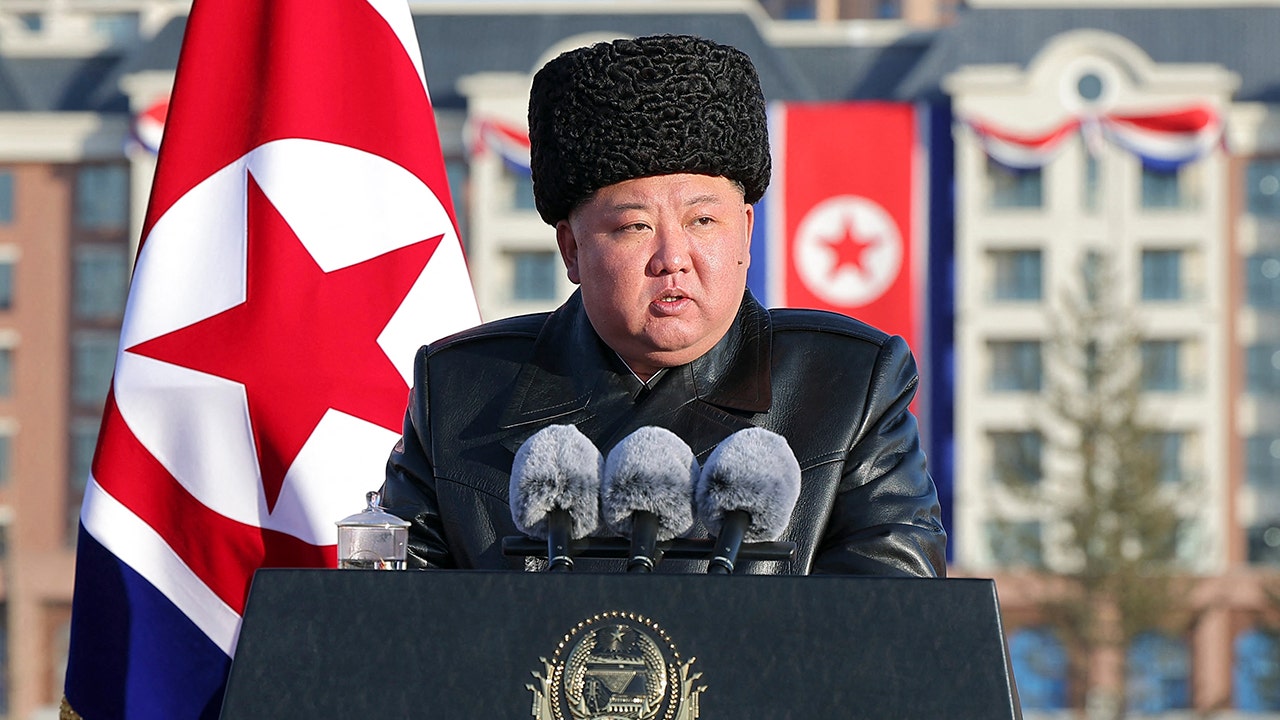
The timing of the constitutional change aligns with Kim’s broader rhetoric against South Korea and the United States. In a speech at the inauguration ceremony of Saeppyol Street in Pyongyang on February 15, 2026, Kim labeled South Korea the “most hostile enemy” and warned that North Korea could “completely destroy” it. He has accused the U.S. of “state terrorism and aggression,” signaling that Pyongyang might take a more active role in opposing Washington as global tensions rise, particularly in the wake of the Iran conflict.
This is not the first recent revision to North Korea’s foundational document. Reuters reported earlier that the country updated its constitution to define its territory as bordering South Korea, explicitly removing references to reunification between the two Koreas. This marked the first inclusion of a territorial clause, reflecting Kim’s long-standing push to treat the divided nations as permanent adversaries rather than potential partners. Last month, Kim pledged to further bolster the country’s nuclear capabilities while maintaining a hard-line posture toward Seoul.
South Korean officials, through the NIS briefing, expressed concern over the implications of the nuclear strike provision. While specific details of the briefing remain classified, sources familiar with the matter indicated that it could complicate diplomatic efforts and increase the risk of miscalculation during any confrontation. “This update formalizes a doomsday scenario that we’ve long feared,” one anonymous South Korean government official told reporters, though the NIS has not issued a public statement.
International observers note that North Korea’s nuclear program has been a flashpoint since the 1990s, with multiple United Nations sanctions imposed in response to tests and developments. The latest amendment builds on a 2022 law that declared nuclear weapons a core element of national defense, allowing for preemptive strikes under certain conditions. Experts say the automatic retaliation clause could deter assassination attempts but also raises the specter of unintended escalation.
In the context of the Khamenei assassination, North Korean analysts suggest Pyongyang views the event as a cautionary tale. The Israeli strike, which Fox News Digital previously reported as part of a sweeping operation, killed Khamenei and other officials in Tehran, destabilizing Iran’s leadership structure. North Korea, which has historically aligned with Iran against Western powers, may see parallels in its own vulnerabilities, prompting the constitutional safeguard.
U.S. officials have not immediately responded to the report, but the State Department has long described North Korea’s nuclear ambitions as a grave threat to global stability. During a recent congressional hearing, Under Secretary of State for Arms Control and International Security Bonnie Jenkins reiterated that denuclearization remains a priority, though progress has stalled under the current administration. Meanwhile, allies like Japan have voiced alarms, with Prime Minister Fumio Kishida calling for enhanced missile defense systems in light of North Korean provocations.
The Supreme People’s Assembly session in Pyongyang, which approved the revision, is North Korea’s highest legislative body, though it functions largely as a rubber-stamp for Kim’s directives. The assembly opened on March 22 and included discussions on economic policies and military enhancements, according to state media. This gathering comes at a time when North Korea faces internal challenges, including food shortages and sanctions-induced isolation, yet continues to prioritize its arsenal.
Beyond the peninsula, the constitutional change has implications for broader geopolitical alliances. Kim’s accusations of U.S. aggression echo sentiments from Russia and China, both of which have provided tacit support to Pyongyang. In a recent interview with Fox News host Mark Levin on “Life, Liberty & Levin,” Levin compared Iran’s situation to North Korea’s, warning of the dangers posed by authoritarian regimes with nuclear aspirations. “These countries are cut from the same cloth—unpredictable and armed to the teeth,” Levin said.
As the world grapples with the aftermath of the Iran strikes, North Korea’s move could prompt renewed diplomatic overtures or, conversely, further isolation. South Korea’s President Yoon Suk Yeol has advocated for dialogue, but recent missile launches have tempered optimism. Analysts predict that the U.S. and its allies may push for tougher sanctions at the United Nations, while Pyongyang remains defiant.
Looking ahead, the automatic nuclear provision introduces uncertainty into an already volatile region. With Kim Jong Un’s health occasionally rumored to be fragile—though unconfirmed by official sources—the policy could serve as both a shield and a sword. International monitors will likely scrutinize future tests and statements for signs of implementation readiness, as the line between deterrence and provocation blurs.
For now, the amendment stands as a bold declaration of North Korea’s resolve, woven into the fabric of its legal framework. As global leaders navigate these tensions, the world watches closely, aware that the stakes involve not just the Korean Peninsula but the precarious balance of nuclear powers worldwide.