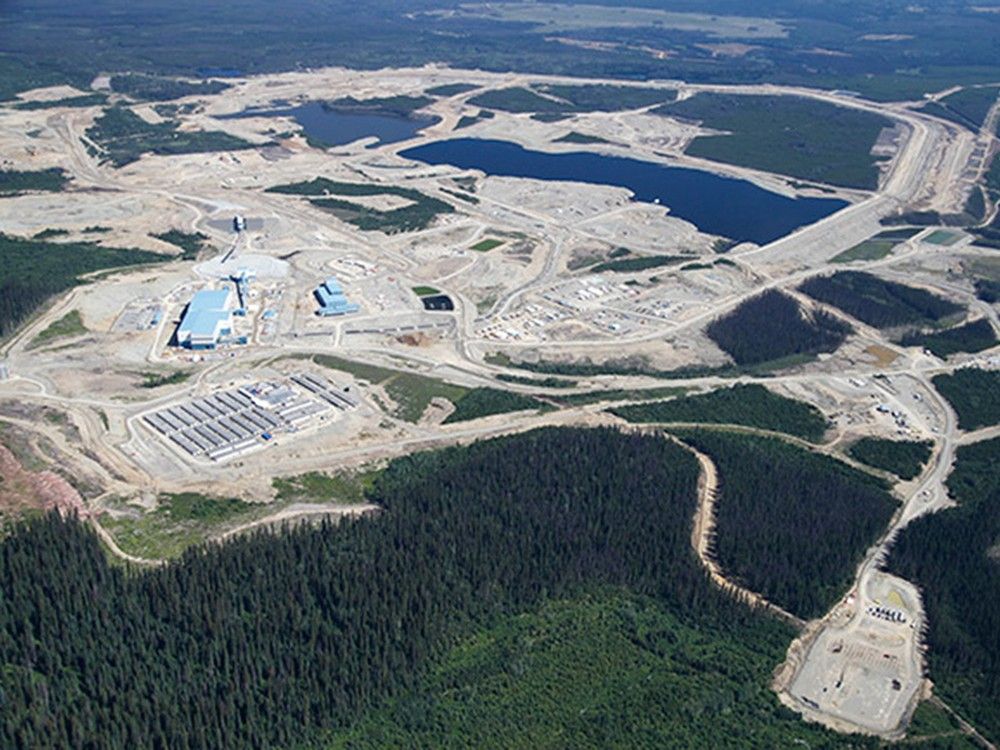
The Mount Milligan copper-gold mine in northern British Columbia has received provincial approval to ramp up production and extend its operations through 2035, marking a significant boost for the region's economy amid ongoing debates over resource development and environmental safeguards.
Located near Fort St. James, approximately 90 kilometers northwest of Prince George, the open-pit mine is owned by Centerra Gold Inc., though the latest announcement highlights the collaborative efforts of provincial regulators. On Monday, the B.C. Environmental Assessment Office (EAO) announced the decision following a rigorous nine-month review of the mine owner's application for an expanded production rate. This approval allows the facility to deepen its main pit and raise the retaining wall on its tailings storage facility by 100 meters, enabling daily ore processing to increase from 60,000 tonnes to 66,500 tonnes.
"The review examined potential effects on nearby communities and First Nations, water and fish habitat, air quality and noise, and considered safety risks, First Nations rights and cumulative effects," the EAO reported in its official statement. This comprehensive evaluation underscores the province's commitment to balancing industrial growth with ecological and social responsibilities in one of Canada's most mineral-rich areas.
The mine, which has been operational since 2014, currently employs around 600 workers, many of whom are local residents from Fort St. James and surrounding communities. Officials estimate that the expansion could inject an additional $450 million into the local economy over the coming years, supporting jobs in mining, transportation, and related services. The site's infrastructure already includes a tailings storage facility, road access, a transmission line, and a rail shipping facility, all of which will see enhancements under the new permit.
As a designated priority project under British Columbia's streamlined regulatory framework, the Mount Milligan amendment benefited from an integrated assessment process. "As a priority project, the EAO integrated its assessment of the complex project amendment with permitting reviews by the ministries of Mining and Critical Minerals and Environment and Parks into one review," the office explained. This coordination among agencies allowed for shared expertise and eliminated redundancies, reportedly cutting more than a year from the typical provincial review timeline.
"Through this co-ordination, regulatory agencies were able to share expertise and reduce duplication, shaving more than a year off the usual timeline for provincial reviews, while upholding environmental protections and consultation obligations with First Nations," the EAO added. Permitting decisions from the involved ministries are anticipated in the near future, paving the way for the expansion to begin as early as next year.
The decision comes at a time when British Columbia is pushing to accelerate major resource projects to bolster its critical minerals sector, essential for global supply chains in electronics, renewable energy, and electric vehicles. Copper and gold from Mount Milligan contribute to these markets, with the mine having produced over 1.5 million ounces of gold and 300 million pounds of copper since inception, according to company reports. However, the approval has not been without scrutiny, as environmental groups and some First Nations leaders have long voiced concerns about long-term impacts on the region's sensitive watersheds.
Nearby First Nations, including the Nak'azdli Whuten and Ts'il Kaz Kaz' Nation, were actively consulted during the review process, as required under B.C.'s environmental laws and reconciliation commitments. While specific reactions from these groups were not immediately available, the EAO emphasized that the assessment fully addressed their rights and interests. In past consultations for similar projects, Indigenous representatives have highlighted the need for robust monitoring of water quality, given the mine's proximity to the Stuart River system, a vital salmon habitat.
The expansion's environmental footprint includes potential increases in dust and noise levels, which the review deemed manageable with existing mitigation measures. Air quality monitoring stations around the site will continue to track emissions, and fish habitat compensation plans remain in place to offset any disruptions to local aquatic ecosystems. Safety risks, such as those associated with the deepened pit and heightened tailings dam, were evaluated with input from geotechnical experts, ensuring compliance with provincial dam safety regulations.
Economically, the news is a welcome development for northern B.C., where mining accounts for a substantial portion of GDP. Fort St. James, a community of about 5,000 people, relies heavily on resource industries, and the mine's longevity until 2035 could stabilize employment amid fluctuations in global metal prices. Centerra Gold, headquartered in Toronto, has invested heavily in the site, with recent upgrades including a $100 million reprocessing plant that recovers copper from previously discarded tailings.
Provincial leaders have framed such approvals as key to B.C.'s green economy transition, arguing that responsible mining supports the shift to low-carbon technologies. Environment Minister George Heyman, whose ministry participated in the review, has previously stated that critical minerals extraction must prioritize sustainability. "We are ensuring that projects like this meet the highest standards," Heyman said in a related press release earlier this year, though he did not comment directly on Mount Milligan this week.
Critics, however, point to cumulative effects from multiple mines in the area, including potential overlaps with forestry and tourism. The B.C. Wildflower Society and other advocacy groups have called for more transparent data on long-term biodiversity impacts, but the EAO maintains that the integrated review process adequately addressed these concerns. No formal appeals have been filed as of Tuesday, but stakeholders have 45 days to submit comments on the environmental assessment certificate amendment.
Looking ahead, the mine's extended life could influence regional infrastructure plans, such as upgrades to Highway 27 connecting Fort St. James to the site. Rail enhancements for ore transport to Prince George may also accelerate, benefiting broader logistics in the Nechako Valley. For workers like those at Mount Milligan, the approval means job security through the next decade, with training programs expected to expand to accommodate the increased output.
As permitting finalizes, all eyes will be on implementation. The EAO has committed to ongoing oversight, including annual reporting on environmental performance. This approval not only sustains a vital economic engine but also tests B.C.'s model for fast-tracking projects without compromising protections—a balance that will shape future developments in the province's vast northern frontier.
In the broader context of Canada's mining renaissance, Mount Milligan's story reflects a national push to secure domestic supplies of copper, projected to face shortages by 2030 according to industry forecasts. With global demand surging, such expansions are seen as strategic, yet they remind stakeholders of the enduring tension between progress and preservation in resource-dependent regions.