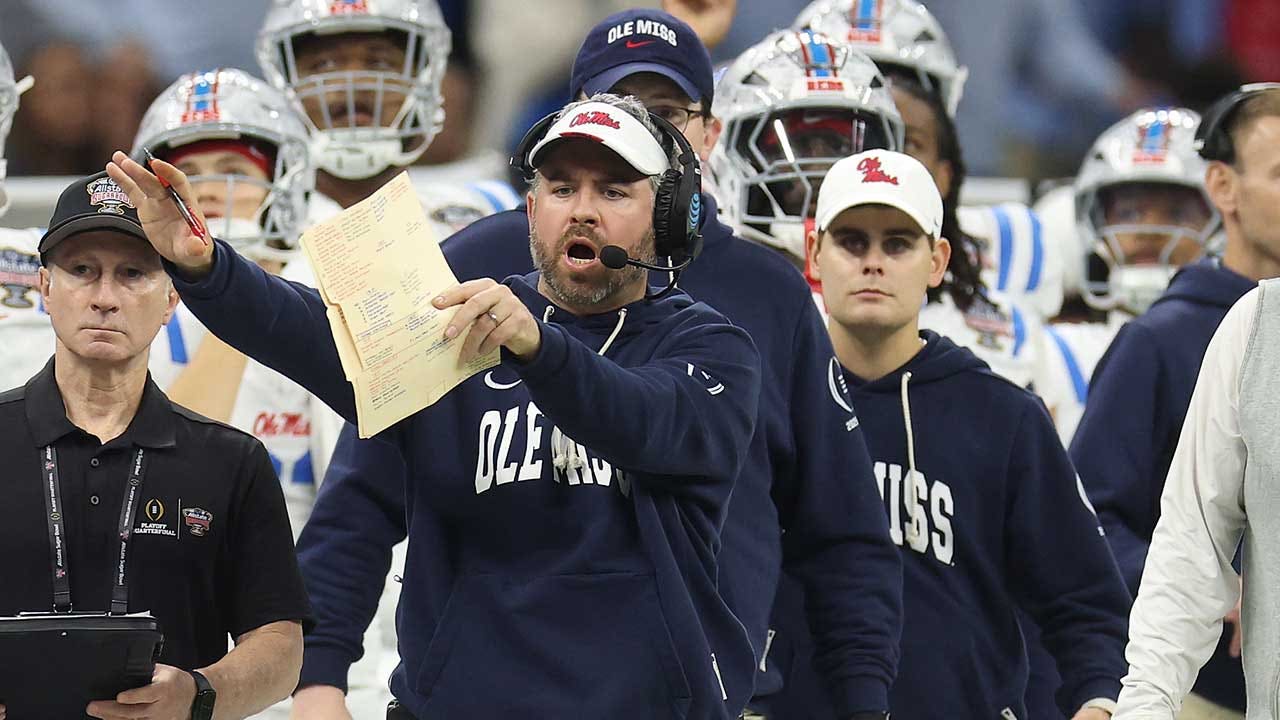
OXFORD, Miss. — As the Ole Miss Rebels gear up for a pivotal College Football Playoff semifinal matchup against Miami in the Fiesta Bowl, head coach Pete Golding is navigating a coaching staff in flux, with several key assistants caught between loyalties to their current team and a new opportunity at LSU.
The drama stems from the abrupt departure of former Rebels head coach Lane Kiffin, who bolted for Baton Rouge shortly after the regular season, leaving Golding to steer the ship through an unexpected playoff run. Multiple coordinators and assistants, including offensive coordinator Charlie Weis Jr., tight ends coach and co-offensive coordinator Joe Cox, and wide receivers coach and passing game coordinator George McDonald, have reportedly signed contracts with LSU. However, their availability for Ole Miss's postseason games hinges on decisions made by their prospective employer.
Golding addressed the situation candidly during a press conference on Saturday, emphasizing that LSU holds the ultimate authority. "They have every opportunity like they have up to this point to be able to make that decision," Golding said. "So, week in and week out, I don't dictate whether they do that or not, because they're not employed by me. Up to this point, that's how it's been, and that's my expectation."
The uncertainty comes at a critical juncture for Ole Miss, which is one victory away from a shot at the program's first national championship. The Rebels advanced to the semifinals with a stunning upset over Georgia in the Sugar Bowl on January 1, 2026, at the Caesars Superdome in New Orleans. That win followed a first-round playoff victory against Tulane, marking a remarkable turnaround for a team that faced skepticism after Kiffin's exit.
Quarterback Trinidad Chambliss captured the sentiment surrounding the coaching change in a recent interview. "A lot of people doubted us when Lane Kiffin left," Chambliss said, highlighting the resilience that has defined the Rebels' postseason surge.
According to ESPN reports, at least some of the assistants in limbo would prefer to remain with Ole Miss as long as the team's playoff hopes stay alive. This preference underscores the emotional ties to the program, but practical realities may prevail. Golding acknowledged the fluid nature of the situation, comparing it to everyday uncertainties. "I don't know. Do you know if you're going to show up at work tomorrow? I mean, we don't know," he told reporters. "It's grown people making decisions, so I have no idea. We're going to go out there and spot the ball. We got plenty enough people in this building who showed up this morning. We'll be just fine."
The Fiesta Bowl is scheduled for next week at State Farm Stadium in Glendale, Arizona, where Ole Miss will face a Miami team fresh off its own upset victory over Ohio State. Analysts, including former NFL quarterback Robert Griffin III, joined sports radio host Colin Cowherd to break down the matchup, with Griffin expressing optimism about the Rebels' chances despite the off-field distractions.
Golding downplayed any potential disruption to preparations, insisting that the players remain focused. "Our players know what to do," he said. "It’s going to have no impact on the game. Keep blowing it up and making it a big deal, it’d be great." This stoic approach reflects Golding's experience; he stepped in as interim head coach after Kiffin's departure and has since been credited with stabilizing the program during its deepest playoff run in school history.
Beyond the coordinators, Ole Miss will also lose senior analyst and pass game specialist Dane Stevens, as well as graduate assistant Sawyer Jordan, to LSU in the coming weeks. Yet Golding expressed unwavering confidence in the depth of his staff. "A lot of guys that y'all don't know by name are actually the ones instructing and teaching players," he noted. "And so we have an elite staff that's been together for a long time that knows the ins and outs."
He drew parallels to past challenges, such as the COVID-19 disruptions that tested teams across the country. "No different than during COVID when a coach didn't show up for the game," Golding said. "These things obviously come up every year, and guys try to do both jobs, and they have responsibilities of the new job that take precedence, especially in times like this. And then they can make both work. If they can't, they can't."
Golding was particularly emphatic about the continuity in leadership. "That would not be any reason for success or lack of success with this game," he added. "The playcallers haven't changed." This assurance aims to quell concerns among fans and boosters who have invested heavily in the program's recent success, including facility upgrades and recruiting hauls under Kiffin.
The broader context of Kiffin's move adds layers to the story. Kiffin, known for his nomadic coaching career, had revitalized Ole Miss since taking over in 2020, leading the Rebels to back-to-back 10-win seasons before the playoff breakthrough. His decision to join LSU, a SEC rival with deep pockets and a storied history, was reportedly influenced by a lucrative contract and the chance to chase championships in a high-profile program. Images from earlier games, such as Kiffin conferring with Weis Jr. during warmups against Georgia State at Vaught-Hemingway Stadium, serve as reminders of the collaborative dynamic now fractured.
For the assistants involved, the situation is precarious. Contracts with LSU bind them to their new roles, but NCAA rules and professional courtesy often allow for dual commitments during playoffs. Golding's comments suggest that LSU has permitted some overlap thus far, but as the semifinals approach, firmer lines may be drawn. Officials from neither school have provided timelines for final decisions, leaving the matter in a reported state of limbo.
Ole Miss's fanbase, long starved for national relevance, has rallied behind Golding. Celebratory moments, like the Gatorade dousing after the Sugar Bowl victory, symbolize the newfound momentum. With the Rebels ranked among the nation's elite, the Fiesta Bowl represents not just a game, but a potential turning point for the program's future.
Looking ahead, a win over Miami would propel Ole Miss to the national championship game, possibly against the winner of the Rose Bowl semifinal. Regardless of the staff's final configuration, Golding's message is clear: the focus remains on the field. As preparations intensify in Oxford, the Rebels aim to prove that their playoff magic transcends personnel changes, setting the stage for what could be a historic conclusion to the 2025 season.