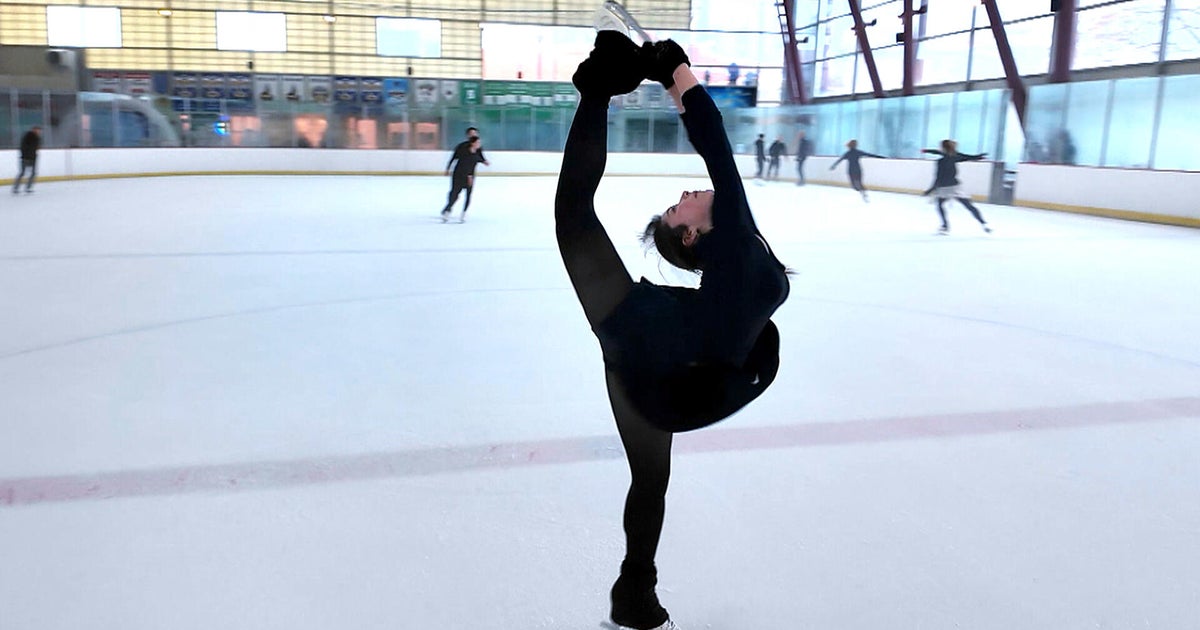
In a story that has captivated the figure skating world, 20-year-old American Alysa Liu has staged what Olympic gold medalist Brian Boitano calls "the biggest comeback in sports history." Liu, who abruptly retired from the sport at just 16, shocked fans and insiders alike when she stepped away from the ice in 2022. Her return in June 2024, after two years of what she described as simply "living it up," culminated in a stunning victory at the World Figure Skating Championships, marking her as a top contender for gold at the upcoming Winter Olympics in Milan, Italy.
Liu's early career was nothing short of phenomenal. At age 12, she became the youngest skater in history to land a triple axel in an international competition, a feat that set her apart from her peers. By 2019, at 13, she claimed the U.S. women's figure skating title, becoming the youngest champion in the event's history. She defended that title successfully in 2020, solidifying her status as a prodigy. Brian Boitano, the 1988 Olympic champion in men's singles, praised her exceptional talent during those years, noting that she performed jumps no other skater could execute at the time.
However, the pressures of elite competition took their toll. In early 2022, Liu announced her retirement via Instagram, deleted the app, and largely vanished from the public eye. According to Liu, the decision was driven by a desire for normalcy. "I was really just living it up," she told 60 Minutes, recounting how she spent her time traveling and hanging out with friends. The abrupt exit stunned the skating community, where early retirements among young athletes are rare but not unheard of.
Two years later, Liu's passion for the sport reignited. She returned to full-time training in June 2024, facing significant physical and mental challenges. Out of shape and dealing with changes in her body as she matured into adulthood, relearning her signature jumps proved arduous. Boitano, who has mentored Liu during her comeback, described the process vividly: "Learning the jumps 'was so easy for her as a child,'" he said. "She didn't even think about it. She just did it." But now, with her "new body," it required intense effort. "There were a lot of days that she was crying center ice," Boitano added, highlighting the emotional toll.
Despite the hurdles, Liu's determination paid off quickly. In her first competitive season back, she not only qualified for major events but dominated them, ultimately winning the world championship title. Boitano, speaking to 60 Minutes, called the achievement "unheard of." "It's the biggest comeback in sports history," he declared, emphasizing the rarity of such a rapid ascent after a prolonged hiatus.
Liu herself was surprised by the outcome. "I didn't, you know, foresee winning Worlds, or really winning any competition," she admitted. Her return wasn't just about reclaiming technical skills; it represented a profound personal evolution. As a child prodigy, Liu was often directed by adults—coaches, choreographers, and parents—who managed every aspect of her training and performances. Now, at 20, she has asserted her independence, collaborating closely with her team rather than following orders.
Her coach, Phillip DiGuglielmo, noted this shift as key to her growth. "For many years, she was dropped off at the rink. She was told what to do," he explained. "Now she comes in, and it is all collaborative." DiGuglielmo believes this maturity enhances her artistry on the ice. "I think the maturity comes out in the movement of the body in the choreography," he said.
Choreographer Massimo Scali echoed that sentiment, comparing Liu's pre- and post-retirement styles to two different skaters. Before her break, Scali said, she was "not interested in the process at all." Now, she is deeply invested, even taking the lead on creative decisions like selecting her music—a role he once handled himself. This newfound agency has transformed her performances, blending technical precision with artistic depth.
Boitano observed similar changes. As a young technician, Liu focused primarily on executing difficult jumps, sometimes at the expense of stylistic flair. During her time away, she adjusted her approach. "Once she got her woman's body, she didn't do all those hard things anymore. But she came down to a level where she was competing with the same technical arsenal that everybody else was," Boitano explained. Yet, her style has elevated dramatically. "Stylistically she is 'definitely one of the best,'" he said. "There's a depth to her movement. It's fluid and graceful and strong."
Liu attributes much of this evolution to a redefined purpose. No longer skating solely to win or please others, she now prioritizes the art form itself. "I kind of skated for other people. And I was a kid, and all these adults were telling me what I had to do. So, I kind of just followed suit," she reflected. "But now, like, I don't care, but it's because I value, I guess, the art of skating so much more." This mindset, she said, has freed her to express herself more authentically on the ice.
The skating world has taken notice of Liu's resurgence. Her world championship win in March 2025—following a strong showing at the U.S. Nationals in January—has positioned her as a favorite for the 2026 Winter Olympics in Milan, Italy, scheduled for February. Officials from U.S. Figure Skating have expressed confidence in her preparation, though they emphasize the competitive field remains wide open with rivals like Japan's Kaori Sakamoto and Russia's Anna Shcherbakova potentially returning to form.
While Liu's story is one of triumph, it also sheds light on the intense demands placed on young athletes in figure skating. The sport has seen other prodigies burn out early, with cases like Gracie Gold's struggles with mental health highlighting the need for better support systems. Liu's break allowed her to recharge, but experts like Boitano warn that such comebacks are exceptional. "It's unheard of," he reiterated, underscoring that most skaters who step away for years struggle to regain their edge.
Looking ahead, Liu's focus remains on the process rather than the podium. With training intensifying ahead of the Olympics, she continues to refine her programs under DiGuglielmo and Scali. Her journey from retirement to world champion in under two years serves as an inspiring narrative for aspiring athletes, demonstrating resilience and the value of pursuing passion on one's own terms.
As the Milan Olympics approach, all eyes will be on Liu to see if she can add Olympic gold to her resume. Whether she achieves that or not, her comeback has already rewritten the script of what’s possible in figure skating, proving that even after walking away, one can return stronger than ever.