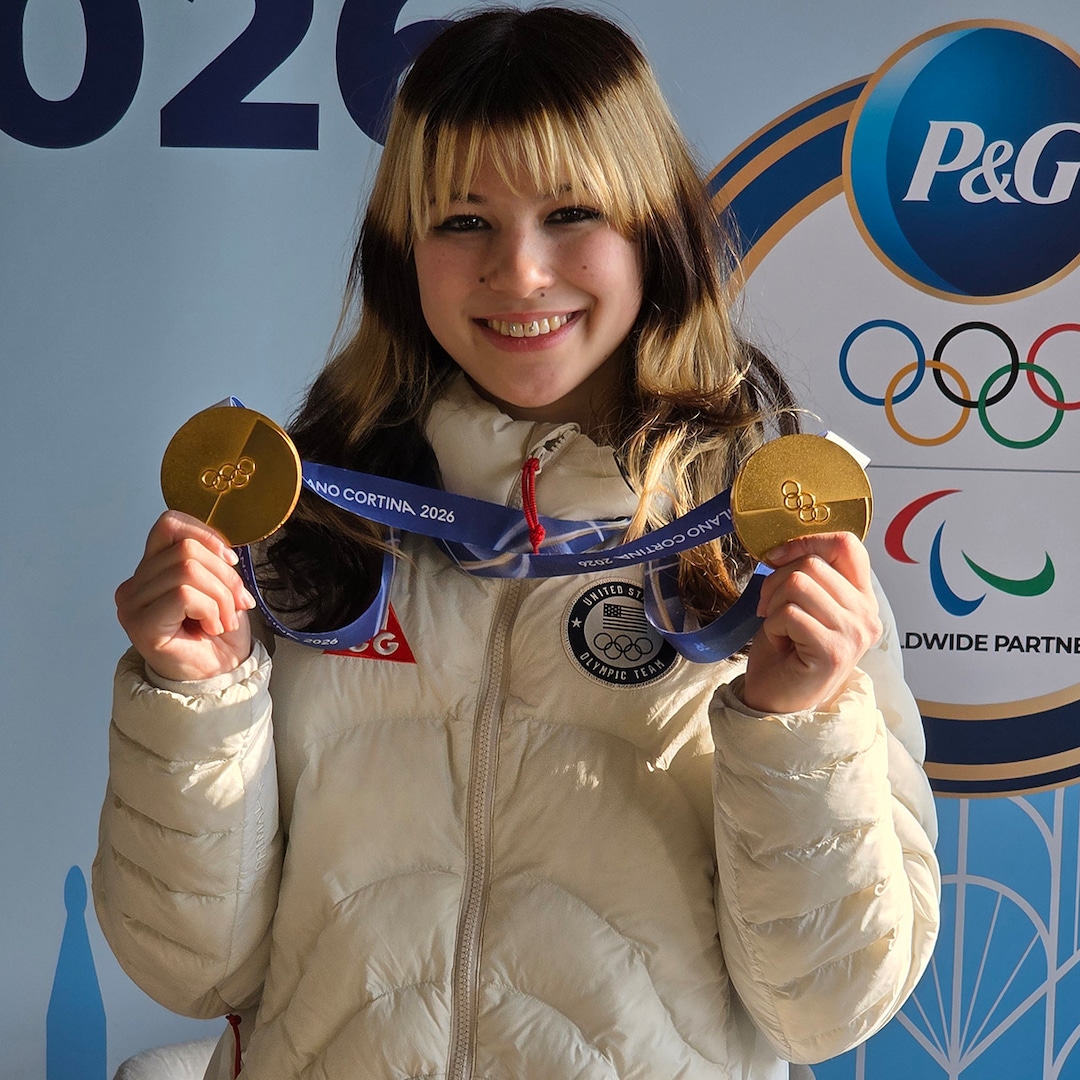
In the glittering aftermath of the 2026 Winter Olympics in Milano Cortina, Italy, American figure skater Alysa Liu has emerged not just as a gold medal champion but as a cultural bridge between the worlds of competitive sports and pop music. Liu, 20, captivated audiences by clinching the gold in the women's figure skating final, marking the first such victory for a U.S. woman since Sarah Hughes in 2002. Her performance to the tune of “Stateside” by Zara Larsson and Pink Pantheress during the Exhibition Gala on February 22 drew an unexpected and enthusiastic response from Larsson herself, who gave Liu a viral shoutout on TikTok that same day.
Liu, who returned to competitive skating after a retirement at age 16, expressed pure elation upon discovering the singer's nod. “Wow, I love that,” she told E! News exclusively while watching the video for the first time. The shoutout, which highlighted Liu's graceful routine to Larsson's track, quickly amassed views online, blending the high-stakes drama of the Olympics with the infectious energy of contemporary music.
The choice of “Stateside” was no accident for Liu, who has spoken openly about how music fuels her artistry on the ice. “I am only able to do such great programs because their songs are so great,” Liu said, “and I really connect with it.” She described the synergy between the song's rhythm and her movements as seamless, noting that the music and skating “go hand-in-hand.” This connection underscores Liu's evolution as an athlete who prioritizes personal expression in a sport often critiqued for its rigidity.
Liu's journey back to the Olympics has been one of rediscovery and empowerment. After stepping away from figure skating in 2020 amid the pressures of early fame—she was the 2019 world junior champion—Liu announced her return in 2024. Her gold medal performance in Milano Cortina not only redeemed her hiatus but also showcased a newfound confidence. “There was a time where I wasn't confident in myself or I didn't know I could step out of the lane,” she reflected to E! News. “That was up until I was 16 years old when I stepped away from the sport.”
That break, Liu explained, was her “first out-of-the-lane decision,” sparking a chain reaction of authenticity that carried her through training and back to international competition. Now, at 20, she feels liberated on the ice. “It feels like I'm really just doing what I want to do,” she said, “and I'm more confident in myself.” This mindset shift has been evident in her routines, which blend technical precision with emotional depth, earning praise from coaches and fans alike.
Beyond the rink, Liu's preparation extends to meticulous self-care routines, a detail she shared in partnership with Gillette Venus, the official razor sponsor of Team USA and the Milano Cortina Games. “I'm picky with blades, so this one? It's the one,” Liu quipped, emphasizing its role in her pre-competition ritual. “On the ice, it's my get-ready, pre-competition [routine] and it doesn't leave my skin dry and stuff. It's a good razor.” Such endorsements highlight how Olympians like Liu balance athletic demands with everyday wellness in the spotlight.
As the medals tally concluded on February 22, Liu's achievement stood out amid a Games rich with historic firsts. The 2026 Olympics, hosted in the Italian Alps, saw athletes shattering barriers across disciplines. Norwegian cross-country skier Johannes Høsflot Klæbo dominated with six gold medals, elevating his career total to 11 and cementing his status as the most decorated Winter Games gold medalist in history, according to Olympic records.
In speed skating, American Jordan Stolz not only secured gold in the men's 1000m event but also etched his name into the annals by setting a new Olympic record of 1:06.28. Stolz followed this up days later with another record in a subsequent race, showcasing the blistering pace of the sport at the Oval Lingotto in Turin.
South America's presence at the Winter Games grew with Brazilian ski racer Fábio Silva, whose gold in the men's slalom marked the continent's first medal in the history of the event. Silva's victory, celebrated with a spontaneous dance on the podium, symbolized a breakthrough for underrepresented nations in snow sports, as reported by International Olympic Committee officials.
Team USA's Maddie Mastro added to the American haul with a silver in women's snowboarding halfpipe, becoming the first woman to medal three times consecutively in the discipline. Mastro's run included the first-ever cab double 1080 landed by a female snowboarder in an Olympic final, a technical feat that drew standing ovations at the Laax halfpipe venue.
Historic debuts peppered the roster as well. Quynn Middelton, 22, became the first Black woman to represent Team USA in women's ice hockey, suiting up for the U.S. squad in their quarterfinal match against Canada on February 18. Similarly, Mexico's Regina Martínez Lorenzo made waves as the inaugural female cross-country skier from her country, competing in the women's 10km classic race and finishing 45th in a field of international elites.
In curling, Americans Cory Thiesse and Korey Dropkin clinched silver in mixed doubles, securing the United States' first medal in the event and ending a long wait for success on the ice sheets of the PyeongChang Curling Centre repurposed for Milano Cortina. South Africa's Melany Finberg broke ground as the first woman from her nation to compete in skeleton, hurtling down the Cortina sliding track at speeds exceeding 120 km/h during her debut runs.
Cross-country skiing saw the U.S. snap a 50-year drought when Jesse Williams earned silver in the men's sprint classical, crossing the line in 3:12.45 at the Val di Fiemme course. Williams' podium finish, the first American medal in the event since 1976, was hailed by U.S. Ski and Snowboard Association officials as a turning point for the program.
Looking ahead, Liu plans to savor her post-Olympic life without upending her grounded routine. “It's still me. I want my life to stay as similar as possible,” she told E! News. “I'm really going to try to keep my peace because I like my life, so I don't want it to be too chaotic. I want it to stay calm and peaceful and chill.” As she transitions from the adrenaline of Milano Cortina, Liu eyes future competitions while exploring her evolving identity off the ice.
The 2026 Games, wrapping up on February 23, leave a legacy of inclusivity and record-breaking feats, with Liu's story exemplifying how personal growth intersects with global sport. Organizers from the Milano Cortina 2026 committee reported attendance exceeding 1.2 million across venues, underscoring the event's draw despite challenging weather in the Dolomites. For athletes like Liu, the shoutout from Larsson serves as a reminder that Olympic triumphs resonate far beyond the medals, inspiring a new generation through shared cultural moments.