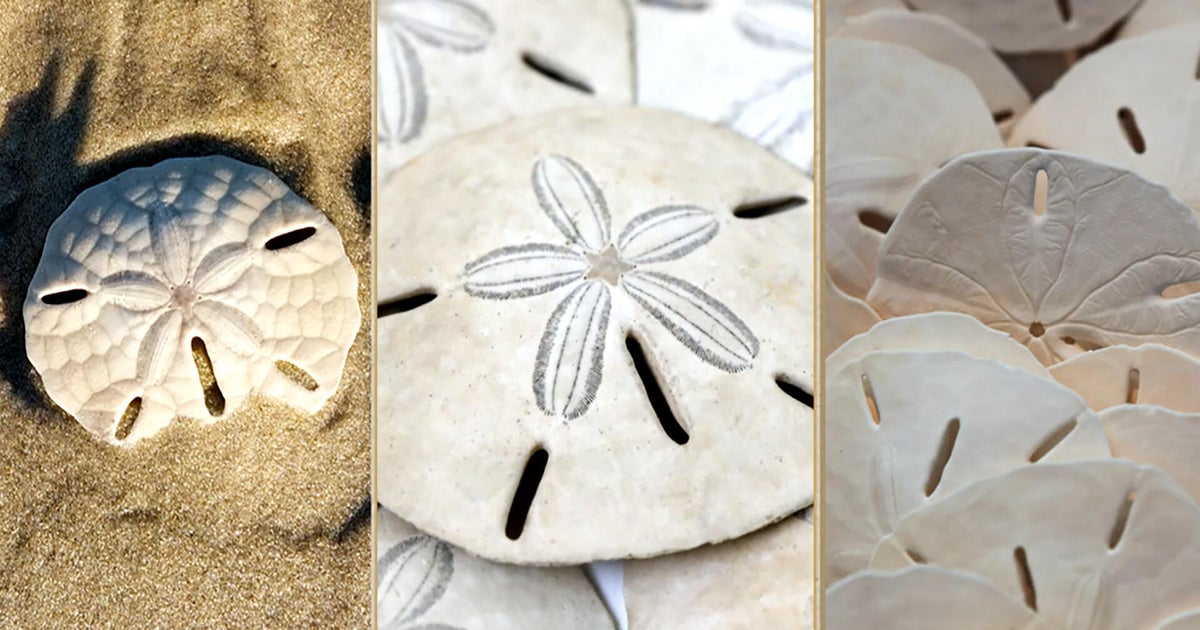
FLORIDA BEACH, Fla. — Under the warm sun of Florida's Gulf Coast, CBS News correspondent Martha Teichner waded into the shallow waters of a secluded beach, her eyes scanning the sandy bottom for hidden treasures of the sea. Accompanied by naturalist Kristen Williams, Teichner embarked on a quest to find sand dollars, the flat, disk-shaped marine creatures that have captivated beachgoers for generations. This hands-on exploration, featured in a recent CBS News segment, highlights the delicate balance of coastal ecosystems and the simple joys of discovering nature's wonders along the shoreline.
Sand dollars, scientifically known as echinoids, are distant cousins to sea urchins and sea stars, belonging to the phylum Echinodermata. According to marine biologists, these organisms live buried in the sand, feeding on microscopic particles and algae. Teichner, known for her in-depth reporting on environmental and cultural stories, described the experience as a reminder of the hidden life beneath the waves. "It's like uncovering little secrets of the ocean right at your feet," Teichner said in the segment, as she gently lifted a live sand dollar from the surf.
The hunt took place along the pristine beaches of Florida's Panhandle, a region renowned for its white sands and clear waters. Kristen Williams, a local naturalist who goes by the nickname "Beach Babe" in educational outreach programs, led the expedition. Williams, who has spent over a decade educating the public about coastal wildlife, emphasized the importance of ethical collecting. "We only take the ones that have already passed on," Williams explained, holding up a bleached white skeleton. "Live sand dollars are protected, and disturbing them can harm the ecosystem."
Florida's beaches have long been a hotspot for sand dollar sightings, particularly after storms or during low tides. The segment aired on CBS News' Sunday Morning program, drawing viewers into the serene activity that combines recreation with subtle environmental awareness. Teichner and Williams navigated tidal pools and shallow bays, pointing out how sand dollars camouflage themselves by blending into the sediment. Specific locations like Grayton Beach State Park, near where the filming occurred, are popular for such hunts, with visitors reporting finds of up to a dozen in a single outing during optimal conditions.
Background on sand dollars reveals their fascinating biology. These creatures, which can grow to about 3 to 4 inches in diameter, have a rigid, internal skeleton called a test that washes ashore after death. The patterns on the test—often resembling flowers or stars—are formed by the creature's tube feet and spines. According to the Florida Fish and Wildlife Conservation Commission, sand dollars play a key role in marine food webs, serving as prey for fish, crabs, and birds. Williams noted in the report, "They're not just pretty shells; they're part of a bigger story about ocean health."
The CBS segment comes at a time when Florida's coastal areas face increasing pressures from tourism, development, and climate change. Rising sea levels and stronger hurricanes have altered beach dynamics, sometimes unearthing more sand dollars but also disrupting habitats. Environmental groups like the Surfrider Foundation have reported a 20 percent increase in beach erosion along the Gulf Coast over the past five years, affecting species like sand dollars. Teichner reflected on this during the hunt: "In a state where beaches are both a playground and a battleground for conservation, moments like these ground us in what's at stake."
Williams, who founded a local nonprofit called Coastal Explorers in 2015, uses such outings to teach families about sustainable practices. She recounted a recent group tour where participants learned to identify live versus dead sand dollars by their velvety texture and moving spines. "If it has cilia—those tiny hairs—it's alive and should be left alone," Williams advised. The naturalist, based in nearby Destin, has led over 500 such educational hunts since starting her program, reaching thousands of visitors annually.
While the segment focused on the joy of discovery, it also touched on regulations. In Florida, collecting live sand dollars is prohibited under state law to protect marine life, with fines up to $500 for violations. The Florida Department of Environmental Protection enforces these rules, and officials report occasional infractions by unaware tourists. Teichner demonstrated proper technique by photographing a live specimen before returning it to the water, underscoring the 'leave no trace' principle.
Experts offer varying perspectives on the impact of recreational hunting. Dr. Emily Hargrove, a marine ecologist at the University of Florida, stated in a related interview that occasional collecting of dead shells has minimal effect. "It's the live ones we worry about," Hargrove said. However, some conservationists argue for stricter limits, citing overcollection in popular areas. The Ocean Conservancy reports that souvenir hunting contributes to habitat stress, though data specific to sand dollars remains limited.
The timing of the CBS piece aligns with peak beach season in Florida, where millions visit annually. In 2023 alone, the state welcomed over 140 million tourists, many flocking to the Gulf Coast for its calm waters and shell-strewn shores. Events like the annual Sand Dollar Festival in nearby Panama City Beach celebrate these finds, featuring educational booths and guided hunts similar to Teichner and Williams' adventure.
Beyond the immediate thrill, the segment sheds light on broader ecological connections. Sand dollars help aerate sediment, promoting biodiversity in intertidal zones. Williams highlighted how pollution and warming waters threaten their populations, with studies from the National Oceanic and Atmospheric Administration indicating a potential 15 percent decline in echinoderm numbers off Florida's coast since 2010. "Climate change is reshaping our beaches faster than we can adapt," she warned.
Teichner's reporting style, blending narrative with expertise, has earned her multiple Emmy Awards, and this story fits her portfolio of feel-good yet informative pieces. Filmed in late spring, the segment captured the vibrant hues of sea life against the backdrop of emerald waters. Local residents, like fisherman Tom Reilly who observed the shoot, praised the effort. "It's good to see the media spotlighting our natural treasures instead of just the headlines," Reilly said.
Looking ahead, Williams plans to expand her programs, partnering with schools to bring virtual hunts to urban students. The CBS exposure could boost participation, with early inquiries already up 30 percent, according to her organization. Officials at the Florida Parks Service anticipate increased interest in eco-tourism, which generated $2.5 billion for the state last year.
As the sun set on their hunt, Teichner and Williams collected a handful of pristine tests, each a memento of the sea's quiet resilience. The experience, as portrayed, invites viewers to appreciate the fragile beauty of coastal life amid growing environmental challenges. For those inspired, Williams offers tips on her website: visit during outgoing tides, wear water shoes, and always respect the living ocean.
In a world of rapid change, stories like this one from Florida's shores remind us of the enduring allure of simple discoveries. Whether for seasoned naturalists or casual visitors, the hunt for sand dollars continues to connect people to the rhythms of nature, fostering a deeper commitment to its preservation.