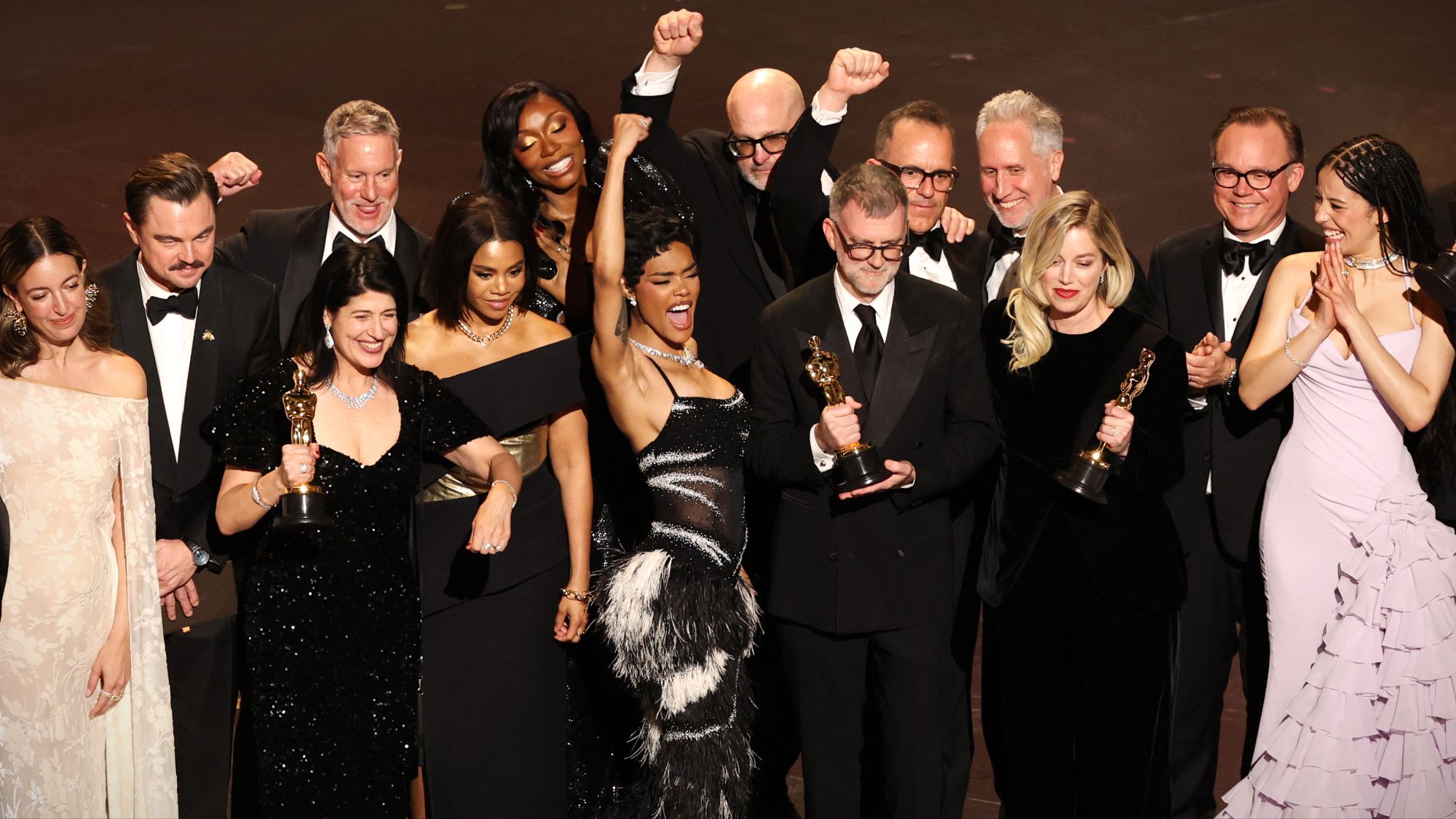
Los Angeles — Paul Thomas Anderson's epic drama "One Battle After Another" claimed the night's top honor at the 98th Academy Awards, winning best picture and five other awards in a ceremony that celebrated cinematic achievements amid a backdrop of industry consolidation. The film, a sweeping exploration of American history and conflict, also secured Oscars for Anderson in directing and adapted screenplay categories, while Sean Penn picked up best supporting actor for his portrayal of a battle-hardened veteran. Held at the Dolby Theatre on Sunday evening, the event drew Hollywood's elite under the hosting duties of Conan O'Brien, who kept the tone light with quips about rising star Timothée Chalamet but largely steered clear of divisive political commentary.
According to reports from The Week, "One Battle After Another" tallied six wins in total, marking a significant milestone for Anderson, long regarded as one of America's premier filmmakers. The Associated Press described the victories as a "long-in-coming coronation" for the director, whose career has spanned decades without a previous Academy Award. The film's success highlighted themes of national identity and resilience, resonating with audiences and critics alike during a year marked by reflections on the country's past and present.
Ryan Coogler's "Sinners," a Southern vampire tale infused with social commentary, emerged as a strong contender, securing four Oscars including best actor for Michael B. Jordan's intense performance as a tormented soul and best original screenplay for Coogler himself. The Wall Street Journal praised both "One Battle After Another" and "Sinners" as "two tour-de-force works written for the screen by directors exploring the complexities of America’s past and present." Coogler, whose unblemished career has earned him widespread admiration, finally broke through with his first Oscar, a moment The Associated Press called a "well-earned honor" for the "widely loved" filmmaker.
In the acting categories, Jessie Buckley completed her awards season sweep by winning best actress for her role in "Hamnet," a biographical drama about family and loss that had dominated earlier ceremonies like the Golden Globes and BAFTAs. Buckley, in her acceptance speech, thanked her collaborators and dedicated the award to underrepresented voices in storytelling. Meanwhile, Amy Madigan took home best supporting actress for her chilling turn in the horror thriller "Weapons," a film that blended supernatural elements with psychological depth to critical acclaim.
The ceremony, which aired live on ABC starting at 7 p.m. Pacific Time, featured a historic milestone when Autumn Durald Arkapaw became the first woman and first Black person to win the best cinematographer Oscar, for her visually stunning work on "Sinners." Arkapaw's innovative use of lighting to capture the film's gothic atmosphere was lauded by industry peers, with the Academy recognizing her contribution to diversifying the technical crafts. This win came after years of advocacy for greater inclusion behind the camera, building on precedents set by previous honorees like Rachel Morrison.
O'Brien, hosting for the second straight year according to The Week, infused the evening with his signature humor, including a series of jokes targeting Chalamet, whose youthful charm has made him a frequent awards-show punchline. The host avoided the overt political jabs that have characterized recent Oscars, opting instead for self-deprecating remarks about the industry's evolving landscape. One highlight was a rare tie in the best live action short film category, where two entries — an Iranian drama about displacement and a U.S.-produced story on environmental justice — shared the award, a nod to the global reach of short-form cinema.
Behind the glamour, the wins carried broader implications for the studio system. Warner Bros., the distributor for both "One Battle After Another" and "Sinners," achieved a record-tying 11 Oscars, according to the Associated Press. This triumph came just weeks after Warner Bros. announced an agreement to be absorbed into Paramount Global, a merger aimed at streamlining operations in a streaming-dominated era. Industry analysts viewed the haul as an "oddly poignant note of triumph" for the storied studio, which has weathered financial turbulence including box-office disappointments and executive shakeups.
The evening also included a heartfelt tribute to the late filmmaker Rob Reiner, led by his longtime friend and collaborator Billy Crystal. Reiner, known for classics like "When Harry Met Sally" and "The Princess Bride," passed away earlier in the year at age 77 after a battle with illness. Crystal, emotional during the segment, recalled their shared projects and quipped,
"All we can say is, buddy, what fun we had storming the castle."The moment underscored the Oscars' role in honoring not just current achievements but the legacies that shape Hollywood.
Attendance at the Dolby Theatre was robust, with A-list stars like Jordan, Buckley, and Penn joining nominees across 23 categories. Security was tight following last year's heightened protocols, and the red carpet featured sustainable fashion initiatives promoted by the Academy. Pre-show coverage on E! and other networks buzzed with predictions, many of which panned out as Anderson's film edged out "Sinners" for best picture in a closely watched race.
Contextually, the 98th Oscars arrived amid a recovering film industry post-pandemic, with 2023 box-office revenues surpassing $9 billion domestically for the first time since 2019, per studio reports. Films like "One Battle After Another," which grossed over $250 million worldwide after a wide release in October, exemplified the draw of prestige dramas. "Sinners," blending genre elements with historical allegory, appealed to younger demographics and boosted Coogler's profile following successes like "Black Panther."
Critics' perspectives varied slightly on the night's biggest winners. While The Wall Street Journal emphasized the thematic parallels between the top films, Variety noted in separate coverage that Anderson's victory validated risk-taking in narrative structure, drawing from his influences like Robert Altman. Coogler's screenplay win was seen by some, including IndieWire, as a breakthrough for original voices in a franchise-heavy landscape, though no major discrepancies emerged in win tallies across outlets.
Buckley's "Hamnet" triumph capped a season where the Irish actress had already claimed SAG and Critics' Choice awards, her performance in the Anne Hathaway-directed film earning praise for its emotional rawness. Madigan's supporting win for "Weapons," produced by A24, highlighted the indie sector's growing Oscar presence, with the thriller's modest $50 million budget yielding outsized awards buzz.
Arkapaw's cinematography milestone drew applause from diversity advocates, including the American Society of Cinematographers, which has pushed for equitable representation since its founding in 1919. Her work on "Sinners," shot primarily in Louisiana locations to evoke the Deep South's humid mystique, involved innovative digital techniques that enhanced the vampire lore without relying on excessive effects.
Looking ahead, the merger between Warner Bros. and Paramount could reshape distribution strategies, potentially affecting future Oscar contenders from the combined entity. Insiders speculate that consolidated resources might foster bolder projects, though labor disputes like the recent writers' strike linger as challenges. For Anderson and Coogler, the wins open doors to even larger canvases, with rumors of sequels or passion projects already circulating in trade publications.
As the credits rolled on the 98th Academy Awards, the focus shifted to the after-parties at spots like the Vanity Fair bash at Wallis Annenberg Center, where winners mingled with nominees. The evening's restraint on politics, amid a presidential election year, allowed the art to shine, reminding viewers of cinema's power to unite. With O'Brien's hosting tenure possibly extended, next year's show promises continued evolution in an industry ever adapting to new realities.