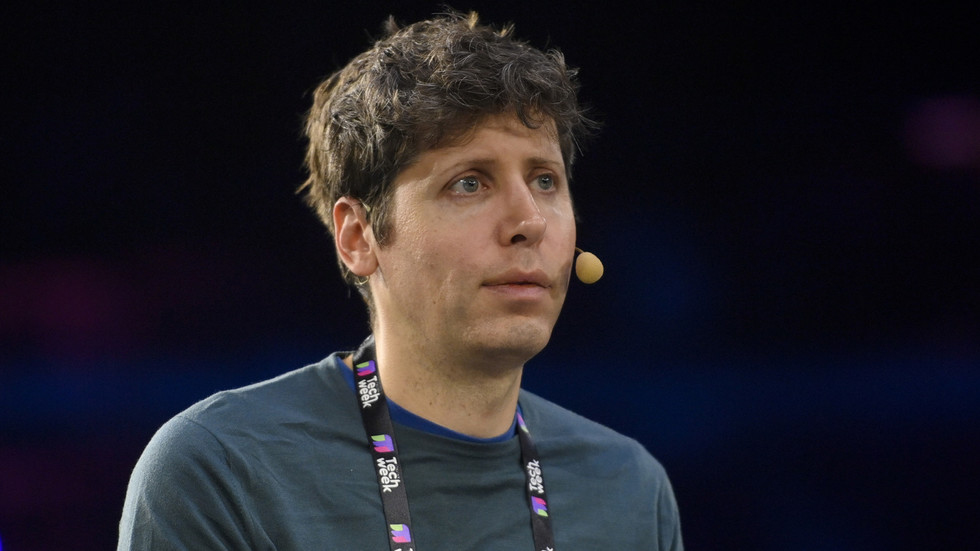
WASHINGTON — OpenAI, the company behind the popular ChatGPT tool, has entered into a significant agreement with the Pentagon, allowing its artificial intelligence systems to be integrated into the U.S. military's classified networks. The deal was announced by OpenAI CEO Sam Altman on Friday, marking a pivotal moment in the collaboration between Big Tech and the Department of Defense amid ongoing debates over AI ethics and national security.
According to Altman's statement, the partnership includes robust safety measures designed to address concerns about the military application of AI technologies. "The Pentagon has displayed a deep respect for safety and a desire to partner to achieve the best possible outcome," Altman said. He emphasized two core safety principles embedded in the agreement: prohibitions on domestic mass surveillance and the requirement for human responsibility in the use of force, including any autonomous weapon systems.
The timing of OpenAI's announcement is particularly noteworthy, coming just hours after President Donald Trump issued an executive order directing federal agencies to suspend the use of AI systems developed by OpenAI's rival, Anthropic, for the next six months. Trump's directive cited worries over Anthropic's attempts to impose conditions on the Pentagon regarding the deployment of its technology in military contexts.
Under the new OpenAI-Pentagon deal, the company's AI models will incorporate technical safeguards such as full-disk encryption to ensure secure operation, though these will be limited to cloud-based networks. Altman highlighted these protections as essential for maintaining the integrity of the systems in sensitive environments. He also urged the Pentagon to apply similar terms across all AI providers, calling on Washington to shift away from legal confrontations toward collaborative frameworks.
This development follows a period of tension between the U.S. government and Anthropic, whose Claude AI model had previously been utilized in the Pentagon's classified networks. However, Anthropic reportedly refused to grant unrestricted access to its systems without assurances that the technology would not enable domestic surveillance or fully autonomous weapons lacking human oversight.
Pentagon officials viewed Anthropic's stance as an overreach, interpreting it as an effort by the company to dictate operational terms beyond a standard commercial relationship. Deputy Defense Secretary Emil Michael publicly criticized Anthropic CEO Dario Amodei, accusing him of seeking "undue control over military operations," according to a Bloomberg report from earlier this week.
The rift escalated when President Trump took to his Truth Social platform to denounce Anthropic. "We don’t need them, we don’t want them, and we will no longer deal with them," Trump wrote, framing the company's conditions as a threat to national security and an attempt to pressure the military into compliance.
Altman, in his announcement, expressed support for Anthropic's safety-focused approach, noting that the guardrails in OpenAI's deal mirror those previously requested by its competitor. This gesture comes at a time when the AI industry is navigating complex relationships with government entities, particularly in defense applications where ethical boundaries are fiercely debated.
The Pentagon's interest in AI tools like those from OpenAI and Anthropic stems from their potential to enhance intelligence analysis, logistics, and decision-making in classified settings. For instance, models such as ChatGPT and Claude can process vast amounts of data quickly, offering insights that could streamline military operations. However, the integration of such technologies into secure environments raises questions about data privacy, algorithmic bias, and the risk of unintended escalations in warfare.
Background on the broader context reveals that the U.S. military has been accelerating its adoption of AI since the early 2020s, with initiatives like the Joint Artificial Intelligence Center established in 2018 to oversee such integrations. The OpenAI deal builds on previous collaborations, including Microsoft's longstanding partnership with the Pentagon through its Azure cloud services, which powers much of the department's computing infrastructure.
Critics within the tech sector and advocacy groups have long warned about the militarization of AI, arguing that commercial developers should avoid contributing to systems that could lower the threshold for conflict. Organizations like the Campaign to Stop Killer Robots have called for international treaties to ban lethal autonomous weapons, a concern echoed in Anthropic's reported conditions.
From the Pentagon's perspective, the OpenAI agreement represents a pragmatic step forward. Officials have not yet released a formal statement on the deal, but sources familiar with the negotiations described it as a balanced arrangement that aligns technological advancement with security protocols. The emphasis on cloud-only deployment, for example, allows the military to leverage OpenAI's expertise without compromising on-premises classified data.
Meanwhile, the fallout from the Anthropic ban continues to reverberate. Federal agencies, including the Departments of Defense, Homeland Security, and Justice, must now scramble to replace Claude in their workflows, potentially turning to alternatives like OpenAI's offerings or open-source models. This shift could cost millions in transition expenses and disrupt ongoing projects, though exact figures remain undisclosed.
Looking ahead, the OpenAI-Pentagon partnership may set a precedent for future AI contracts with the government. Altman's call for standardized safety terms across the industry suggests a push toward self-regulation, potentially averting more executive interventions like Trump's order. As AI capabilities evolve rapidly— with OpenAI's latest models demonstrating advanced reasoning and multimodal processing—policymakers in Washington face mounting pressure to establish clear guidelines.
The implications extend beyond the U.S., influencing global AI governance. Countries like China and Russia are investing heavily in military AI, prompting American leaders to prioritize domestic innovation while addressing ethical dilemmas. For now, the OpenAI deal underscores a delicate balance: harnessing AI's power for defense without crossing into unchecked autonomy.
In Appleton, where tech hubs are emerging amid the Midwest's industrial revival, local experts are watching these developments closely. "This could accelerate AI job growth here, but we need safeguards to prevent misuse," said Dr. Elena Vasquez, a computer science professor at Appleton University. As the story unfolds, it highlights the intersection of innovation, security, and ethics in an era defined by artificial intelligence.