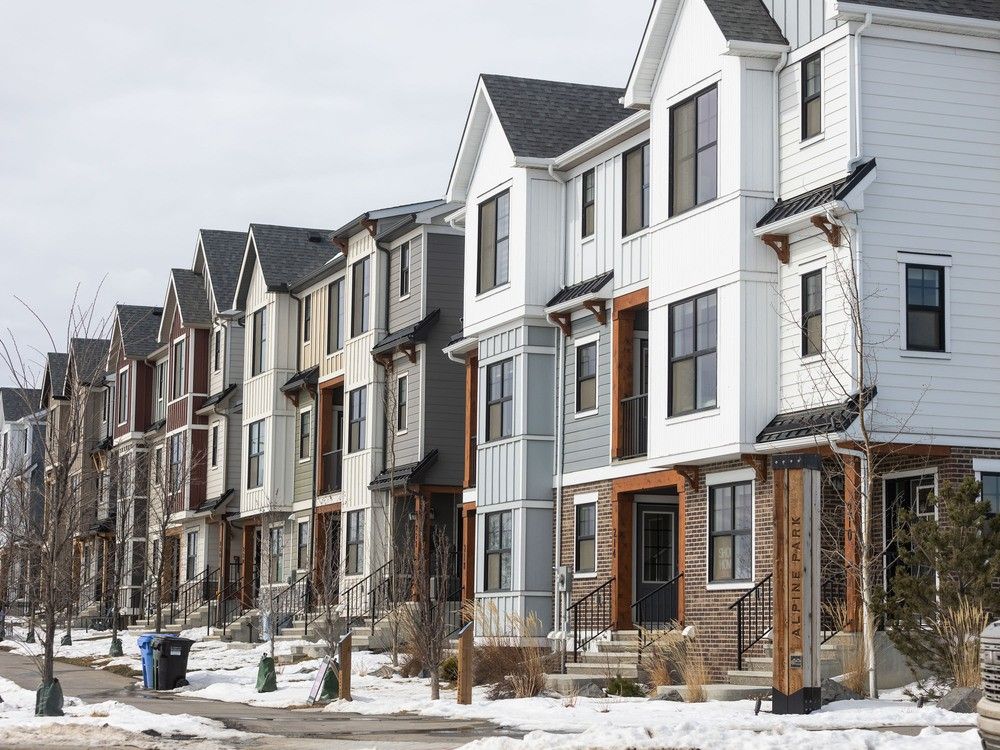
CALGARY, Alberta — As Calgary's city council weighs a potential repeal of recent zoning reforms aimed at boosting housing affordability, advocates warn that the move could jeopardize opportunities for first-time homebuyers and retirees seeking to downsize within their communities. The reforms, part of the city's broader Housing Strategy, introduced blanket rezoning to allow more diverse housing types like townhouses, duplexes, and secondary suites in neighborhoods previously restricted to single-detached homes. Critics of the repeal, including members of the pro-housing group More Neighbours Calgary, argue that rolling back these changes would exacerbate isolation for younger and older residents alike.
The debate has intensified in recent weeks, with council members considering measures that would require special permissions for such "missing middle" housing options. According to an opinion piece published in the Calgary Herald, this shift could undo progress in creating adaptable homes that serve residents at different life stages. "The question we should be asking is: Does Calgary’s housing market account for all stages of Calgarians’ lives?" wrote Inam Teja, a Calgarian in his 20s, and Frank Frey, a lifelong resident born in the city's former general hospital before its demolition. "The answer is no, but we’re on the right path. That is, unless our council turns its back on a housing market that gives young people a place to start and our seniors a place to land."
Teja and Frey, both affiliated with More Neighbours Calgary, highlight how first-time buyers are increasingly turning to townhouses for their relative affordability compared to single-detached houses. The Calgary Herald has reported that this trend reflects broader market pressures, with median home prices in Calgary hovering around $550,000 as of late 2023, according to data from the Calgary Real Estate Board. For seniors, the authors emphasize the need for condos, flats, and smaller homes without extensive maintenance, options that are currently limited and often located on the outskirts of established neighborhoods.
"For many seniors, the family home stops fitting long before the memories fade," Teja and Frey wrote. "Once children move out, a large house with stairs and constant maintenance is less attractive than a condo or other housing options. But these homes are broadly limited and often at the edge of our communities." They argue that without local downsizing options, retirees face displacement from the areas where they've built their lives, including parks, schools, and community events.
The Housing Strategy, approved by council in 2021 and updated in subsequent years, sought to address these gaps by permitting a wider range of housing densities across the city. This included allowing up to four units on lots previously zoned for single-family homes, a change implemented through blanket rezoning in select areas starting in 2023. Proponents say it promotes "missing middle" developments—townhouses, duplexes, fourplexes, and secondary suites—that cater to evolving needs without the high costs of luxury high-rises.
"These homes aren’t luxury towers or speculative investments," according to Teja and Frey. "They are practical, adaptable places that grow with people: a basement suite for a student, a duplex for a young family, a townhouse for empty nesters and a single-level apartment for seniors who want to stay close to neighbours, doctors and transit." The piece points to the Calgary Real Estate Board's observations that first-time homebuyers have shifted toward townhomes, with sales of such properties rising by about 15% year-over-year in 2023.
Opposition to the zoning changes has come from some homeowners concerned about neighborhood character and property values. While specific council statements on the repeal proposal were not detailed in the available reports, the Calgary Herald opinion notes that the framing of the debate often pits younger affordability seekers against older homeowners protecting their communities. Council meetings on the matter have reportedly drawn vocal participation from residents in established areas like Kensington and Bridlewood, where fears of increased density have been raised since the strategy's rollout.
Teja and Frey counter that restricting diverse housing could deepen social isolation, a growing issue in Calgary amid its population boom. The city added over 46,000 residents in 2023 alone, per Statistics Canada, straining an already tight housing supply with vacancy rates below 2%. "Our society is increasingly isolating," they wrote. "The feeling of disconnection is growing in every generation. If we continue to put walls up, to place barriers between our neighbours and us, the sense of isolation will only grow, and it will hit our youngest and oldest the hardest."
Advocates also promote multi-generational living as a benefit of flexible zoning, allowing families to accommodate aging relatives or young adults starting out. This arrangement, they say, reduces isolation for seniors and provides affordable entry points for youth. The opinion piece cites the need for such options to maintain community ties, noting that downsizing enables continued contributions like volunteering and neighborhood cleanups.
"Downsizing realizes the lifelong investment a household has made in its community," Teja and Frey stated. "Our families grew up in these parks, our children attended the local schools, we planted trees, participated in community cleanups, babysat and volunteered to clear snow. Downsizing in your own community gives you a chance to keep contributing, but it only works when there are housing choices—from condos to row houses—in our own communities."
The potential repeal comes as Calgary's housing market faces national scrutiny. Alberta's capital has long been touted as more affordable than Vancouver or Toronto, with average home prices about 40% lower than the national median. However, rapid in-migration from other provinces, driven by economic opportunities in oil and tech sectors, has pushed prices up 8% in the past year, according to the Canadian Real Estate Association.
City officials have not yet scheduled a final vote on the repeal, but discussions are slated for the next council meeting on October 15, 2024, at the Calgary Municipal Building. More Neighbours Calgary plans to rally support, emphasizing the strategy's role in fostering inclusive growth. "This isn’t a story about winners and losers," the group wrote. "It’s about whether Calgary’s Housing Strategy provides people with choices at all stages of their lives."
Broader implications extend to Calgary's urban planning future. If repealed, the zoning rules could limit new construction to low-density formats, potentially worsening affordability amid projections of 200,000 additional residents by 2030. Experts from the University of Calgary's School of Public Policy have previously noted that such restrictions often lead to higher prices and reduced mobility for all demographics.
On the other side, some councilors argue that special permissions ensure community input, preventing abrupt changes. Ward 7 Coun. Raj Dhaliwal, for instance, has expressed support for measured development in public comments, though specifics on the repeal remain under debate. The Calgary Herald summary reinforces the advocates' view: "Young adults need a place to start and seniors a place to land. The Housing Strategy, including blanket rezoning, helped make room for both."
As the decision looms, residents like Teja and Frey urge council to preserve the reforms. "Repealing it doesn’t protect neighbourhoods," they concluded. "It protects an expensive fiction that one kind of housing fits everyone, forever. And that fiction leaves us all worse off." The outcome could shape Calgary's housing landscape for years, balancing growth with the preservation of community fabric in a city on the cusp of major transformation.