In a move that has stunned international observers and sparked widespread debate in Washington, President Donald Trump has ordered U.S. military forces to intervene in Venezuela, resulting in the capture of President Nicolás Maduro. The operation, which unfolded over the past week, marks one of the most aggressive foreign policy actions of Trump's second term, drawing comparisons to historical U.S. interventions in Latin America while raising fresh concerns about the limits of executive power.
According to reports from U.S. officials, American special forces launched a targeted raid on Maduro's compound in Caracas late last Thursday night, local time. Maduro, who has led Venezuela since 2013 amid a deepening economic crisis and political unrest, was taken into custody without significant resistance, sources close to the Pentagon said. The swift action followed months of escalating tensions, including U.S. sanctions on Venezuelan oil exports and recognition of opposition leader Juan Guaidó as the legitimate interim president back in 2019—a stance the Trump administration has maintained.
Elizabeth Saunders, a professor of political science at Columbia University specializing in American foreign policy, described the incursion as "one of the most radical" decisions of Trump's administration. In a recent discussion on the podcast Right Now With Perry Bacon, hosted by New Republic staff writer Perry Bacon, Saunders expressed surprise at the operation's scope. "I was surprised by the decision to capture Maduro and even more so by Trump declaring that the U.S. would now essentially run Venezuela," she said.
The professor's comments highlight a key aspect of the intervention: Trump's apparent disregard for traditional checks on presidential authority. Saunders noted that while the U.S. has a history of deposing leaders abroad—citing interventions in Panama in 1989 and Grenada in 1983—the current situation in Venezuela stands out because "the president does not appear to be taking much guidance from Congress, the American public, or even his own advisers." This lack of consultation has fueled criticism from both Democrats and some Republicans on Capitol Hill.
House Speaker Nancy Pelosi, D-Calif., condemned the action in a statement released Friday morning, calling it "an unconstitutional overreach that endangers American lives and destabilizes the region." She urged immediate congressional briefings, which the White House has promised but not yet scheduled. On the Republican side, Sen. Lindsey Graham, R-S.C., offered measured support, saying in a Fox News interview, "Maduro's regime has been a humanitarian disaster; if this brings relief to the Venezuelan people, it's worth considering." However, he stopped short of endorsing the full U.S. administration of the country.
White House officials have framed the intervention as a necessary response to Venezuela's collapse under Maduro's socialist policies. Press Secretary Kayleigh McEnany told reporters during a briefing on Saturday that the operation aimed to "restore democracy and prevent further suffering." She added that U.S. forces would remain in Venezuela "as long as needed to stabilize the government and facilitate free elections," a timeline that remains undefined.
Behind the scenes, the decision appears to have been driven by a tight circle of Trump advisers. Saunders pointed to senior adviser Stephen Miller and Secretary of State Marco Rubio as key influencers. "This invasion was driven more by the individual goals and priorities of Trump, Miller, Rubio, and the president himself than simply a U.S. desire to grab Venezuela’s oil reserves," she argued on the podcast. Rubio, a vocal critic of Maduro for years, has long advocated for stronger action against the regime, tweeting last month that "the time for talk is over." Miller, known for his hardline views on immigration, has reportedly linked the Venezuelan crisis to border security issues, claiming in internal memos that regime change could stem migration flows to the U.S. southern border.
Venezuela's context adds layers to the unfolding story. The oil-rich South American nation has been mired in turmoil since the death of Hugo Chávez in 2013, Maduro's mentor. Hyperinflation peaked at over 1 million percent in 2018, according to the International Monetary Fund, leading to widespread shortages of food and medicine. More than 7 million Venezuelans have fled the country since 2015, creating the largest displacement crisis in Latin American history, per United Nations estimates. U.S. recognition of Guaidó in January 2019 intensified the standoff, but previous efforts at regime change, including economic sanctions, failed to dislodge Maduro, who retained control with support from Russia, China, and Cuba.
International reactions have been swift and divided. Russian President Vladimir Putin condemned the U.S. action as "imperialist aggression" in a statement from the Kremlin on Friday, vowing to support Maduro's allies. China's Foreign Ministry echoed similar sentiments, calling for respect for Venezuela's sovereignty. In contrast, leaders from Colombia and Brazil, both with right-leaning governments, expressed cautious approval. Colombian President Iván Duque said his country stands "ready to assist in the transition," citing the millions of Venezuelan refugees straining its resources.
Within the U.S., protests erupted in major cities over the weekend. In Miami, home to a large Venezuelan-American community, demonstrators gathered outside the White House's regional office, waving flags and chanting for Maduro's ouster. "This is justice for our families back home," said Maria Gonzalez, a 45-year-old exile who fled Caracas in 2017. Counter-protests in New York decried the move as warmongering, with activists from Code Pink holding signs reading "No More Wars for Oil."
Military details of the operation remain classified, but sources familiar with the matter described it as a joint effort involving Navy SEALs and Air Force drones. The raid occurred around 2 a.m. local time, with U.S. aircraft providing cover from the USS Abraham Lincoln carrier group stationed in the Caribbean. No American casualties were reported, though Venezuelan state media claimed two soldiers died in the skirmish—a claim the Pentagon has not confirmed.
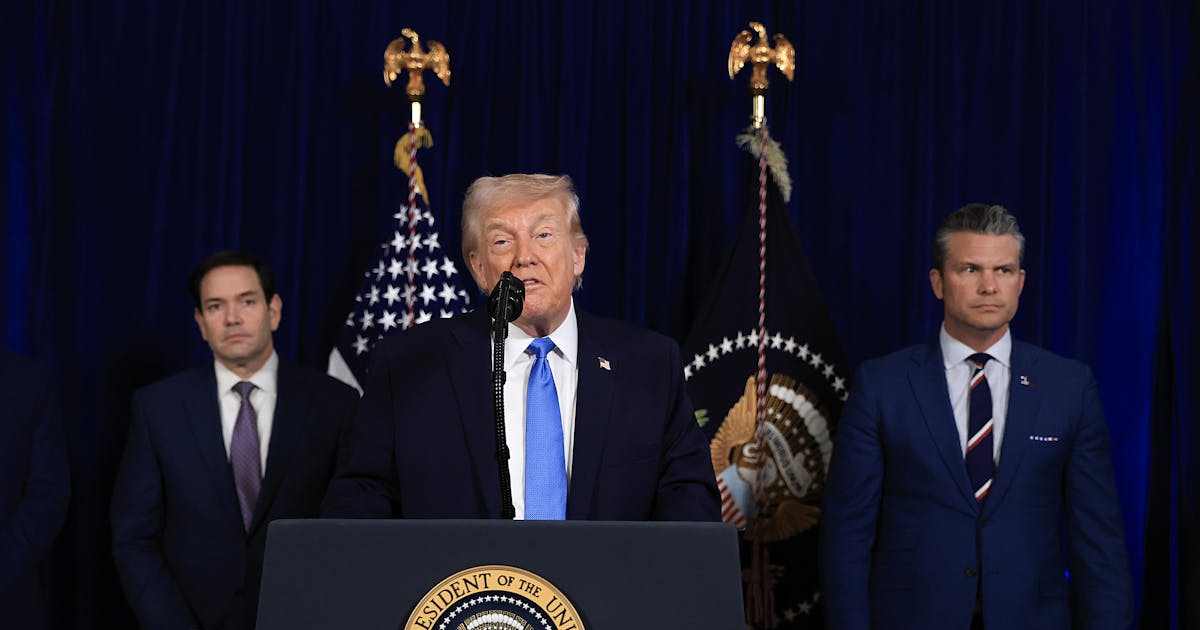
Trump himself addressed the nation in a Rose Garden speech on Sunday afternoon, flanked by Rubio and Miller. "Nicolás Maduro has turned Venezuela into a hellhole, and we're fixing it," he declared, emphasizing that the U.S. would not seek to occupy the country indefinitely. He promised that interim governance would involve Guaidó and other opposition figures, with U.S. oversight limited to security and economic stabilization. Critics, however, question the feasibility, pointing to past U.S.-led efforts in Iraq and Afghanistan that stretched into decades.
As the dust settles, questions about the legal basis for the intervention loom large. The War Powers Resolution of 1973 requires congressional approval for sustained military actions, but Trump invoked his authority as commander-in-chief, similar to his 2020 strike on Iranian General Qasem Soleimani. Legal experts like Saunders warn that this sets a dangerous precedent. "It's alarming because it shows how unconstrained the executive can be," she said.
Looking ahead, the implications for U.S. foreign policy are profound. With midterm elections approaching in November, the Venezuela operation could become a flashpoint, boosting Trump's base among hawkish conservatives while alienating moderates wary of entanglement. Economically, access to Venezuela's vast oil reserves—estimated at 300 billion barrels by the U.S. Energy Information Administration—could ease global energy pressures, but experts caution that rebuilding the shattered industry will take years.
For Venezuelans, the capture of Maduro offers hope but also uncertainty. Opposition leaders have called for unity, with Guaidó stating in a video from Bogotá, "This is the beginning of the end of tyranny." Yet, loyalist factions within the military remain, and reports of unrest in Caracas persist. As U.S. diplomats engage with regional partners, the world watches to see if this radical step leads to renewal or further chaos in the hemisphere.