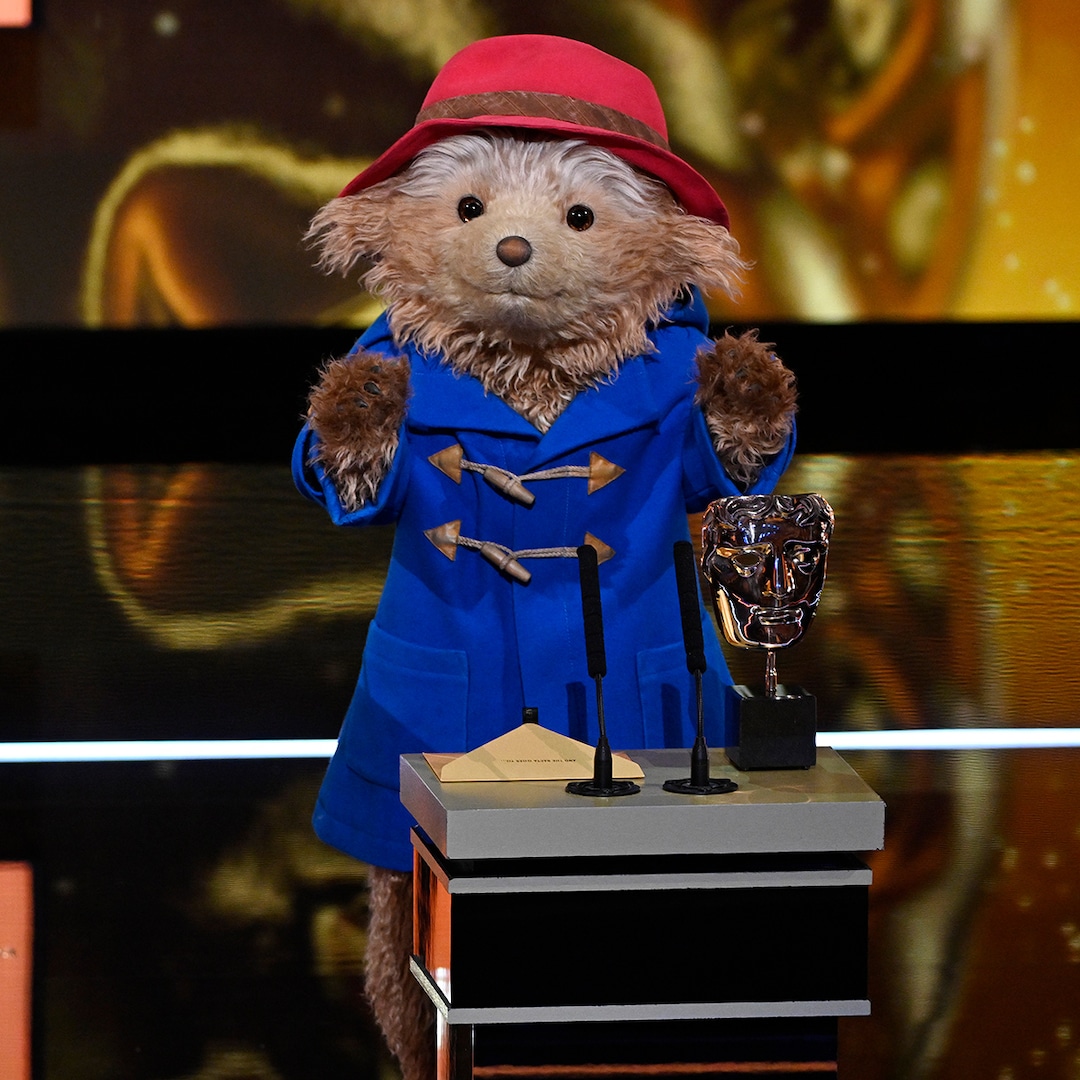
LONDON — In a moment that blended whimsy with cinematic history, Paddington Bear made his debut at a major awards ceremony on Sunday night, presenting the Children's & Family Film award at the 2026 British Academy Film Awards. The event, held at the Royal Festival Hall and broadcast live on E!, was hosted by Scottish actor Alan Cumming and drew a star-studded crowd including Paul Mescal, Gracie Abrams, Kate Middleton, and Prince William. Paddington, the beloved Peruvian bear from Michael Bond's classic children's books and the hit film franchise, stepped onto the stage in his iconic blue duffle coat, marking what organizers described as a groundbreaking appearance for the character.
According to reports from the ceremony, Paddington expressed surprise at his own presence amid the glamour. "I don't usually talk in front of lots of people, and there are rather a lot of you," he told the audience, drawing laughter from the attendees. The bear, voiced in the films by Ben Whishaw, drew on wisdom from his fictional family to steady his nerves. He recounted advice from his Aunt Lucy, saying it's always better to face your fears—unless, of course, "it's a snake." In that case, he quipped, "Then you have to walk away very slowly."
The presentation was not just a charming interlude but a historic one, as Paddington revealed during his speech. His foster mother, Mrs. Brown—played by Sally Hawkins in the movies—had informed him that he was "the first ever bear to present an award." He added a touch of his signature humor by noting he was also "the first presenter to get marmalade all over a BAFTA. Sorry about that." Paddington joked about his plan to "lick it off," before conceding, "Apparently that's not very good manners." The mishap with the marmalade sandwich, a staple of the character's adventures, endeared him further to the crowd.
The Children's & Family Film category featured a diverse lineup of nominees, including the animated sequel Zootropolis 2, Disney's live-action remake Lilo & Stitch, the Spanish family adventure Arco, and the Indian Manipuri-language drama Boong. It was Boong, a 2024 coming-of-age story directed by Aribam Syam Sharma, that ultimately won the award. The film, set in the hills of Manipur and exploring themes of identity and tradition through the eyes of a young girl, has been praised for its authentic portrayal of indigenous cultures and its appeal to young audiences worldwide.
BAFTA officials highlighted the choice of Paddington as presenter as a deliberate nod to the category's focus on family-friendly storytelling. The British Academy Film Awards, established in 1948, have long celebrated excellence in film, but incorporating a fictional character like Paddington underscores the event's evolving approach to engaging younger viewers. This year's ceremony, the 79th annual edition, also honored achievements across television and games, with winners announced in over 20 categories. Paddington's segment aired midway through the three-hour broadcast, providing a light-hearted break amid heavier dramatic presentations.
Fans reacted swiftly to the bear's appearance, flooding social media platforms with praise. On the official BAFTA Instagram page, one user wrote, "This is healing something in me," capturing the emotional resonance of the moment. Another commenter added, "This was actually so cool and wholesome," emphasizing the segment's feel-good vibe. A third fan delved deeper into its significance, stating, "It’s really a beautiful thing to fire the imagination of children everywhere with this presentation. There are few moments of wonder in life. I’m glad BAFTA invested in this." They concluded with a practical tip inspired by the bear: "Also, always have a marmalade sandwich in case of emergencies."
Paddington Bear, created by Michael Bond in 1958, first appeared in a series of books that have sold over 35 million copies globally. The character emigrated from Peru to London in the stories, finding a home with the Brown family and embodying themes of kindness, adventure, and cultural adaptation. The modern film adaptations, starting with the 2014 release directed by Paul King and produced by StudioCanal and Warner Bros., revitalized the franchise. The third installment, Paddington in Peru, hit theaters in late 2024, grossing over $200 million worldwide and setting the stage for Paddington's awards-season cameo.
This BAFTAs appearance marks Paddington's first foray into presenting at a major awards show, though the character has become a cultural icon in the UK. Bond's creation was inspired by real-world child evacuees during World War II, with Paddington symbolizing welcome and resilience. At the ceremony, his presence also tied into broader discussions about representation in family films. Boong's win, for instance, highlights the growing recognition of international stories in English-dominated awards circuits. The film's producer, from the Manipur-based NAAC Films, noted in pre-ceremony interviews that the nomination alone was a milestone for Northeast Indian cinema.
While some attendees and viewers appreciated the novelty, others in the industry offered measured perspectives on such character-driven segments. A representative from BAFTA told reporters that the decision aimed to "bridge generations and make the awards accessible to families." However, not all reactions were uniformly enthusiastic; a few online commentators questioned the appropriateness of a CGI character in a live presentation, though these voices were drowned out by the overwhelming positivity. The segment's production involved advanced animation techniques, with Whishaw recording his lines remotely to sync with the on-stage puppetry.
The 2026 BAFTAs also featured notable red carpet moments, with royals Kate Middleton and Prince William arriving in coordinated black attire, supporting British talent. Paul Mescal, fresh off his Oscar buzz for Gladiator II, walked the carpet with singer Gracie Abrams, sparking speculation about their relationship. These celebrity sightings added to the event's buzz, but Paddington's presentation quickly became the viral highlight, amassing millions of views on social clips within hours.
Looking ahead, Paddington's historic role could pave the way for more innovative presentations at future awards. BAFTA has experimented with virtual and hybrid elements in recent years, especially post-pandemic, and this bear's success might encourage similar crossovers. For the Boong team, the win opens doors for wider distribution; the film, which premiered at the 2024 Busan International Film Festival, is now eyeing expansions into European and North American markets. Sharma, the director, expressed gratitude in a post-win statement, saying the award validates "stories from the margins that deserve the spotlight."
The evening's other winners included established names in film, with the full list available on BAFTA's website. Yet, it's Paddington's marmalade-stained triumph that lingers in the public imagination, reminding audiences of the power of simple, heartfelt narratives in an industry often dominated by blockbusters. As one fan put it, such moments restore a sense of wonder, much like the bear's own journeys from Darkest Peru to the heart of London—and now, to the BAFTAs stage.
In the broader context of 2026's film landscape, Paddington's appearance underscores the enduring appeal of animated and family-oriented content. With streaming platforms like Netflix and Disney+ investing heavily in such genres, awards bodies like BAFTA are adapting to reflect these shifts. The ceremony's timing, just weeks before the Oscars, positions it as a key predictor, and Boong's victory could signal stronger international contention in Hollywood's big night.
Ultimately, Sunday's event at the Royal Festival Hall was more than an awards gala; it was a celebration of storytelling's ability to unite. Paddington's confident stride—despite the nerves and the sticky fingers—exemplified the courage at the core of his tales. As the bear might say, facing fears with a marmalade sandwich in paw is the best way forward.