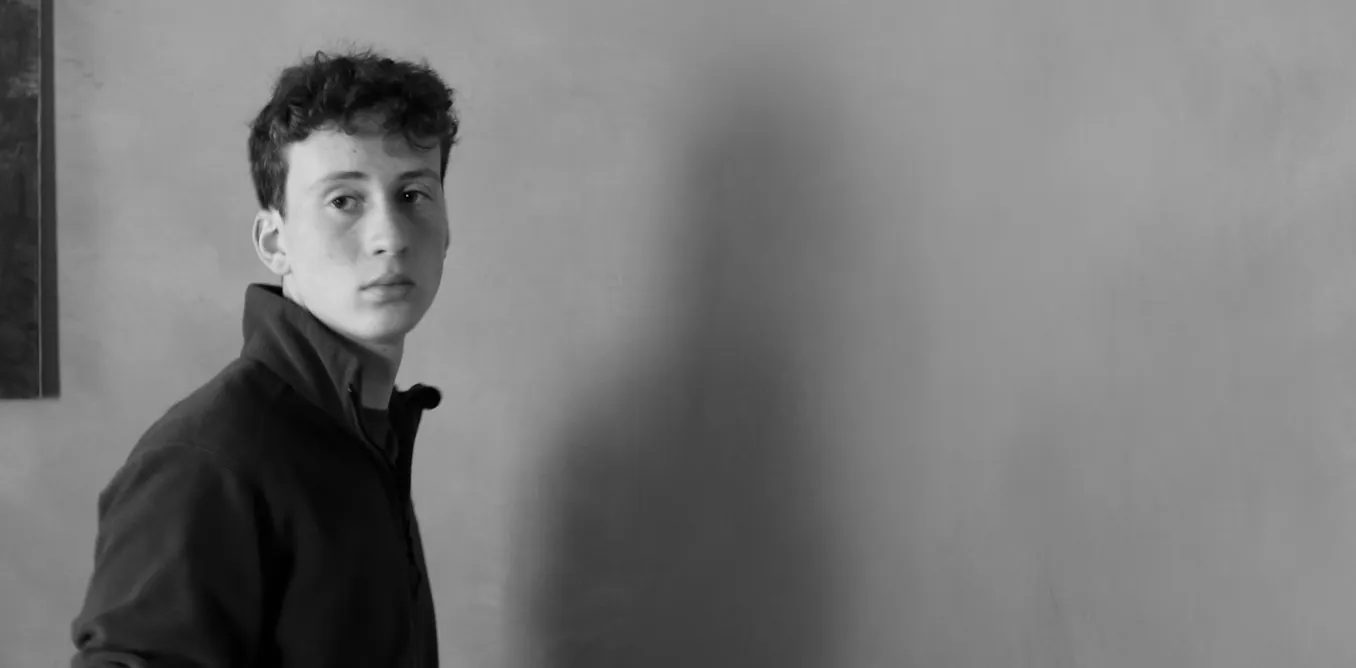
LONDON — The recent publication of London Falling by acclaimed investigative journalist Patrick Radden Keefe has drawn widespread attention for its gripping exploration of Russian oligarchs' influence in the British capital, framed through the tragic and mysterious death of a 19-year-old aspiring financier. On November 29, 2019, Zac Brettler plummeted from a luxury high-rise apartment overlooking the River Thames in the early hours of the morning, an event that initially appeared to be a suicide but has since raised profound questions about the shadowy networks of wealth and crime infiltrating London's elite circles.
Zac, described by those who knew him as an edgy, funny, and ambitious young man from a comfortable middle-class family in North London, had a fascination with wealth and power that shaped his short life. According to Keefe's book, Zac idolized the film The Wolf of Wall Street and even expressed admiration for Vladimir Putin, once telling a cousin that democracy was overrated. Friends recalled him as a teller of tall tales, often embellishing stories to the point where they dubbed him a 'bullshit artist.' But Zac's fabrications went far beyond youthful exaggeration; unbeknownst to his parents, Matthew and Rachelle Brettler, he had crafted an elaborate false identity as the son of a wealthy Russian oligarch, claiming his fictional father was worth hundreds of millions of pounds.
This persona drew Zac into dangerous associations. Keefe details how the teenager was introduced to Verinder Sharma, known as 'Indian Dave,' a figure with a reported murderous past and ties to violent crime, through Akbar Shamji, a charming but dubious businessman. On the night of his death, Zac was at Sharma's apartment with Shamji, where GPS data later suggested movements that went unexamined by authorities. The Brettlers, devastated by the loss, launched their own investigation, grappling with the possibility that Zac's lies had entangled him in a web of threats. 'It felt like trying to piece together a jigsaw in the dark,' Rachelle Brettler told Keefe, capturing the family's anguish over the deceptions their son had hidden.
The official police response has been a focal point of criticism in London Falling. Keefe describes what he calls the 'maddening incuriosity' of the investigation, noting that evidence was not properly gathered before the apartment was cleaned. Officers failed to scrutinize Shamji's account of events, which contained notable inconsistencies, and overlooked key digital footprints like GPS records. Zac's parents, who documented their quest for answers meticulously, found the process frustrating, as leads into Sharma's background—a man who died the following year—and potential connections to organized crime were not pursued vigorously.
Keefe's narrative situates Zac's story within a larger tapestry of Russian money flooding into London since the Soviet Union's collapse in 1991. The influx accelerated with the UK's 2008 visa program, which allowed wealthy foreigners to gain permanent residency by investing millions of pounds. According to Keefe, one in four of the roughly 3,000 participants in the program's first seven years were Russian. At the time, Boris Johnson, then London's mayor and later prime minister, famously boasted that 'London is to the billionaire as the jungles of Sumatra are to the orangutan,' highlighting the city's embrace of this ultra-wealthy demographic.
This wave of capital brought not just investment but also a cadre of enablers: lawyers, bankers, tax advisors, and real estate agents who, as Keefe writes, performed 'paperwork jujitsu' to move and launder funds from Russia. A generation of 'smart, eager, morally elastic young British professionals' filled these roles, according to the book, facilitating the integration of oligarchs into London's high society. Yet this prosperity came at a cost. Keefe points to a pattern of suspicious deaths among Russians and their associates in the UK, citing a 2017 BuzzFeed investigation that documented 14 such cases, often involving poisonings or falls from heights, linked to powerful enemies back home.
The book argues that institutional weaknesses exacerbated these risks. Budget cuts had closed half of England's police stations since 2010, straining resources and fostering complacency. Keefe suggests that high-level decisions shielded London's 'new mafia class,' allowing them to operate with impunity. In the same year as Zac's death, 2019, BuzzFeed global investigations editor Heidi Blake published From Russia with Blood, which described how Russians had grown accustomed to a societal 'dissonance' where suicides or accidents were euphemisms for murder. The Brettlers, delving deeper into their son's case, encountered a similar 'eerie dissonance' and 'fog of ambiguity,' as Keefe reports, blurring lines between fact and conspiracy.
Verinder Sharma's role looms large in the narrative. Described by Keefe as having 'a murderous past and a thuggish present,' Sharma had connections that prompted the author to interview dozens of former Scotland Yard detectives to explore whether he had ever served as a police informant. No definitive answers emerged, but the inquiries underscore the opacity surrounding such figures. Shamji, meanwhile, provided an account to police that Keefe portrays as evasive, though authorities did not press further.
Keefe's approach in London Falling builds on his reputation as a meticulous researcher, honed over years at The New Yorker, where he has been a staff writer since 2012. The book originated from a 2024 magazine article, one of only a few stories in his two-decade career that expanded into full-length works. His previous successes include Say Nothing (2018), which won the Orwell Prize for its examination of the Troubles in Northern Ireland and was adapted into a 2024 streaming series, and Empire of Pain (2021), a critique of the Sackler family's role in the opioid crisis that inspired the 2023 Netflix series Painkiller.
In Say Nothing, Keefe recounts the 1972 abduction of Jean McConville, a widow raising ten children in West Belfast, who was accused—possibly wrongly—of being an informer for the British Army. As her son Archie, then 16, tried to intervene, an IRA member pressed a pistol to his cheek and hissed, 'Fuck off.' McConville was never seen again by her family; she had been shot and buried across the border in the Irish Republic.
That book's compassionate portraits of IRA members and victims alike delved into the personal toll of political violence, from hunger strikes endured by figures like Dolours Price to the denials of former IRA commander Gerry Adams. Similarly, Empire of Pain exposed how Purdue Pharma, under Sackler leadership, aggressively marketed OxyContin in the 1990s, downplaying its addictive risks and contributing to an epidemic that has claimed hundreds of thousands of lives in the U.S. The family's philanthropy—funding wings at institutions like the British Museum, Harvard, and the Guggenheim—served as a veneer over their actions, until campaigns like that led by photographer Nan Goldin prompted renamings and, ultimately, a $7.4 billion settlement in May with U.S. attorneys general.
While London Falling shares Keefe's signature blend of clear storytelling and vivid character studies, it centers intensely on the Brettlers' personal saga, granted through extraordinary access. The family, Keefe notes in his acknowledgments, provided 'such a private and often painful history' with 'honesty that was bracing, unblinking and complete.' This focus, though powerful, limits the book's scope compared to its predecessors, which illuminated broader historical or societal upheavals. Zac's story, intertwined with the era of social media's rise, highlights how platforms blurred reality and fantasy, magnifying personal aspirations into potential delusions.
The broader implications of London Falling extend to London's status as a haven for illicit wealth. Keefe illustrates this through figures like property tycoon Scot Young, an advisor to Russian billionaires who met a grisly end amid fears for his safety, and his partner Noelle Reno, star of the reality show Ladies of London, which chronicled the exploits of social climbers. The book warns of corrupted institutions and a weakened press, echoing Blake's observations on Russian society's eroded trust.
As the Brettlers continue their pursuit of closure—though Keefe structures the narrative to preserve the mystery for readers—the publication of London Falling has reignited calls for scrutiny of foreign money in the UK. With early acclaim from critics and fans alike, the book arrives amid ongoing debates over post-Brexit financial transparency and the legacies of programs that welcomed oligarchs. Whether it prompts institutional reforms remains to be seen, but it undeniably sheds light on the human cost of London's gilded underbelly.