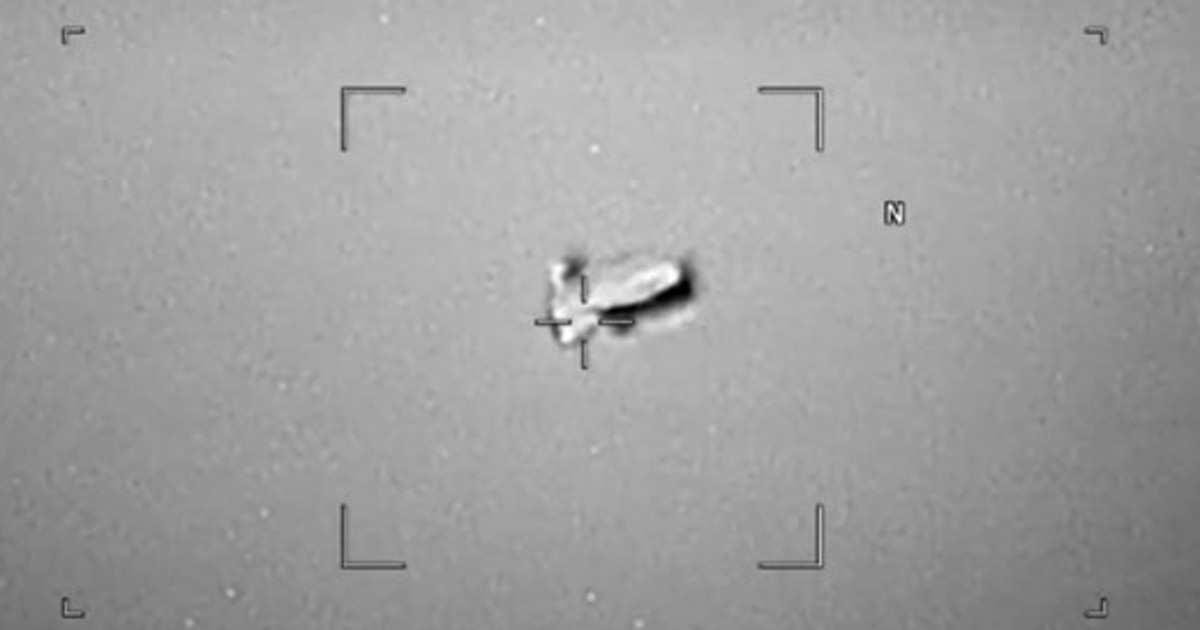
WASHINGTON — The Pentagon announced on Friday the release of long-classified files on unidentified anomalous phenomena, commonly known as UFOs, marking a significant step toward greater government transparency on one of the most enduring mysteries in American history.
These "never-before-seen" documents, which the government has held for decades, delve into reports of strange aerial sightings and encounters that have captivated the public imagination for generations. The initial batch of files is now available on a dedicated federal website, https://www.war.gov/UFO/, where additional materials will be added on a rolling basis, according to a Pentagon Public Affairs press release.
"The American people can now access the federal government’s declassified UAP files instantly," the press release stated. "The latest UAP videos, photos, and original source documents from across the entire United States government are all in one place — no clearance required."
The disclosure comes nearly a month after President Donald Trump teased the release during a speech at a conservative gathering, where he described some of the documents as "very interesting" and promised they would be made public by the Department of Defense "very, very soon." Trump has long advocated for openness on such topics, frequently discussing the need to share information about unidentified phenomena with the public.
Among the highlights in the newly unsealed trove are accounts from NASA's Apollo moon missions. During the Apollo 12 mission in November 1969, astronaut Alan Bean reported observing "flashes of light" that appeared to be "sailing off into space," according to the files. Similarly, on the Apollo 17 mission in December 1972 — the final crewed lunar landing — astronauts witnessed "very bright particles" of light that were "tumbling" and "rotating way out in the distance." Mission specialist Harrison Schmitt likened the sight to "the Fourth of July," evoking images of fireworks exploding in the void of space.
These space-related incidents add a layer of historical intrigue to the release, connecting Cold War-era space exploration with modern discussions about potential extraterrestrial activity. The files encompass reports from various government agencies, spanning decades of sightings across the United States, though many remain unexplained.
Lawmakers on Capitol Hill, scientists, and even conspiracy enthusiasts have pushed for such disclosures for years, arguing that the public deserves access to information on phenomena that could range from advanced foreign technology to something more otherworldly. "The American people have asked for more transparency on these topics, and President Trump is delivering," the Pentagon press release emphasized.
The statement contrasted the current administration's approach with previous ones, noting, "While past administrations sought to discredit or dissuade the American people, President Trump is focused on providing maximum transparency to the public, who can ultimately make up their own minds about the information contained in these files."
However, the release includes an important disclaimer: "While all of the files have been reviewed for security purposes, many of the materials have not yet been analyzed for resolution of any anomalies," according to the press release. This suggests that while the documents are now public, definitive explanations for the reported events may still be forthcoming.
NASA Administrator Jared Isaacman welcomed the initiative, highlighting the agency's commitment to scientific inquiry. In a post on X, formerly Twitter, Isaacman wrote, "At NASA, our job is to bring the brightest minds and most advanced scientific instruments to bear, follow the data, and share what we learn. We will remain candid about what we know to be true, what we have yet to understand, and all that remains to be discovered."
Isaacman's comments underscore NASA's ongoing interest in UAP, separate from but complementary to the Pentagon's efforts. The space agency has previously formed a panel to study such phenomena, emphasizing rigorous data analysis over speculation.
President Trump has not yet commented directly on Friday's document drop, but his involvement dates back to February, when he announced directives to Defense Secretary Pete Hegseth and other officials to review government records related to "alien and extraterrestrial life." That announcement followed a podcast appearance by former President Barack Obama, who stated that aliens were real — a remark he later clarified to mean "the odds are good there’s life out there" and that he had seen no evidence of extraterrestrial visitors during his time in the White House.
Obama's comments reignited public debate, coming amid a broader cultural fascination with UFOs fueled by congressional hearings, whistleblower testimonies, and declassified videos from the military. The interagency effort behind the current release operates under the acronym PURSUE — the Presidential Unsealings and Reporting System for UAP Encounters — aimed at systematically unsealing and reporting on such incidents.
The Pentagon's setup mirrors a recent Department of Justice initiative from December, which began releasing files related to the late financier Jeffrey Epstein. That process, still ongoing, has drawn criticism for including already-public documents, heavy redactions, omissions of key materials, and even accidental disclosures of victims' names before Epstein's 2019 death in a New York jail cell, which was ruled a suicide but has fueled conspiracy theories.
Early reports indicate the new UFO website experienced technical glitches upon launch, echoing some of the rollout issues with the Epstein files. Users attempting to access the site on Friday reported slow loading times and access errors, though Pentagon officials said the platform would be stabilized quickly.
The release arrives at a time when public interest in UAP has surged, driven by viral videos of Navy pilots encountering unexplained objects and reports from military personnel. Skeptics argue many sightings can be attributed to drones, weather balloons, or optical illusions, while proponents call for more rigorous investigation to rule out national security threats or advanced technologies.
Serious scientists, including those at institutions like Harvard and the University of California, have urged caution, stressing the need for peer-reviewed analysis rather than sensationalism. Conspiracy communities, meanwhile, view the disclosures as a potential breakthrough, though some express skepticism about the government's willingness to reveal everything.
As more files are added to the site in the coming weeks and months, experts anticipate a wave of independent reviews and analyses. The Pentagon has encouraged public engagement, inviting citizens to explore the documents and form their own conclusions.
Beyond the immediate excitement, the initiative raises questions about government accountability and the balance between national security and public right-to-know. With NASA's involvement and potential for further interagency collaboration, the coming years could see a more structured approach to studying UAP, potentially reshaping our understanding of the skies above — and beyond — Earth.
For now, the files stand as a testament to decades of secrecy giving way to openness, even if the full story remains as elusive as the phenomena themselves.