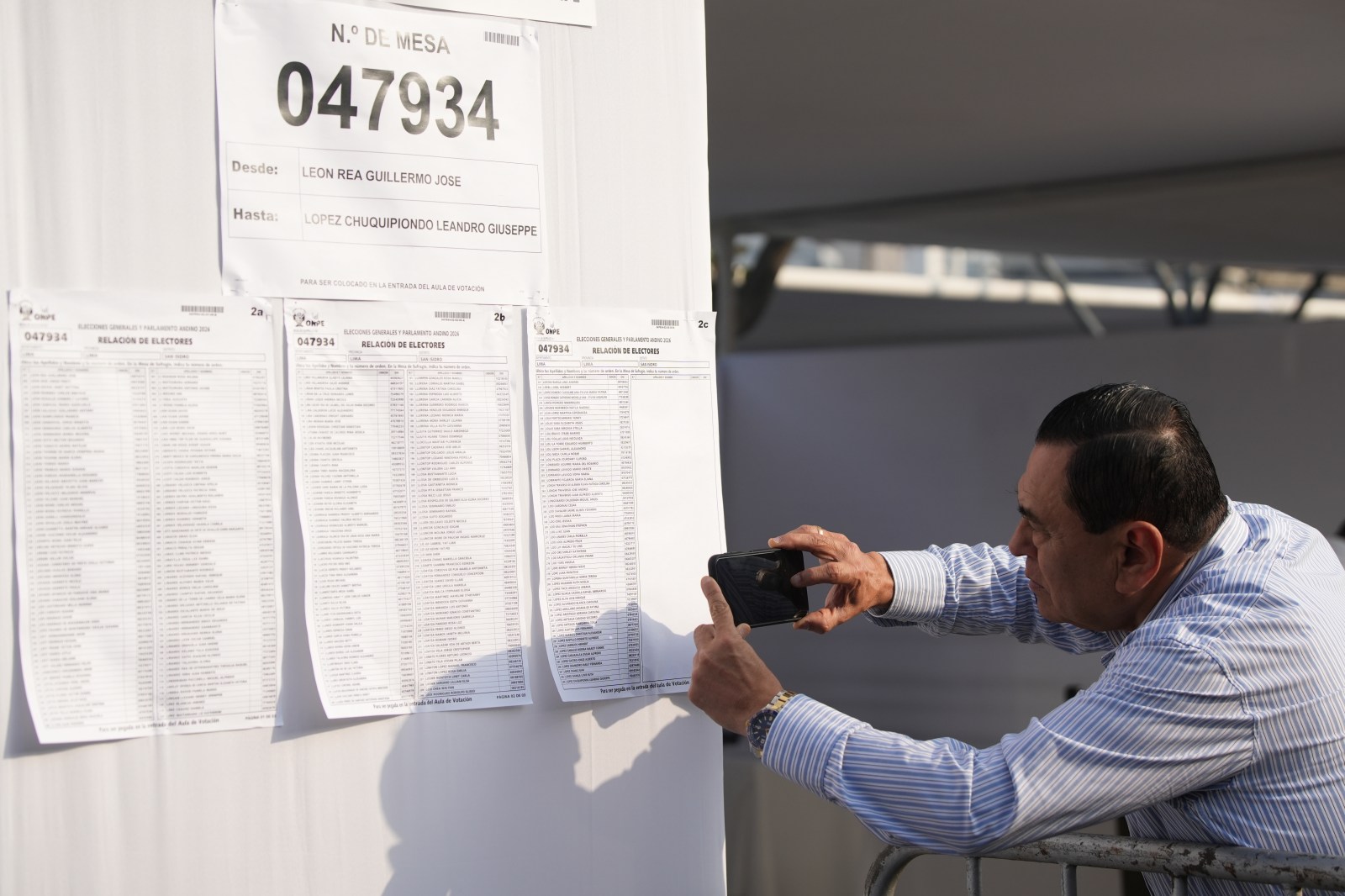
LIMA, Peru — Peruvians are set to vote on Sunday in an election that could usher in the country's ninth president in just 10 years, with 35 candidates vying for the top job amid widespread frustration over rising violent crime and entrenched corruption. The ballot includes a diverse array of contenders, from a former minister and a comedian to Keiko Fujimori, the heiress to a prominent political dynasty, highlighting the deep divisions and instability that have plagued the Andean nation in recent years.
The election comes at a time of heightened insecurity, with homicides doubling and extortion cases surging fivefold over the past decade, according to official data from Peruvian authorities. Voters, many of whom express deep distrust in the political class, are grappling with daily fears of crime, from motorcycle-riding assailants to deadly attacks on public transportation. Construction worker Juan Gómez, 53, captured the sentiment while carrying bags of potatoes and rice for his five children. “You can’t trust anyone anymore, nothing’s going to change,” he said. “(Criminals) come on motorcycles, put a gun to your head… you look around and there’s no police officer. What are you going to do? You just let them rob you.”
Retiree Raúl Zevallos, 63, echoed these concerns, describing the perils of everyday commutes. “You get on the bus, and you have to sit far from the driver; you don’t know if you’ll make it home alive,” Zevallos said. “Criminals drive by on motorcycles, shoot, kill the driver, and you could die, too.” In 2025 alone, more than 200 public transportation drivers were killed in Peru, underscoring the crisis. A national survey by the state’s National Institute of Statistics and Informatics that year revealed that 84% of respondents in urban areas feared becoming victims of a crime in the following 12 months.
Voting is mandatory for Peruvians aged 18 to 70, with more than 27 million registered voters expected to participate. About 1.2 million ballots are anticipated from abroad, primarily from the United States and Argentina. To win outright, a candidate must secure more than 50% of the vote, but analysts predict a runoff in June given the fragmented field — the largest in Peru's history — and the electorate's deep divisions.
Among the frontrunners is Keiko Fujimori, a conservative former congresswoman and daughter of the late President Alberto Fujimori, marking her fourth bid for the presidency. Fujimori has pledged an iron-fisted approach to crime, including anonymous judges for criminal cases and requiring prisoners to work for their food. However, she has also defended recent laws backed by her party that critics argue hinder prosecutions, such as eliminating preliminary detention in some cases and raising thresholds for seizing criminal assets.
Rafael López Aliaga, the conservative former mayor of Lima, is another key contender with similarly tough-on-crime proposals. He advocates building megaprisons in Peru's Amazon region, allowing judges to hide their identities, and expelling foreigners living illegally in the country. López Aliaga's platform taps into the public's anger over insecurity, which has sparked frequent protests across the nation.
Not all candidates come from traditional political backgrounds. Comedian-turned-politician Carlos Álvarez is seeking support by promising to consult international experts on security, including leaders from El Salvador, Denmark, and Singapore. Álvarez's unconventional approach reflects the desperation among voters who see most candidates as dishonest and unprepared, as widespread discontent fuels skepticism about any real change.
Beyond the presidency, Peruvians are also electing a bicameral Congress for the first time in more than 30 years, following constitutional reforms in 2024 that amended the legislature despite 80% of voters rejecting the idea in a 2018 referendum. The new structure introduces a Senate with 60 members, which will hold significant power, including the ability to appoint and sanction high-ranking officials like the ombudsman, constitutional court members, and some central bank directors. Senators will also review and amend bills from the lower chamber.
The Senate's influence extends to impeachment proceedings, making it easier to remove a president. Only 40 of the 60 senators need to approve such a move, compared to the previous requirement of 87 out of 130 lawmakers in the unicameral Congress. This lower threshold could exacerbate Peru's revolving door of leadership, where presidents have been ousted frequently over the past decade. However, the president will no longer be able to dissolve the Senate, a change aimed at stabilizing governance.
Alejandro Boyco, a researcher at the Institute of Peruvian Studies, expressed concerns about the concentration of power. “They’ve concentrated too much power in a 60-people chamber,” Boyco said. “They are not going to be immune to being corrupt.” His warning highlights ongoing worries about corruption, which has intertwined with the crime wave to erode public trust in institutions.
The surge in violence has prompted candidates across the spectrum to propose drastic measures, such as constructing megaprisons, restricting food for inmates, and reinstating the death penalty for serious offenses. These ideas resonate in a country where protests against insecurity have become commonplace, but experts question their feasibility and long-term impact.
Peru's political turmoil traces back to a series of impeachments and resignations that have seen eight presidents in the last decade, often amid scandals and economic woes. The current election, scheduled for April 12, 2026, in Lima and nationwide, represents another chapter in this instability. With the largest candidate pool ever, the outcome remains unpredictable, though a fragmented vote seems likely to force a second round.
International observers note that the election's timing, amid economic pressures and social unrest, could shape Peru's trajectory in Latin America. The return to a bicameral system, despite past voter rejection, underscores the influence of lawmakers in reshaping the constitution. As polls open, the focus remains on whether any candidate can address the root causes of crime and corruption that have left many Peruvians feeling vulnerable.
Looking ahead, the June runoff, if needed, will test the electorate's resolve. With mandatory voting ensuring high turnout, the results could either stabilize or further destabilize the nation. For now, voters like Gómez and Zevallos hope for leaders who can restore safety and faith in democracy.
The Appleton Times will continue to monitor developments in Peru's election and its implications for the region.