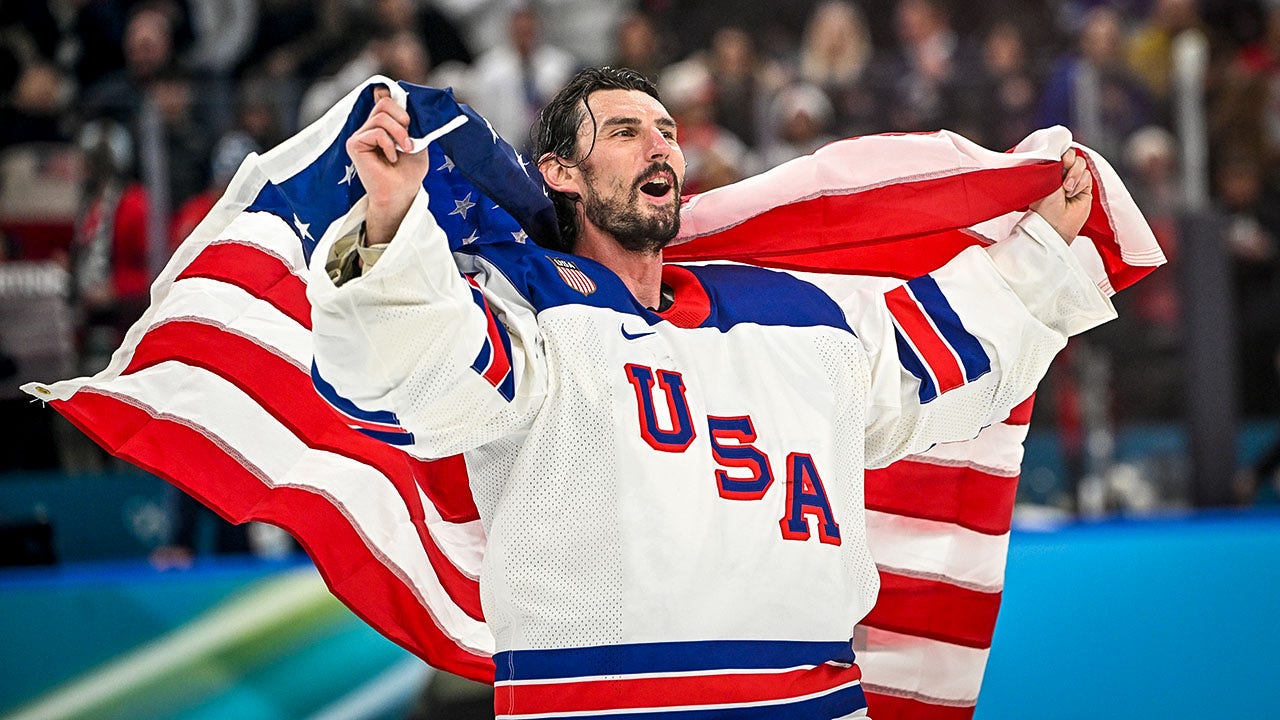
MILAN, Italy — In a thrilling overtime victory that echoed the Miracle on Ice from four decades ago, the United States men's hockey team captured Olympic gold for the first time since 1980, defeating rival Canada 2-1 in the gold medal game at the Milano Cortina 2026 Winter Olympics. The game, played on February 22, 2026, at the Milano Santagiulia Ice Hockey Arena, went down to the wire, with goaltender Connor Hellebuyck standing tall in net, making 41 saves to preserve the tie and set the stage for forward Jack Hughes to score the decisive goal.
The match was a defensive battle from the start, with both teams trading chances but unable to break through decisively. Canada struck first in the second period when Colorado Avalanche defenseman Cale Makar tied the score at 1-1 with a wrist shot that beat Hellebuyck. But the 32-year-old goaltender, playing for the Winnipeg Jets in the NHL, refused to yield, turning away shot after shot as the game remained deadlocked through the end of regulation and into overtime.
One moment in particular captured the drama: in the second period, with the score level at 1-1, Canadian defenseman Devon Toews found himself with a wide-open net in front of the crease. Toews lifted the puck slightly, but Hellebuyck, reacting with lightning-quick instincts, twisted his body and used the paddle of his stick to deflect the shot, keeping the game tied. Without that save—and several others like it—the outcome might have swung in Canada's favor, according to observers who watched the play unfold.
Hellebuyck's heroics didn't go unnoticed beyond the ice. Pete Hegseth, the U.S. Secretary of War, who previously served as Secretary of Defense before the department's name change last September, took to social media to praise the goalkeeper. Endorsing a post that dubbed Hellebuyck the "Secretary of Defense," Hegseth wrote, "Now we have a Secretary of War…and a Secretary of Defense!" The comment highlighted Hegseth's own military background and added a touch of patriotic flair to the celebration of Team USA's triumph.
The victory was especially sweet given the historical context. The last time the U.S. men's hockey team won Olympic gold was at the 1980 Lake Placid Games, where a ragtag group of college players stunned the Soviet Union in what became known as the Miracle on Ice. This time, the roster was stacked with NHL stars, but the pressure of facing Canada—a perennial powerhouse with 13 Olympic golds in men's hockey—made the win feel just as monumental. Canada, seeking to extend its dominance, couldn't capitalize on prime opportunities, including a third-period miss by assistant captain Nathan MacKinnon, who shot wide of an open net.
After Hughes' overtime tally slipped past Canadian goaltender Jordan Binnington, who made 28 saves in defeat, the American bench erupted in joy. Hellebuyck, named the tournament's top goaltender, later reflected on the intensity of the competition. "It’s a dream come true," he said in an interview with NBC after the game. "We grinded, we battled, and this was some of the best and most fun hockey that I’ve ever played." His performance not only secured the gold but also cemented his legacy as a clutch performer on the international stage.
Post-game celebrations were electric, with Hellebuyck skating laps around the rink draped in an American flag as the crowd at the arena roared its approval. Teammates mobbed him at center ice, and the victory parade of flags during the medal ceremony drew cheers from fans across the venue. The win capped a grueling tournament for Team USA, which had navigated a tough bracket including victories over strong European squads to reach the final.
This gold medal wasn't an isolated triumph for American hockey. The U.S. women's team also brought home gold earlier in the Games, defeating Canada in their final to complete a sweep of the top prizes in the sport. It marked the first time since 1998 that both U.S. hockey teams medaled in gold at the same Winter Olympics, underscoring a resurgence in the program under USA Hockey's development initiatives.
Beyond hockey, the Milano Cortina 2026 Games proved historic for the United States, which tallied a total of 33 medals, including a record-tying 12 golds—the most in a single Winter Olympics for the country. Standouts included alpine skier Mikaela Shiffrin adding to her medal count and figure skaters securing a podium finish. Officials from the U.S. Olympic and Paralympic Committee hailed the performance as a testament to investments in youth sports and training facilities back home.
The rivalry with Canada added extra stakes to the final. The two nations have a storied history in Olympic hockey, with Canada holding a decided edge in golds but the U.S. pulling off upsets in key moments. This victory evens the score in recent memory, following the women's team's dramatic shootout win over Canada four years prior at Beijing 2022. Canadian coach Greg Ireland acknowledged the fine margins after the loss, saying his team created enough chances but couldn't convert, per reports from the International Ice Hockey Federation.
Hegseth's lighthearted nod to Hellebuyck also drew attention amid ongoing discussions about U.S. military leadership. As Secretary of War, Hegseth has focused on rebuilding military readiness, and his comment tied into broader themes of American strength and defense—both on the battlefield and the ice rink. Social media buzzed with memes and endorsements of the moniker, amplifying the story beyond sports pages.
Looking ahead, Hellebuyck and his teammates return to the NHL with the glow of Olympic champions. The Winnipeg Jets, Hellebuyck's club, face a tight race in the Central Division, and his confidence from Milan could prove invaluable in the playoff push. For USA Hockey, the double gold signals momentum heading into the 2026-27 season and preparations for the 2030 Olympics in the French Alps.
The Milano Cortina Games, hosted across northern Italy's stunning alpine regions, featured innovative venues like the Santagiulia Arena, built specifically for hockey and convertible for future events. Despite some logistical challenges from weather delays earlier in the week, the closing ceremony on February 23 promised a festive wrap-up, with U.S. athletes leading the parade of nations.
As the flags were raised and "The Star-Spangled Banner" played, the victory resonated far beyond the arena. For a nation grappling with global uncertainties, the image of Hellebuyck's stick save and Hughes' game-winner offered a unifying moment of pride. With both hockey teams golden and the overall medal haul impressive, Team USA's performance at Milano Cortina 2026 will be remembered as a high-water mark in Winter Olympic history.