SAN FRANCISCO — A wave of poisonings linked to the deadly death cap mushroom has swept through California's Bay Area, prompting health officials to issue a stark warning against foraging for wild mushrooms. Since November 18, the California Poison Control System has recorded 23 cases of mushroom poisoning attributed to the toxic Amanita phalloides, with one fatality and several patients still fighting for their lives in hospitals.
Dr. Craig Smollin, medical director for the Poison Control System's San Francisco division and a professor of emergency medicine at the University of California, San Francisco, detailed the incidents during a news conference on Tuesday. "All of these patients were involved with independently foraging the mushrooms from the wild," Smollin said. "They all developed symptoms within the first 24 hours, including nausea, vomiting, diarrhea and abdominal pain."
The victims range in age from 1½ to 56 years old, and many were part of small groups who shared the same foraged batch. The largest affected cohort numbered about seven people, according to Smollin. All 23 individuals required hospitalization, at least briefly. One patient has died, five remain under care, one has undergone a liver transplant, and another is awaiting a transplant after being placed on a donor list.
California's state public health officer, Dr. Erica Pan, emphasized the dangers in a news release, advising the public to steer clear of wild mushroom foraging entirely this season. "Because the death cap can easily be mistaken for edible safe mushrooms, we advise the public not to forage for wild mushrooms at all during this high-risk season," Pan stated.
Experts point to an unusually abundant season for death caps as a key factor in the spike. Mike McCurdy, president of the Mycological Society of San Francisco, noted during an organized fungi hunt last week that the death cap was one of the top two species identified. "Any mushroom has years that it’s prolific and years that it is not... It’s having a very good season," McCurdy said.
Dr. Cyrus Rangan, a pediatrician and medical toxicologist with the California Poison Control System, described the cluster of cases as rare. "It’s rare to see a case series like this," he said, while supporting the broad advisory against foraging. Rangan explained that most people lack the expertise to distinguish safe from poisonous varieties, necessitating a "blanket warning."
Some victims may have been influenced by foraging traditions from other regions, where similar-looking mushrooms are safe to eat. The Poison Control System noted that several affected patients speak Spanish and might draw from practices developed outside the United States. Heather Hallen-Adams, toxicology chair of the North American Mycological Association and an associate professor of food science at the University of Nebraska-Lincoln, highlighted the risks of misidentification. Death caps resemble other Amanita species commonly consumed in Central American countries, but they are scarce there, leaving foragers unaware of the California-specific dangers.
"That’s a story that comes up over and over again," said Anne Pringle, a professor of mycology at the University of Wisconsin-Madison, referring to poisonings from misidentifying mushrooms based on experiences from different ecosystems.
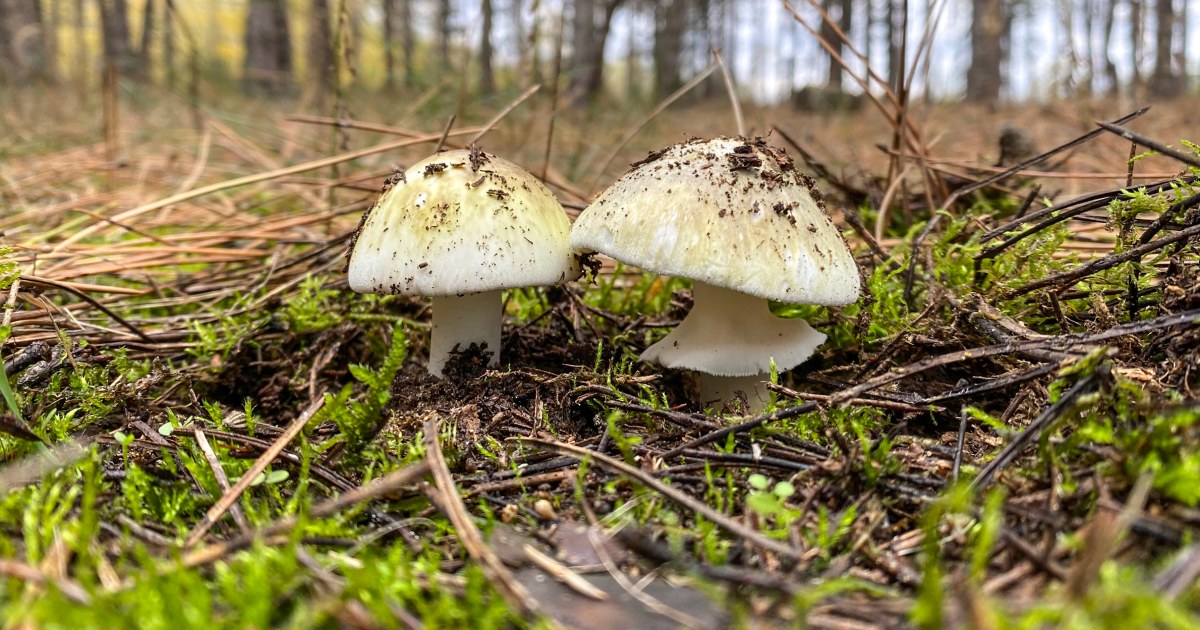
The death cap, an invasive species from Europe that arrived in California in the 1930s likely via imported nursery trees, has thrived since its introduction. It typically grows a few inches tall, featuring white gills, a pale yellow or green cap, and often a ring around the base of its stalk. Found across the West Coast, Eastern Seaboard, Florida, and Texas, it forms a symbiotic relationship with oak trees in California, though it occasionally associates with pines. Its toxin, amatoxin, wreaks havoc on the kidneys, liver, and gastrointestinal tract by disrupting genetic transcription and protein production, leading to cell death.
Hallen-Adams reported that U.S. poison centers average about 52 amatoxin-related calls annually, though underreporting is common. "A lot of things don’t get called into poison centers — take that with a grain of salt," she cautioned. While not the most frequent mushroom poisoning, amatoxin accounts for 90% of lethal cases worldwide. Alarmingly, just one cubic centimeter of the mushroom can deliver a fatal dose.
Symptoms of amatoxin poisoning typically emerge within hours, subside temporarily, and then intensify, complicating treatment. "It’s a very difficult mushroom to test for," Rangan said, "and also very difficult to treat." Physicians have turned to silibinin, an experimental drug sourced entirely from Europe, for some patients in this outbreak.
The rise in incidents coincides with a surge in mushroom foraging popularity over the past decade, particularly in the Bay Area and nationwide. This boom has been accompanied by a flood of identification resources, from social media forums and phone apps to AI-generated guidebooks, many of which experts deem unreliable. Pringle warned, "I have seen AI-generated guidebooks that are dangerous." McCurdy and Pringle both recounted instances of apps and online communities incorrectly identifying death caps.
While officials advocate caution, seasoned foragers push back against the sweeping ban. McCurdy, who has hunted mushrooms since the 1970s, called the blanket discouragement "ridiculous." "After an incident like this, their first instinct is to say don’t forage," he said. "Experienced mushroom collectors won’t pay any attention to that." He urged novices to consult local mycological societies, abundant in California, and to critically evaluate information sources.
Pringle's research sheds light on the death cap's resilience, revealing its ability to reproduce both bisexually and unisexually, enhancing its invasive spread. "If Eve can make more of herself, she doesn’t need Adam," she quipped, underscoring the challenge of eradicating it. "One of the things I’m really interested in is how you might stop the invasion, how you might cure a habitat of its death caps. And I have no solutions to offer you at the moment."
As the season progresses, health authorities continue to monitor for additional cases, reiterating that only trained experts should handle wild mushrooms. The outbreak serves as a grim reminder of nature's hidden perils, especially amid growing interest in foraging as a hobby. With death caps proliferating near urban parks and woodlands, officials hope their message reaches those tempted by the allure of free, fresh fungi.