By David Kim
The Appleton Times
MELBOURNE, Australia — Australian authorities have warned that a group of women with alleged links to the Islamic State militant group will face immediate arrest and criminal probes upon their return from Syria, as four women and nine children have reportedly booked flights home from Damascus.
The announcement came Wednesday from police officials, who emphasized that investigations into Australians who joined the group's so-called caliphate have been ongoing since 2015. Home Affairs Minister Tony Burke confirmed the travel arrangements but declined to specify an arrival date, noting the government's limited ability to block citizens from re-entering the country.
"The individuals concerned traveled … in support of one of the most horrific terrorist organizations we’ve seen in recent history or in our lifetimes," Burke told reporters in Melbourne. He added, "There is a reason why the government has drawn a very hard line saying we will do nothing to assist. The government’s complete lack of support for these individuals is a direct reflection of the decisions that they made."
Australian Federal Police Commissioner Krissy Barrett detailed the scope of the inquiries during a press briefing. She said the probes encompass potential terrorism offenses as well as crimes against humanity, including slave trading, committed by Australians in the Islamic State's territory centered in Syria.
"Some individuals will be arrested and charged. Some will face continued investigations when they arrive in Australia," Barrett stated. She also mentioned that the accompanying children would be enrolled in programs designed to counter violent extremism, though the government has ruled out separating minors under 14 from their mothers.
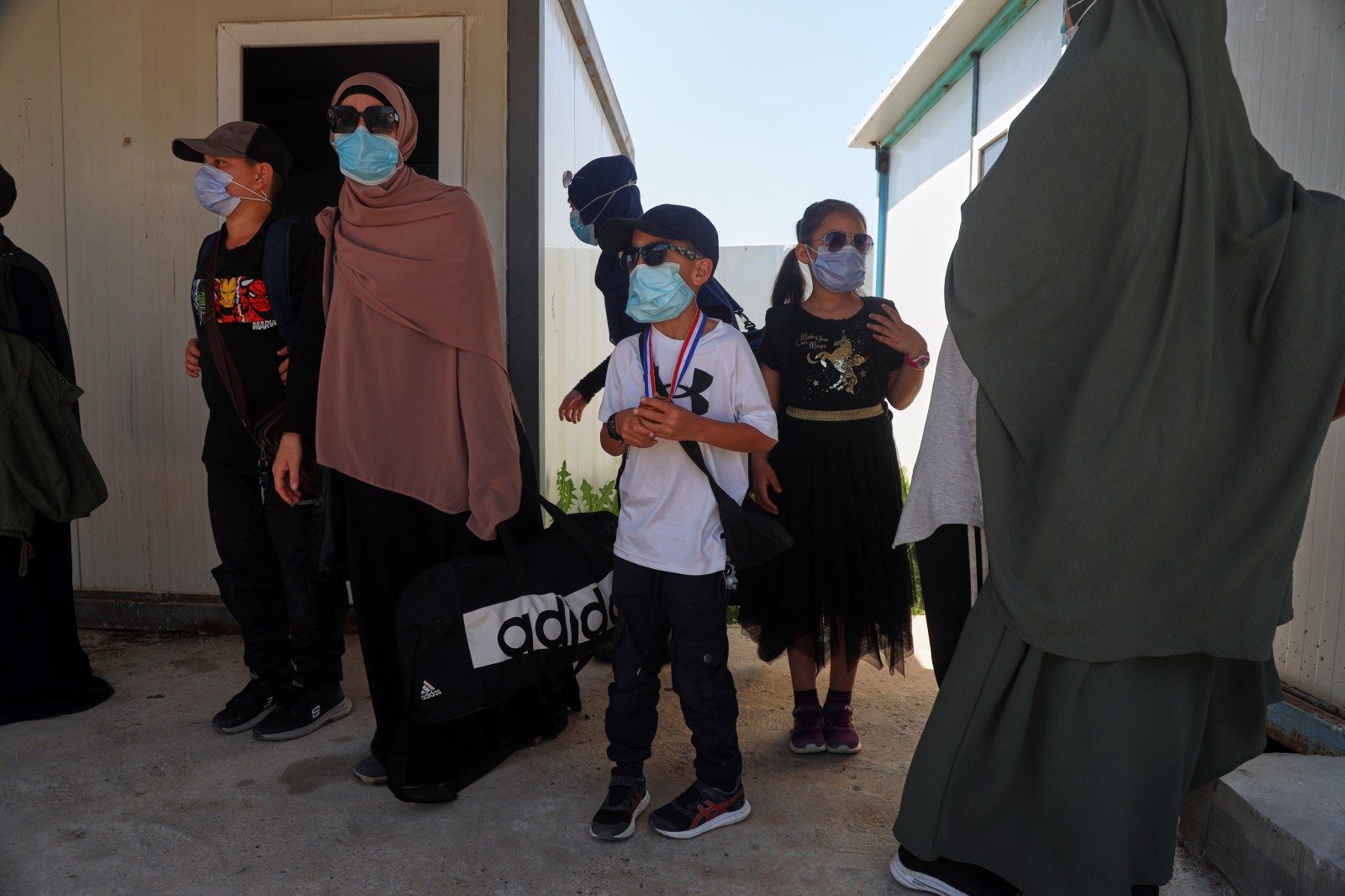
The women and children had been detained in the Roj Camp, located near the Syrian border with Iraq, until last week when they departed. According to the Syrian government, as reported to The Associated Press at the time, Australia had refused to receive them, prompting their release or movement amid shifting regional dynamics.
This development follows a failed repatriation effort in February, when Syrian authorities turned back a larger group of 34 women and children from the same camp. On that occasion, Australian officials issued a temporary exclusion order against one unidentified woman, barring her return for up to two years under laws enacted in 2019 to prevent high-risk Islamic State affiliates from re-entering the country.
Burke confirmed that the February exclusion order remains active, underscoring Australia's firm stance. "There are very serious limits on what can be done with respect to preventing a citizen of a country returning to their country," he said, highlighting the legal constraints on outright bans for most citizens.
Under Australian law, traveling to the former Islamic State stronghold of Raqqa in Syria without a legitimate reason between 2014 and 2017 is punishable by up to 10 years in prison. This legislation reflects broader efforts to hold accountable those who supported the group during its peak control over swaths of Syria and Iraq.
The Islamic State, though territorially defeated in 2019, continues to pose a threat through scattered fighters conducting attacks in Syria and Iraq. Thousands of foreign fighters, along with their families, were subsequently held in camps and detention centers in northeast Syria, managed primarily by the Kurdish-led Syrian Democratic Forces (SDF).
Recent upheavals have complicated the situation further. The larger al-Hol camp, once housing many suspected militants, was closed following clashes in January between Syrian government forces and the SDF. Government troops seized much of the SDF-held territory, leading to chaos in which numerous detainees escaped from al-Hol and a nearby prison.
In response, the U.S. military facilitated the transfer of thousands of suspected Islamic State militants from Syria to Iraq for trial. This move came amid the instability, as fleeing prisoners and camp residents heightened security concerns across the region.
Australia has repatriated women and children from Syrian camps on two prior occasions with government assistance, while others have returned independently. Officials have stressed that any returning individuals with alleged ties will be scrutinized rigorously, with charges possible for a range of offenses tied to their time abroad.
The current group's journey underscores the ongoing challenges of managing foreign terrorist fighters and their families post-caliphate. Burke's comments reflect a policy of non-assistance, rooted in the perceived dangers these individuals represent, even as international obligations require providing travel documents to citizens.
Looking ahead, police have indicated that investigations will intensify upon arrival, potentially leading to trials that could set precedents for handling similar cases. The focus on deradicalization for children highlights efforts to address long-term extremism risks, while the women's fates hang on the outcomes of federal probes.
As the flights approach, Australian authorities are preparing for a delicate balance between legal rights and national security imperatives, in a saga that has spanned nearly a decade since the rise of the Islamic State.