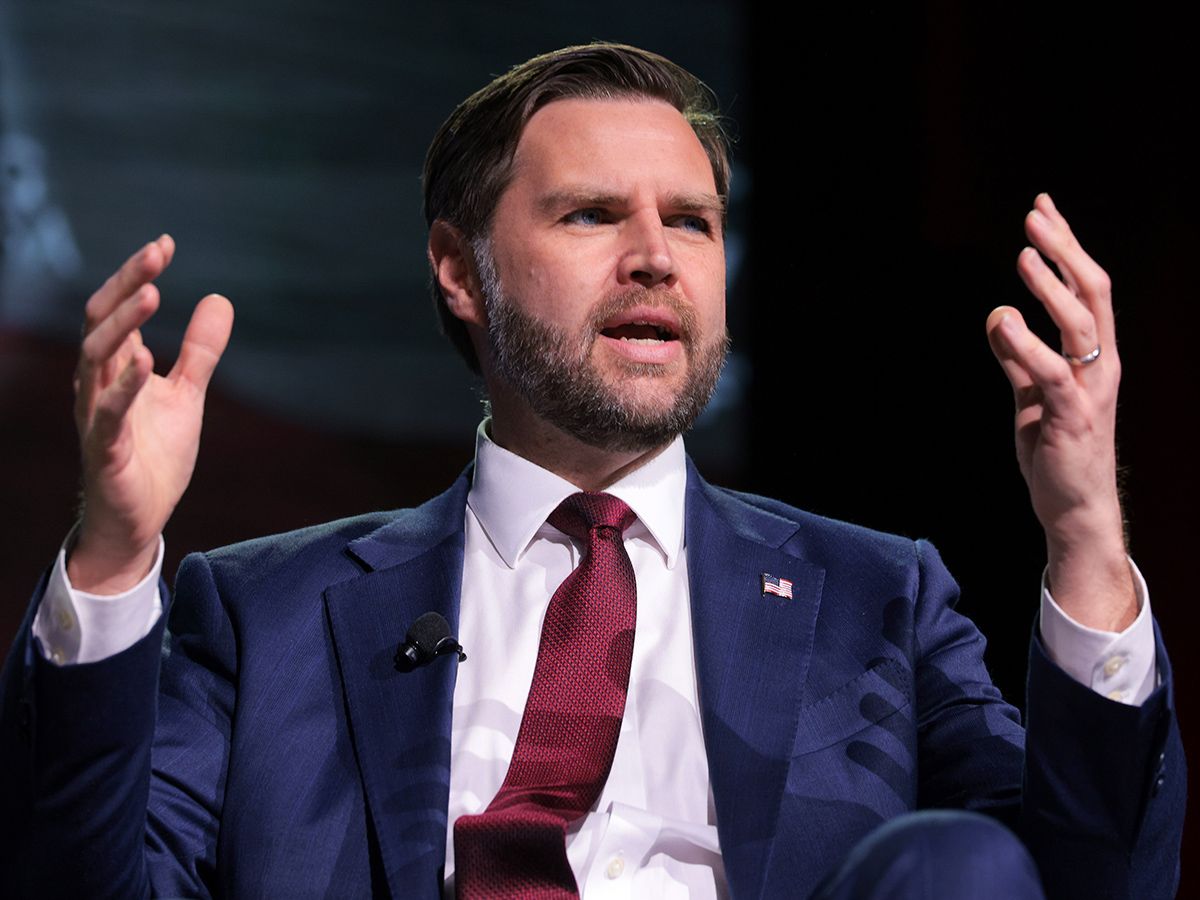
ATLANTA — U.S. Vice President JD Vance, a practicing Catholic, has urged Pope Leo XIV to exercise caution in his public statements on the ongoing conflict with Iran, arguing that the pontiff's recent criticism of the war lacks theological grounding. Speaking at a Turning Point USA event in Georgia on Tuesday, Vance responded to the pope's social media post from last week, in which Leo XIV declared that "God does not bless any conflict" and emphasized that "anyone who is a disciple of Christ, the Prince of Peace, is never on the side of those who once wielded the sword and today drop bombs."
Vance, who converted to Catholicism in 2019 and is set to release a book on his faith later this year, expressed admiration for the pope while drawing a clear line on the remarks. "I admire the pope, and I don't mind him weighing in on current events," Vance said, according to attendees and video footage from the event. However, he questioned the universality of Leo XIV's message, pointing to historical precedents like World War II.
"How can you say that God is never on the side of those who wield the sword?" Vance asked rhetorically, referencing the Allied forces' role in liberating France from Nazi occupation and freeing prisoners from concentration camps. He argued that such actions were morally justified, even if they involved violence, and suggested the pope's words could be misinterpreted in complex geopolitical situations.
The vice president's comments come amid escalating tensions in the Middle East, where U.S.-led coalition strikes against Iranian targets have intensified over the past month. The conflict, which began with Iranian-backed militia attacks on U.S. bases in Iraq in early 2023, has resulted in over 500 reported casualties on both sides, according to Pentagon estimates released last week. Pope Leo XIV, an American-born cleric elected in 2022 as the first U.S. pope in history, has positioned the Vatican as a vocal advocate for peace, issuing multiple appeals for ceasefires since the war's escalation in March.
In the same way that it’s important for the vice president of the United States to be careful when I talk about matters of public policy, I think it’s very, very important for the pope to be careful when he talks about matters of theology,” Vance said. “You’ve got to make sure it’s anchored in the truth.
Vance's pushback places him in a delicate position as one of the most visible Catholic figures in American politics. As a senator from Ohio before ascending to the vice presidency in January 2025, Vance has frequently invoked his faith in policy discussions, including on issues like immigration and family values. His upcoming book, tentatively titled Faith in the Fight, explores how Catholic teachings intersect with national security, sources close to the project told The Appleton Times.
The pope's intervention has also drawn fire from President Donald Trump, who on Monday labeled Leo XIV as "weak on crime" in a series of posts on Truth Social. Trump, who has maintained a combative stance toward the Vatican since his first term, accused the pontiff of undermining U.S. efforts to combat what he called "Iranian terrorism." In a now-deleted image shared online, Trump appeared in a Christ-like pose surrounded by doves, which he later clarified was meant to depict himself as a "doctor of peace," not a divine figure.
"I thought it was me as a doctor," Trump said in a follow-up statement to reporters outside the White House. The episode highlights ongoing frictions between the Trump administration and religious leaders critical of its foreign policy. During Trump's first presidency, similar tensions arose with Pope Francis over issues like the border wall and climate change, though Leo XIV's American roots have added a layer of domestic intrigue to the debate.
Supporters of the pope, including Catholic advocacy groups in the U.S., have defended his remarks as a timeless call for nonviolence rooted in the Gospels. Sister Maria Gonzalez, a spokesperson for the U.S. Conference of Catholic Bishops, said in an interview that Leo XIV's message aligns with the Church's long-standing doctrine of just war theory, which permits defensive action under strict conditions but prioritizes diplomacy. "The pope is reminding the world that peace is not just an absence of war, but a positive pursuit," Gonzalez stated.
Critics within conservative Catholic circles, however, echo Vance's concerns. Father Thomas Reilly, a theologian at Georgetown University, noted that while the pope's intent is pastoral, his phrasing could alienate allies in the fight against authoritarian regimes. "The Second World War example is apt," Reilly said. "The Church itself supported the Allies' efforts, even as it mourned the human cost." Reilly's comments reflect a broader divide in the U.S. Catholic community, where polls from Pew Research Center in April showed 52% of Catholics approving of the administration's Iran strategy, compared to 38% who view it as overly aggressive.
The Iran conflict traces its roots to the 1979 Islamic Revolution, but recent flare-ups stem from Iran's nuclear program and proxy wars in Yemen and Syria. U.S. intelligence reports, declassified last month, indicate that Iranian forces have conducted at least 15 missile strikes on coalition assets since January, prompting retaliatory airstrikes that have targeted key infrastructure in Tehran and Isfahan. International observers, including United Nations Secretary-General Antonio Guterres, have called for restraint, warning of a potential regional escalation involving Israel and Saudi Arabia.
Pope Leo XIV's social media post, which garnered over 2 million views on the Vatican's X account within 24 hours, was part of a series of statements on global peace. Elected at age 58, the former Archbishop of Chicago has emphasized social justice and anti-war activism, drawing from his experiences in urban ministry during the 1990s. His critique of the Iran war follows similar condemnations of violence in Ukraine and Gaza, positioning him as a moral counterweight to secular powers.
Vance's appearance at the Turning Point USA event, a conservative youth organization founded in 2012, underscores the political stakes. The gathering in Atlanta drew about 1,500 attendees, many of whom cheered Vance's remarks on faith and foreign policy. Turning Point USA President Charlie Kirk praised Vance afterward, saying the vice president "spoke truth to power, even when that power wears a papal tiara."
As the dust settles from this latest Vatican-Washington clash, questions linger about its impact on American Catholics, who number around 70 million and play a pivotal role in swing states like Ohio and Pennsylvania. Vance's book release in October could further shape the narrative, offering a platform to reconcile personal piety with hawkish policies. Meanwhile, the White House has signaled no immediate policy shifts in response to the pope, with press secretary Karine Jean-Pierre stating that "the president respects all faiths but prioritizes American security."
Looking ahead, diplomatic efforts continue, with talks scheduled for next week in Geneva between U.S. and Iranian envoys. Whether Pope Leo XIV's words influence those negotiations remains to be seen, but the exchange has undeniably spotlighted the eternal tension between spiritual ideals and the harsh realities of international conflict. For now, Vance's call for theological precision serves as a reminder that even in the halls of power, faith can be a contested terrain.