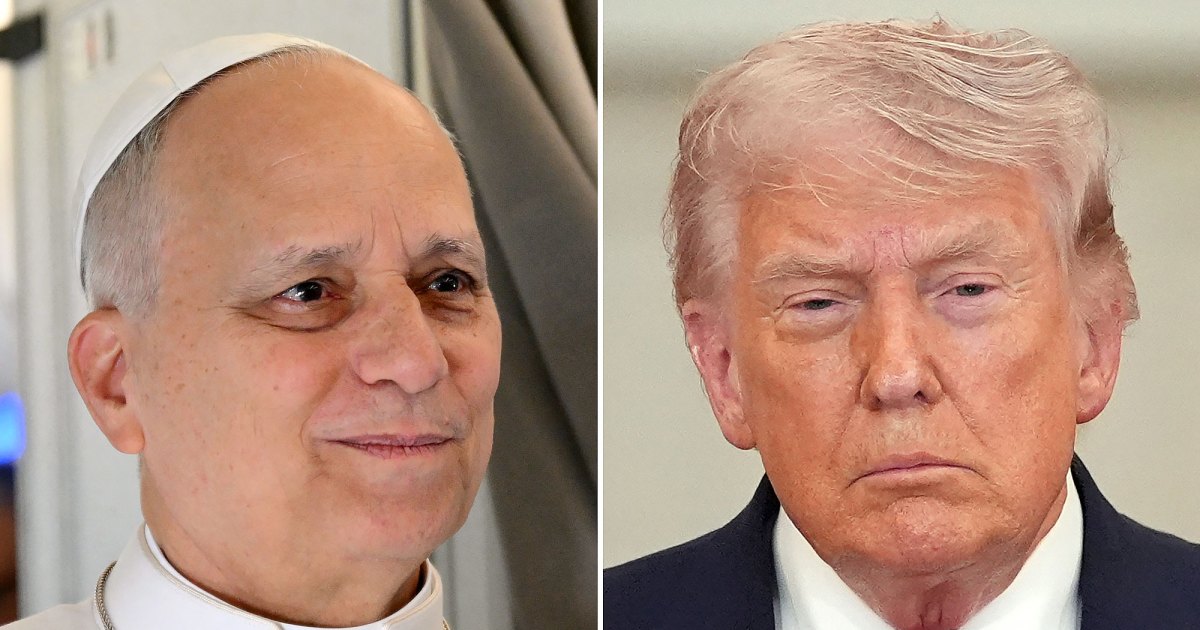
VATICAN CITY — Pope Leo XIV declared on Monday that he harbors 'no fear' of the Trump administration following a scathing social media attack by President Donald Trump, underscoring ongoing tensions between the leader of the Catholic Church and the U.S. president.
Speaking to reporters after a morning audience in St. Peter's Square, the 70-year-old pontiff addressed the controversy head-on. “I have no fear of the Trump administration or speaking out loudly of the message of the Gospel, which is what I believe I am here to do,” Leo said, according to those present at the Vatican press briefing on April 13.
The exchange stems from a lengthy post Trump shared on his Truth Social platform the previous day, Sunday, April 12. In it, the 79-year-old president lambasted the pope on multiple fronts, accusing him of weakness on crime and foreign policy. “Pope Leo is WEAK on Crime, and terrible for Foreign Policy,” Trump wrote, escalating a feud that has simmered for weeks.
Trump's post delved into historical grievances, referencing the COVID-19 pandemic. “He talks about ‘fear’ of the Trump Administration, but doesn’t mention the FEAR that the Catholic Church, and all other Christian Organizations, had during COVID when they were arresting priests, ministers, and everybody else, for holding Church Services, even when going outside, and being ten and even twenty feet apart,” the president continued, according to the full text of the message obtained by The Appleton Times.
The president also expressed a preference for Leo's brother, Louis Martín Prevost, whom he described as more aligned with his political views. “Louis is all MAGA. He gets it, and Leo doesn’t!” Trump stated. He further criticized the pope's stance on international issues, writing, “I don’t want a Pope who thinks it’s OK for Iran to have a Nuclear Weapon.”
Trump's commentary extended to U.S. foreign policy decisions, defending actions against Venezuela. “I don’t want a Pope who thinks it’s terrible that America attacked Venezuela, a Country that was sending massive amounts of Drugs into the United States and, even worse, emptying their prisons, including murderers, drug dealers, and killers, into our Country,” he added in the post.
The president touted his administration's achievements while dismissing Leo's criticisms. “And I don’t want a Pope who criticizes the President of the United States because I’m doing exactly what I was elected, IN A LANDSLIDE, to do, setting Record Low Numbers in Crime, and creating the Greatest Stock Market in History,” Trump wrote.
In a particularly pointed remark, Trump suggested the pope owed his position to the political climate in Washington. “As everyone knows, he was a shocking surprise. He wasn’t on any list to be Pope, and was only put there by the Church because he was an American, and they thought that would be the best way to deal with President Donald J. Trump,” the post claimed. “If I wasn’t in the White House, Leo wouldn’t be in the Vatican.”
Trump concluded with advice for the pontiff: “Leo should get his act together as Pope, use Common Sense, stop catering to the Radical Left, and focus on being a Great Pope, not a Politician. It’s hurting him very badly and, more importantly, it’s hurting the Catholic Church!”
When directly questioned about the Truth Social post during Monday's briefing, Pope Leo offered a succinct rebuke. “It’s ironic — the name of the site itself,” he said. “Say no more.” The comment drew chuckles from some reporters, highlighting the pope's measured approach to the spat.
The clash is part of a broader pattern of discord between the two leaders. In recent weeks, Pope Leo has openly criticized Trump's verbal escalations toward Iran amid escalating tensions in the Middle East. On Monday, Leo reiterated his commitment to peace advocacy. “The things I say are not meant as attacks on anyone,” he explained. “I do not look at my role as being political, a politician. I don’t want to get into a debate with him. I don’t think that the message of the Gospel is meant to be abused in the way that some people are doing.”
Pope Leo XIV, born in the United States and elevated to the papacy in a surprise election last year, has navigated his role with a focus on social justice issues, including immigration and environmental concerns—topics that have occasionally put him at odds with conservative figures in American politics. His American background, the first for a pope in modern history, was initially seen as a bridge to the U.S., but it has instead amplified scrutiny from Washington.
Trump's administration has not issued an official statement beyond the social media post, but White House aides reportedly view the pope's interventions as overreach into U.S. affairs. According to sources familiar with internal discussions, Trump's team sees Leo's comments on Iran as naive, given the president's hardline stance on nuclear proliferation and regional stability.
From the Vatican's perspective, officials emphasize the pope's moral authority on global conflicts. “His Holiness speaks from a place of faith and compassion, not partisanship,” a Vatican spokesperson told The Appleton Times earlier this month. This contrasts with Trump's framing, where he positions himself as a defender of Christian interests against perceived liberal influences within the Church.
The feud echoes past tensions between the Vatican and U.S. presidents, such as those during the Reagan era over Latin American policies, but the personal barbs via social media mark a modern twist. Historians note that while popes have long engaged in diplomacy, direct public spats with sitting leaders are rare and can strain international relations.
As the dust settles from this latest exchange, Pope Leo affirmed his resolve to continue voicing Gospel principles. He plans to address the United Nations General Assembly later this year on peace initiatives, a speech that could further intersect with U.S. foreign policy. Meanwhile, Trump is scheduled to host world leaders at the White House next month, where topics like Iran and Venezuela are expected to dominate discussions.
The implications for Catholic communities in the U.S., numbering over 70 million adherents, remain unclear. Some dioceses have urged restraint, while others see the pope's stance as a vital counterpoint to political rhetoric. “This isn't just about two men; it's about how faith intersects with power in our divided world,” said Rev. Michael O'Brien, a theologian at Georgetown University, in an interview with The Appleton Times.
For now, both sides appear entrenched. Trump has a history of using social media to settle scores with critics, from celebrities to fellow politicians, while Pope Leo's measured responses suggest a strategy of moral elevation over confrontation. Whether this leads to dialogue or deeper rift will likely unfold in the coming weeks, as global events continue to test the boundaries between church and state.