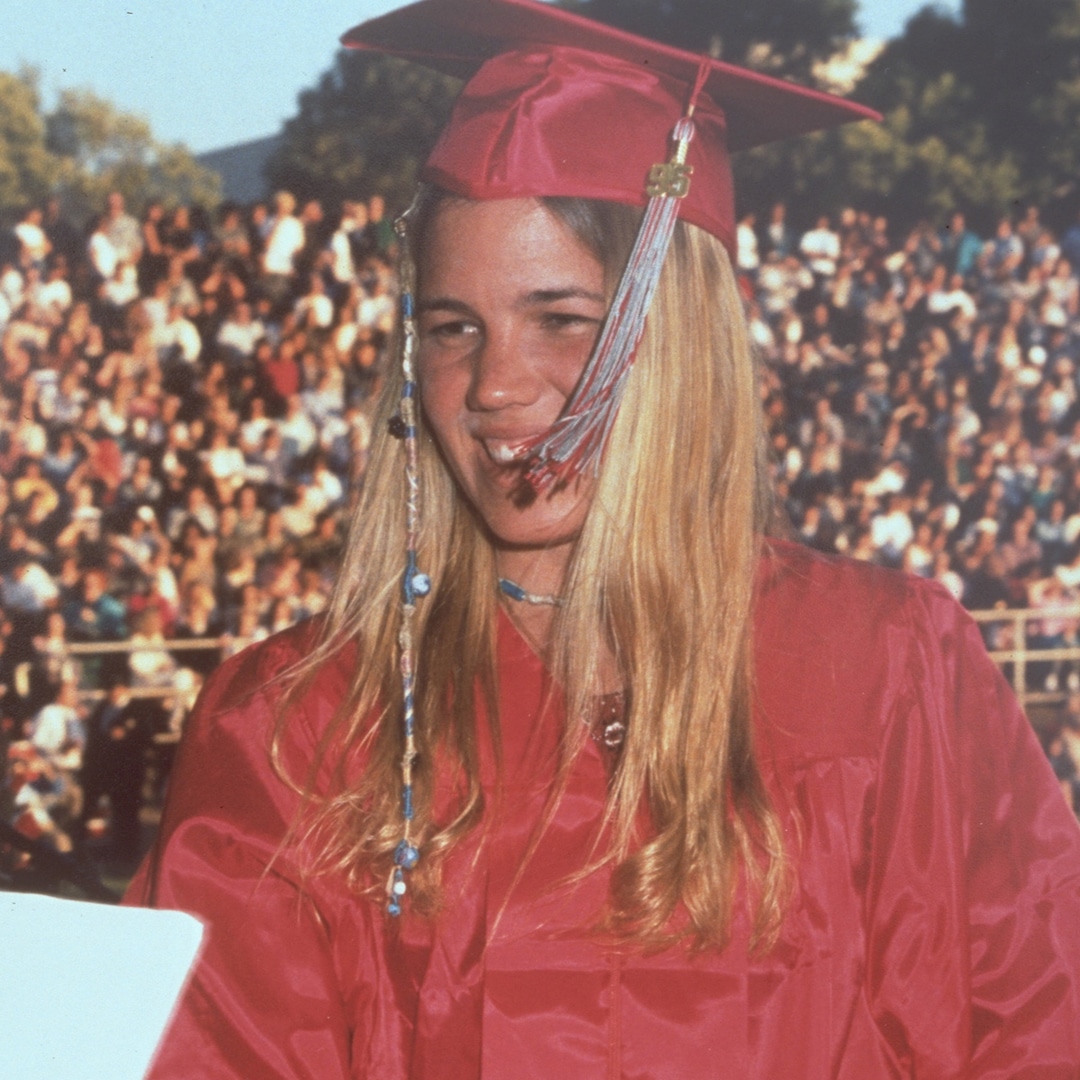
ARROYO GRANDE, Calif. — Nearly three decades after the mysterious disappearance of California college student Kristin Smart, authorities have uncovered evidence suggesting human remains may have been buried on a family property linked to her convicted killer. Soil tests conducted on the Arroyo Grande home owned by Susan Flores, the mother of Paul Flores, indicate the presence of compounds associated with a decomposing human body, according to San Luis Obispo County Sheriff Ian Parkinson. The development, announced during a press conference on May 8, has reignited hope among investigators and Smart's family for closure in a case that has haunted the Central Coast community for years.
Kristin Smart, a 19-year-old freshman at California Polytechnic State University in San Luis Obispo, vanished on May 25, 1996, after attending an off-campus party. Witnesses reported seeing her walking unsteadily with Paul Flores, a fellow student, following an alleged altercation at the event. Prosecutors later argued that Flores murdered Smart during an attempted sexual assault, a charge that culminated in his 2022 conviction for first-degree murder despite the absence of her body. Flores, now 47, is serving a sentence of 25 years to life at Pleasant Valley State Prison in Coalinga, California. His January petition to the California Supreme Court for review was denied, solidifying the verdict.
The latest search focused on the Flores family property at 1495 Acosta Street in Arroyo Grande, a quiet residential area about 15 miles southeast of San Luis Obispo. Sheriff Parkinson, who has led the investigation for much of its duration, addressed reporters outside the San Luis Obispo County Sheriff's Office. "We believe that... human remains were there at one time or still there," he said, emphasizing the scientific basis of the findings. "I’m not going to go into the details, other than just to say with soil tests, it’s about the compounds in the soil that are related to a human, decomposing body."
Parkinson cautioned that the remains have not been positively identified as Smart's. "I think it’s safe to say that we have not recovered Kristin yet," he added. "But our search goes on, and I don’t know how long we’re going to be there." The sheriff's office has cordoned off the property, with forensic teams meticulously sifting through soil samples under the guidance of experts in cadaver decomposition. This marks the latest in a series of digs at the site, which first drew scrutiny in 2021 when cadaver dogs alerted to possible scents of human remains.
Background on the case reveals a tangled web of family involvement. Paul's father, Ruben Flores, was charged as an accessory after the fact for allegedly helping his son bury Smart's body in the backyard of the Arroyo Grande home shortly after her disappearance. During a 2021 search warrant execution, investigators uncovered a soil disturbance approximately the size of a casket and traces of human blood, according to reports from the San Luis Obispo County District Attorney's Office. Prosecutors pointed to these findings as evidence that Smart's remains were initially interred there before being relocated, possibly to evade detection.
However, a jury acquitted Ruben Flores in October 2022, following a separate trial from his son's. His defense attorney, Robert Murray, urged the public to respect the presumption of innocence. "It would be nice if the community would honor the presumption of innocence," Murray said at the time, arguing that the evidence against Ruben was circumstantial at best. Susan Flores, who has maintained her son's innocence, was not charged in the case but has been a figure of interest due to her ownership of the property where the latest evidence surfaced.
The trials of Paul and Ruben Flores captivated the region, drawing national attention to the long-unsolved mystery. Deputy District Attorney Christopher Peuvrelle, who prosecuted Paul Flores, highlighted the emotional toll on Smart's family during closing arguments in the 2022 murder trial. "For crimes that happen in a bedroom, there are no witnesses," Peuvrelle said. "But ground-penetrating radar, a forensic archeologist, and a lab supervisor tell us what Kristin could not. We don't have a full intact body in this case, but we have her blood." He described the evidence as "a couple grains of bloody sand," the scant physical remnants linking the Flores family to the crime.
Smart was declared legally dead in 2002, six years after her disappearance, allowing her family to pursue wrongful death claims. The Smarts—parents Lindsey and Stan, along with siblings Lindsey and Michael—have been vocal advocates for justice, criticizing delays in the investigation for years. In 1996, initial police response was criticized for being lax; it took nearly two weeks for Smart to be officially listed as missing, by which time potential evidence may have been compromised. Cal Poly officials faced scrutiny for not acting swiftly on reports of her absence from classes and dorm life.
The case gained renewed momentum in 2019 when podcast host Chris Lambert's "Your Own Backyard" series spotlighted inconsistencies in the early investigation, prompting the San Luis Obispo County Sheriff's Office to form a cold case task force. This effort led to Paul's arrest in 2021, after DNA evidence from a 2017 search of the Flores property matched samples potentially linked to Smart. Ground-penetrating radar scans revealed anomalies consistent with a burial site, though no body was recovered at that time.
Now, with the soil test results, authorities are employing advanced forensic techniques, including mass spectrometry to analyze organic compounds like cadaverine and putrescine, which are byproducts of human decomposition. Experts consulted by the sheriff's office believe the remains could date back to the mid-1990s, aligning with Smart's disappearance. However, environmental factors such as soil acidity and heavy rains in the region could have dispersed or degraded evidence over time, complicating recovery efforts.
The Smart family issued a statement through their attorney on May 9, expressing cautious optimism. "While we wait for confirmation, any step toward finding Kristin brings us closer to the peace we've sought for 28 years," the statement read. Community members in Arroyo Grande have shown mixed reactions; some residents, like longtime neighbor Maria Gonzalez, expressed relief at the progress. "It's been a dark cloud over this street for so long," Gonzalez said. Others, including supporters of the Flores family, have questioned the timing and methods of the searches, viewing them as a continued harassment.
This discovery places the Kristin Smart case alongside other high-profile unsolved mysteries that have lingered in the public consciousness. For instance, the 1996 murder of 6-year-old JonBenét Ramsey in Boulder, Colorado, remains unresolved despite suspicions falling on family members. Similarly, the 1994 killings of Nicole Brown Simpson and Ron Goldman, in which O.J. Simpson was acquitted criminally but found liable civilly, highlight the challenges of prosecuting without physical evidence. The murders of rappers Tupac Shakur and The Notorious B.I.G. in 1996 and 1997, respectively, also stand as enduring enigmas in popular culture.
Other notorious cases echo the Smart saga's themes of delayed justice. Casey Anthony was acquitted in 2011 of murdering her 2-year-old daughter Caylee, leaving the child's death unsolved. The 1947 Black Dahlia murder of Elizabeth Short in Los Angeles, the 1892 axe killings of Andrew and Abby Borden in Fall River, Massachusetts, and the 1888 Jack the Ripper spree in London all defy resolution more than a century later. Even the 1982 Chicago Tylenol poisonings, which claimed seven lives including children, and the Zodiac Killer's rampage in the late 1960s and early 1970s in Northern California, persist without identified perpetrators.
As the search at the Flores property continues, investigators are coordinating with the FBI's forensic anthropology unit for potential exhumation. Sheriff Parkinson has pledged transparency, promising updates as new details emerge. For the Smart family, who have endured vigils, lawsuits, and endless speculation, this could be the breakthrough that transforms grains of sand into lasting answers. Yet, until DNA confirmation or recovery, the case remains a poignant reminder of the fragility of justice in the face of time and secrecy.
The broader implications extend to cold case protocols nationwide. Advocacy groups like the National Center for Missing & Exploited Children have cited the Smart investigation as a model for persistence, urging faster adoption of technologies like soil analysis in similar probes. In San Luis Obispo County, local lawmakers are considering legislation to fund advanced forensics for historical cases, potentially aiding dozens more families in their quests for truth.