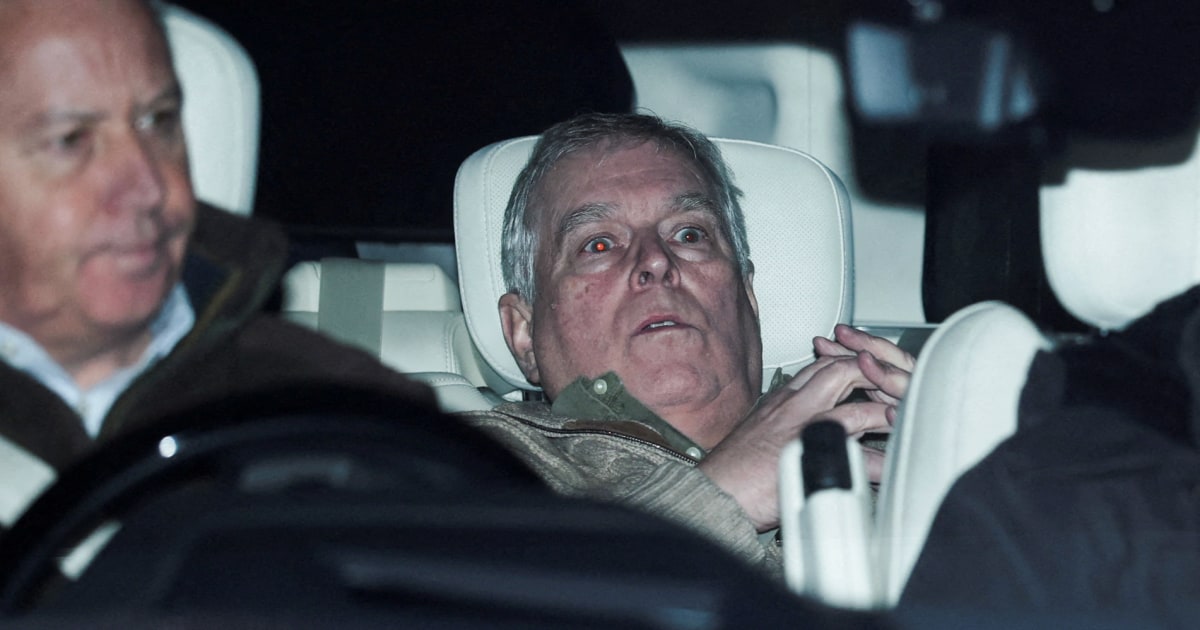
LONDON — The arrest of Prince Andrew, once a prominent figure in the British royal family, has thrust the monarchy into a renewed spotlight amid ongoing investigations into his ties to the late sex offender Jeffrey Epstein. Detained on suspicion of misconduct in public office, the former prince, whose full name is Andrew Mountbatten-Windsor, was released from custody after approximately 11 hours of questioning at Aylsham police station in eastern England. This development, reported by Thames Valley Police, marks a significant but unresolved chapter in a scandal that has plagued the royal household for years.
The arrest occurred following the U.S. Justice Department's release of an additional 3.5 million files related to Epstein, some of which detailed communications between the financier and Prince Andrew during his tenure as Britain's trade envoy. According to Thames Valley Police, officers conducted searches at Royal Lodge in Windsor, the prince's former residence, on Friday, and had previously completed searches at Wood Farm on the royal Sandringham estate, where he relocated earlier this month at the request of his brother, King Charles III. The move from Royal Lodge came amid mounting pressure over his Epstein connections, which led to his stepping back from public duties in 2019.
Prince Andrew was photographed leaving the police station slouched in the back of a car, staring into space with his hands clasped, a stark image that contrasted with his former life of privilege. His release was categorized as "under investigation," a status that does not imply clearance or bail conditions but signals that police have concluded initial questioning while the probe continues. "The former prince being released 'under investigation' would indicate that this is going to be a long-term process," said Dal Babu, a former chief superintendent with London's Metropolitan Police. He added that it means "he's suspected of a crime, he hasn't been formally charged, and there's no conditions. There's no timeline as to how long the investigation will take."
British authorities acted swiftly after the Epstein files surfaced, highlighting alleged interactions that have long fueled controversy. Prince Andrew has consistently denied any wrongdoing related to Epstein, though he has not commented on the latest document releases. The arrest represents the first for a senior royal since Charles I was detained and later beheaded for treason in 1649, underscoring the historic nature of the event.
The operation unfolded without prior warning to the palace. A palace official told NBC News that King Charles III, aged 77, was not informed of his brother's imminent arrest. However, the National Police Chiefs’ Council notified the government's Home Office just 30 minutes beforehand, "in line with routine practice," according to a statement from Thames Valley Police. Both Buckingham Palace and the Department for Business and Trade have expressed willingness to assist investigators, though it remains unclear if they have provided any information yet.
The Crown Prosecution Service (CPS), responsible for deciding on potential charges, is maintaining informal contact with Thames Valley Police. A CPS spokesperson described their involvement as "informal" and noted that no early investigative advice has been offered. Should the case proceed to trial, it would be titled "The King -v- Mountbatten-Windsor," a nomenclature that highlights the extraordinary intersection of royal lineage and state authority. As the name suggests, the CPS derives its power from the crown, placing the monarch's brother in direct symbolic opposition to the throne.
Prince Andrew's troubles trace back to at least 2011, when public outrage grew over his continued association with Epstein, who had recently completed a 13-month sentence for procuring a child for prostitution and soliciting a prostitute. The financier's death in 2019 while awaiting trial on federal sex-trafficking charges only intensified scrutiny of his high-profile associates, including the prince.
One of the most vocal Epstein survivors, Virginia Roberts Giuffre, has accused the prince of sexual abuse when she was 17, claiming Epstein trafficked her to powerful friends. Giuffre filed a lawsuit against Prince Andrew in 2021, which he settled out of court in 2022 for an undisclosed sum without admitting liability or issuing an apology. He has maintained that he never met Giuffre, a denial that has been central to his defense amid widespread allegations.
The prince's popularity has plummeted since a disastrous 2019 BBC interview, in which he defended his friendship with Epstein and appeared tone-deaf to the gravity of the accusations. A YouGov poll conducted on Friday revealed that 82% of Britons believe he should be stripped from the line of succession, where he currently stands eighth. This sentiment reflects a broader erosion of public trust in the monarchy, already strained by other family scandals.
Media coverage of the arrest spanned the spectrum, from the measured tone of The Times, which headlined it simply as "The arrest of Andrew," to the sensationalism of the New York Post's "THE PRINCE OF DARKNESS." Social media trends and global headlines amplified the story, turning it into an international spectacle that exposed the tensions between Britain's ceremonial monarchy and its democratic institutions.
Legal experts suggest that Prince Andrew could face further questioning or even re-arrest if new evidence emerges from ongoing lines of inquiry. The investigation's pace could stretch over weeks or months, depending on the CPS's assessment of the evidence. For now, the former prince remains free but under a cloud of suspicion, his future uncertain as authorities sift through the Epstein archives.
This case not only tests the boundaries of royal accountability but also raises questions about the monarchy's role in modern Britain. With King Charles III navigating his own challenges, the arrest of his sibling could have ripple effects on the institution's relevance and public perception. As the probe deepens, the world watches to see whether justice will prevail in a saga that blends privilege, power, and profound allegations of misconduct.
The implications extend beyond the palace walls, potentially influencing diplomatic relations given Epstein's international network. U.S. authorities' release of the files has bridged transatlantic legal efforts, prompting British police to act decisively. Yet, without formal charges, the narrative remains one of anticipation, with Prince Andrew's silence speaking volumes amid the clamor for transparency.
In the end, the path forward hinges on the thoroughness of the investigation and the CPS's judgment. Whether this leads to charges, a trial, or eventual closure, the arrest has irrevocably altered the trajectory of Prince Andrew's life and cast a long shadow over the House of Windsor. As one of the few remaining ties to Queen Elizabeth II's immediate family, his downfall—if it comes—could redefine the monarchy for generations.