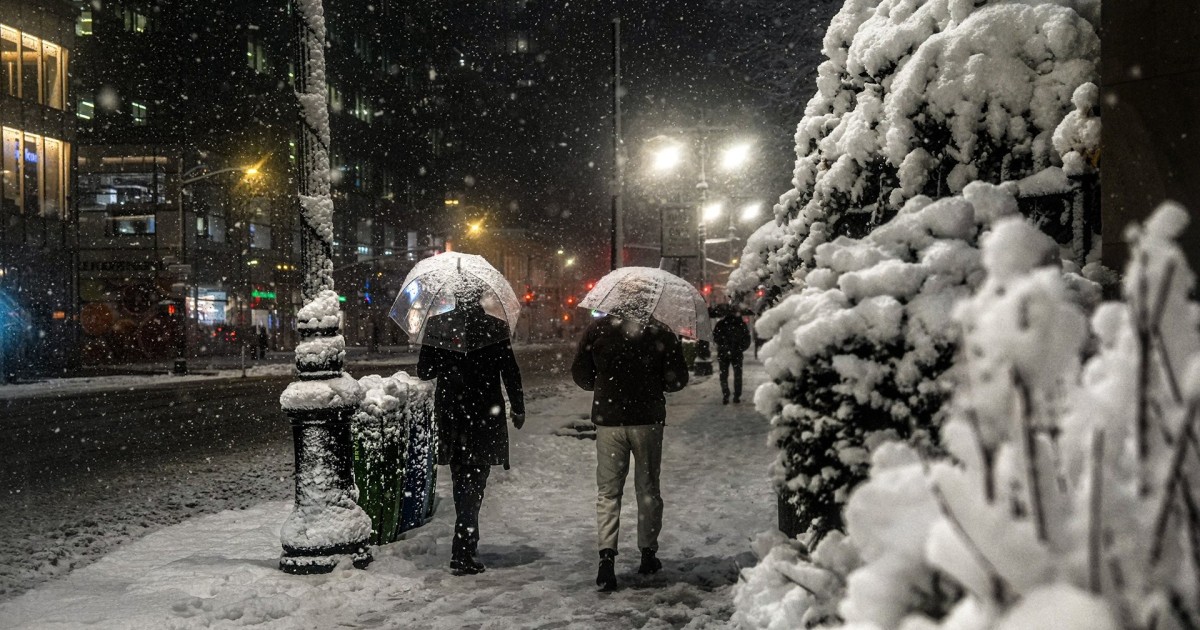
A powerful nor'easter battered the Northeast on Tuesday, blanketing major cities from Philadelphia to Boston in over a foot of snow and disrupting travel across the region. The storm, described by meteorologists as life-threatening, prompted at least seven governors to declare states of emergency as wind gusts reaching up to 70 miles per hour whipped through coastal areas, leading to widespread flooding, power outages, and hazardous road conditions. According to reports from NBC News, the blizzard brought daily life to a standstill, with airlines canceling hundreds of flights and schools shutting down from New Jersey to Maine.
The storm's fury was evident early in the morning as heavy snow began accumulating rapidly in Philadelphia, where officials recorded more than 12 inches by midday. New York City fared no better, with Central Park seeing accumulations topping 14 inches, according to preliminary measurements from the National Weather Service. Boston, often a target for such winter assaults, reported similar totals, with plows struggling to keep major arteries like Interstate 95 clear. NBC correspondent Emilie Ikeda, reporting from the field, highlighted the sudden onslaught: the nor'easter barreled up the East Coast with little warning after forecasts had predicted a milder system just days earlier.
Governors in states including New York, New Jersey, Pennsylvania, Massachusetts, Connecticut, Rhode Island, and New Hampshire activated emergency protocols to coordinate response efforts. In New York, Governor Kathy Hochul urged residents to stay off the roads, emphasizing the dangers posed by whiteout conditions. "This storm is unforgiving," she said in a press briefing, according to state officials. Similar declarations came from Pennsylvania's Governor Josh Shapiro, who mobilized the National Guard to assist with snow removal in urban centers like Philadelphia.
Coastal flooding emerged as a secondary threat, with high tides exacerbated by the relentless winds pushing water inland. In low-lying areas of New Jersey, such as Atlantic City, waves crashed over seawalls, flooding streets and stranding vehicles. Power outages affected hundreds of thousands, with utility companies like Con Edison in New York reporting downed lines from fallen tree branches laden with snow. By evening, more than 500,000 customers were without electricity across the region, per updates from local utilities.
The nor'easter, a type of extratropical cyclone common to the East Coast, formed off the Carolinas and intensified as it tracked northward, drawing moisture from the warm Atlantic waters. Such storms have a storied history in the Northeast, reminiscent of the 2016 Blizzard of the Century that dumped up to 40 inches in parts of New York and caused billions in damages. This event, while not matching that scale, still posed significant risks, particularly to vulnerable populations in densely populated urban areas.
Travel disruptions were immediate and severe. Amtrak suspended service on the Northeast Corridor, stranding passengers at stations from Washington to Boston. Major airports, including LaGuardia, JFK, and Logan, grounded flights, with the FAA reporting over 1,200 cancellations by afternoon. Drivers faced treacherous conditions on interstates, where visibility dropped to near zero in gusts. State police in Massachusetts reported multiple accidents, including a pileup on the Massachusetts Turnpike involving over a dozen vehicles.
Experts tracking the storm's path provided some relief in their forecasts. TODAY show meteorologist Al Roker, analyzing satellite imagery, noted that the system was expected to weaken as it moves offshore late Wednesday. "The heaviest snow will taper off by tonight, but lingering winds could keep coastal areas on alert through the weekend," Roker said during a live segment. However, he cautioned that a secondary low-pressure system might bring additional flurries to interior New England.
In Philadelphia, where the storm made its first major landfall impact, city officials converted parking bans into snow emergency routes to facilitate plowing. Mayor Cherelle Parker addressed the public via social media, thanking first responders and advising against unnecessary travel. Witnesses described the scene as chaotic yet resilient; one resident in South Philadelphia told local reporters, "I've lived through worse, but this one's got the wind howling like a banshee."
New Yorkers, accustomed to winter woes, bundled up against the chill as subzero wind chills set in. The city's Department of Sanitation deployed thousands of salt spreaders, but backlogs formed in outer boroughs like Queens and Brooklyn. Subways ran, but delays plagued commuters, and bridges like the George Washington saw closures during peak gusts. Economic impacts loomed large, with small businesses in Manhattan reporting lost revenue from foot traffic halted by the snow.
Boston bore the brunt in New England, with the storm's core stalling over the area and dumping the heaviest snow. The Massachusetts Emergency Management Agency reported isolated structural collapses under the weight of accumulation, though no fatalities were confirmed by evening. Historical context underscores the region's vulnerability: the Blizzard of 1978, which killed nearly 100 people, led to stricter building codes and emergency preparedness that are now being tested.
As the day wore on, federal agencies stepped in with support. The Federal Emergency Management Agency (FEMA) pre-positioned resources in affected states, ready to assist if damages exceed local capacities. Climate experts, speaking in broader terms, linked the storm's intensity to warming ocean temperatures that fuel stronger nor'easters, though this event's specifics align with seasonal norms.
Looking ahead, improvement is anticipated but not immediate. Forecasts indicate clearing skies by Thursday morning, allowing cleanup to begin in earnest. However, the title of ongoing coverage from NBC News poses the key question: When will conditions truly improve? Meteorologists predict full recovery could take days, with some rural areas in upstate New York and Vermont facing prolonged isolation due to drifted snow.
The broader implications of this blizzard extend to infrastructure resilience and seasonal preparedness. With spring just around the corner—though the calendar date of February 23, 2026, belies the wintry grip—officials are reviewing response efficacy. Environmental groups have called for investments in green infrastructure to mitigate future flooding, while transportation authorities plan reviews of rail and air disruptions.
In the end, the nor'easter serves as a stark reminder of the Northeast's winter temperament. As plows rumble through the night and power crews race against the cold, communities hunker down, waiting for the dawn of clearer weather. Updates from sources like NBC continue to track the storm's exit, ensuring residents stay informed amid the whiteout.