In the high-stakes world of European club soccer, the 2026 UEFA Champions League is shaping up to be one of the most unpredictable tournaments in recent memory. With the knockout stages underway, analysts are turning to historical data to forecast a winner, and a detailed examination published by ESPN points to Manchester City as the frontrunner. The English Premier League powerhouse, managed by Pep Guardiola, emerges as the sole survivor after a rigorous comparison against metrics from the past 15 champions, according to the analysis by ESPN soccer writer James Olley.
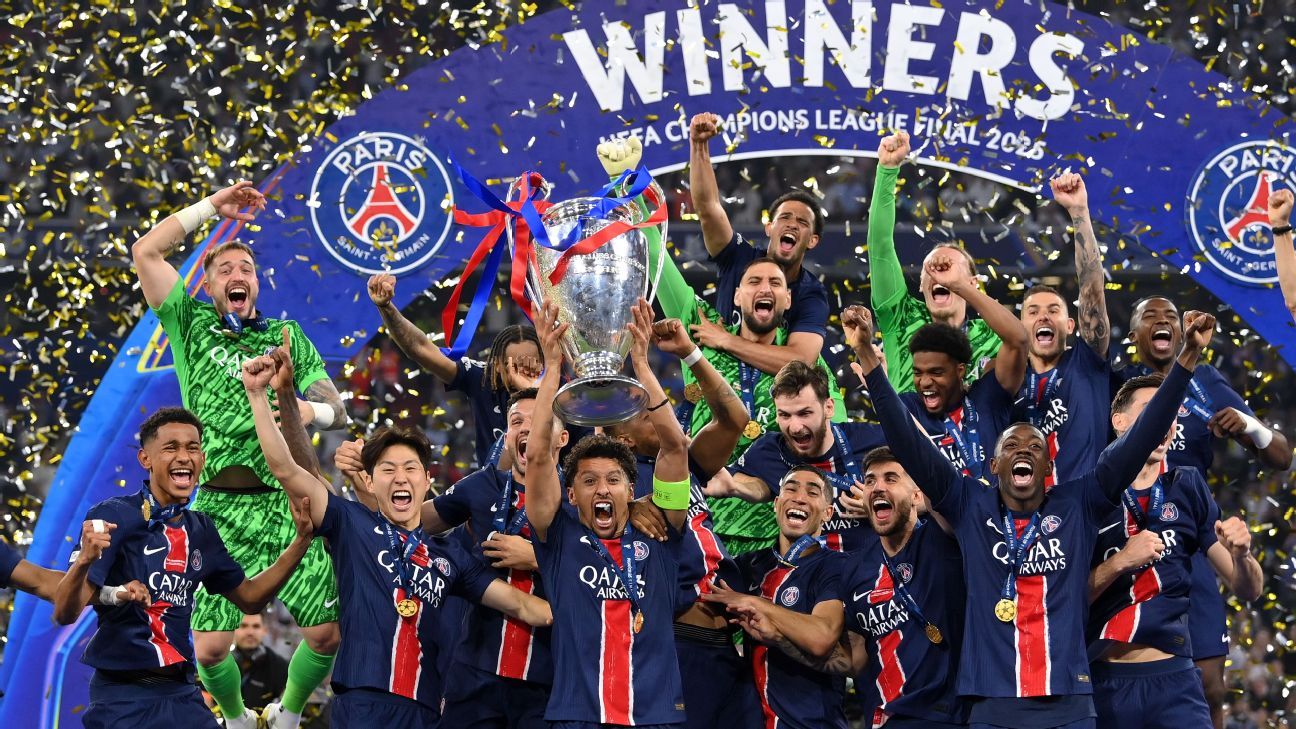
The UEFA Champions League, Europe's premier club competition, has long been dominated by a select group of elite teams. As Olley notes in his ESPN article, the past 10 winners include Real Madrid, Liverpool, Bayern Munich, Chelsea, Manchester City, and Paris Saint-Germain. These clubs have collectively claimed 31 titles and finished runner-up 15 times, underscoring their stranglehold on the tournament. For the 2026 edition, UEFA has structured the bracket into two paths: the 'Silver Path,' featuring six of those historical powerhouses in the top half, and what Olley dubs the 'Blue Path' in the bottom half, where the last title win dates back to 2015.
The Blue Path teams—Barcelona aside—have just five European Cups and nine second-place finishes combined, with no other club on that side boasting a single trophy. This setup, Olley argues, opens the door for surprises, much like last year's first-time winner. Arsenal, in particular, enters as sizable betting favorites despite odds below 50 percent, highlighting the bracket's potential for upsets. However, Olley's predictive model, drawing on advanced data from Opta and Stats Perform, systematically evaluates the 16 remaining teams against patterns from past victors to narrow the field.
The first metric focuses on scoring efficiency, using 'adjusted goals'—a hybrid of 70 percent expected goals (xG) and 30 percent actual goals—to gauge chance creation beyond raw tallies. Olley sets the benchmark at the 2012 Chelsea side's 1.61 adjusted goals per game, the lowest among recent winners despite their unlikely triumph under Roberto Di Matteo. Teams falling short include Atlético Madrid at 1.58, Atalanta and Newcastle both at 1.52, and Tottenham at a dismal 1.13. Additionally, Sporting Lisbon, Galatasaray, and Bodø/Glimt are eliminated due to no non-Big Five league team reaching the final in the last 15 seasons. As Olley explains, 'Bodo had the fifth-worst xG differential in the league phase among all teams, Galatasaray scored six non-penalty goals in the league phase, and Sporting were outshot 118-87 in the league phase.'
After this cull, the contenders are Arsenal, Bayern Munich, Barcelona, Manchester City, Liverpool, Paris Saint-Germain, Real Madrid, Chelsea, and Bayer Leverkusen. Olley emphasizes that this measure captures underlying performance, avoiding overreliance on luck or variance in finishing. The 2021 Chelsea winners, for context, posted a similar 1.61 mark, reinforcing the threshold's relevance even for defensively oriented champions.
Moving to defensive solidity, the analysis underscores the adage that 'defense wins championships,' though recent trends show a tactical shift. Elite defenses like the 2021 Chelsea (below 0.85 adjusted goals allowed), 2011 and 2015 Barcelona, 2019 Liverpool, and 2013 Bayern Munich set a high bar, but most winners hover around 1.0. The 2012 Chelsea again defines the floor at 1.22 adjusted goals allowed per game. Among the remaining teams, only Chelsea's current 1.29 exceeds this, compounded by allowing 11 shots per game—higher than most—and facing high-quality chances akin to Barcelona's aggressive press. Liverpool (1.22) and Barcelona (1.21) barely qualify. 'Both Liverpool and Barcelona snuck in just under the threshold,' Olley reports, eliminating Chelsea and leaving Arsenal, Bayern Munich, Barcelona, Manchester City, Liverpool, Paris Saint-Germain, Real Madrid, and Bayer Leverkusen.
Pressing intensity, measured by passes allowed per defensive action (PPDA), reveals another layer. The 2015 Barcelona under Luis Enrique holds the record at a 'freakish 6.98 PPDA,' powering their attack with stars like Lionel Messi, Luis Suárez, and Neymar—what Olley calls 'the best soccer team I've ever seen.' In contrast, the 2012 Chelsea's passive 13.26 PPDA suits low-block strategies. Bayer Leverkusen, echoing Roger Schmidt's aggressive style from a decade ago but now far less intense at 13.44 PPDA, fails to meet the standard. This ousts Leverkusen, trimming the list to Arsenal, Bayern Munich, Barcelona, Manchester City, Liverpool, Paris Saint-Germain, and Real Madrid.
Crossing frequency in the final third offers a nuanced test, balancing efficiency with versatility. Olley describes it as a 'sweet-spot situation,' where extremes hinder success: too few crosses limit flank threats, too many waste possessions. Past winners range from Paris Saint-Germain's 8.4 percent last season to Chelsea 2012's 19.7 percent. Among favorites, Bayern Munich (7.7 percent), Barcelona (8.0 percent), and Paris Saint-Germain (7.4 percent) dip below, raising questions for knockout matchups against physical defenses. 'The question for all three of these teams in the knockout rounds: Will they be able to create quality opportunities if they come up against a big, physical, organized defense?' Olley poses. This eliminates Bayern Munich, Barcelona, and Paris Saint-Germain, leaving Arsenal, Manchester City, Liverpool, and Real Madrid.
Pace of play, gauged by possessions per team per match, accounts for the chaotic nature of Champions League ties. Pre-pandemic winners like 2019 Liverpool (99.1 possessions) and 2020 Bayern Munich (99.8) thrived in high-tempo games, but post-2020 champions trend lower, with 2023 Manchester City's 78.5 setting the floor. Arsenal's 77.2 and Real Madrid's 78.2 fall short. 'It's pretty much impossible to be in control of every game you play in the Champions League,' Olley writes, noting how tactical exploits in two-legged ties demand endurance. This whittles the field to Manchester City and Liverpool.
The final metric, defensive shape, scrutinizes how far opponents touch the ball from the field's center. Europe's average this season is 17.52 meters, but all 15 recent winners kept foes farther out, with 2023 Manchester City's 17.58 meters as the closest. Liverpool's 16.76 meters—nearer than any past winner and most Big Five league teams—proves fatal. 'That's bad news for Liverpool, who are allowing their opponents to touch the ball 16.76 meters from the center,' Olley states.
Thus, Manchester City stands alone as the predicted winner. Olley acknowledges the irony: this City squad ranks among Guardiola's three or four weakest, lacking the stylistic extremes of past teams. 'Now, they just kind of look like all of the other good teams do, without too many distinctive stylistic features,' he observes. While trailing Arsenal in the Premier League title race—due to a 38-game grind—this unflashy approach may suit the four knockout rounds against global elites.
The broader context of the 2026 Champions League adds intrigue. The tournament, running from September 2025 to the May 2026 final at an undecided venue, features a revamped format with a single league phase of 36 teams, leading to knockout playoffs. Historical dominance by the Silver Path clubs persists, but the Blue Path's underdogs, like Arsenal, fuel betting markets. Odds from bookmakers, as referenced by Olley, favor Arsenal slightly, yet data-driven models diverge.
Critics of such predictive models might argue they overlook intangibles like injuries or momentum—Real Madrid's 2024 triumph despite domestic struggles comes to mind. Yet Olley's methodology, rooted in Opta and Stats Perform data spanning 15 seasons, provides a data-backed counterpoint. No conflicting analyses were immediately available, but ESPN's cross-references to related pieces, such as summer transfer needs for Premier League teams, suggest ongoing squad evolutions could sway outcomes.
Looking ahead, Manchester City's path includes potential clashes with Silver Path giants like Real Madrid or Bayern Munich early on. Liverpool, despite elimination here, remains a threat via their attacking prowess under new management. As the knockouts progress—first legs in February 2026, finals in May—these metrics will face real-world tests. Fans and pundits alike await whether history's patterns hold or if another first-time winner emerges from the Blue Path.
For now, Olley's verdict spotlights Manchester City as the team most aligned with championship DNA. In a competition where 31 titles are concentrated among six clubs, this prediction reinforces the Premier League's growing influence, with City and Liverpool as the last English duo standing in the model. The Appleton Times will continue monitoring developments as Europe's top clubs vie for glory.