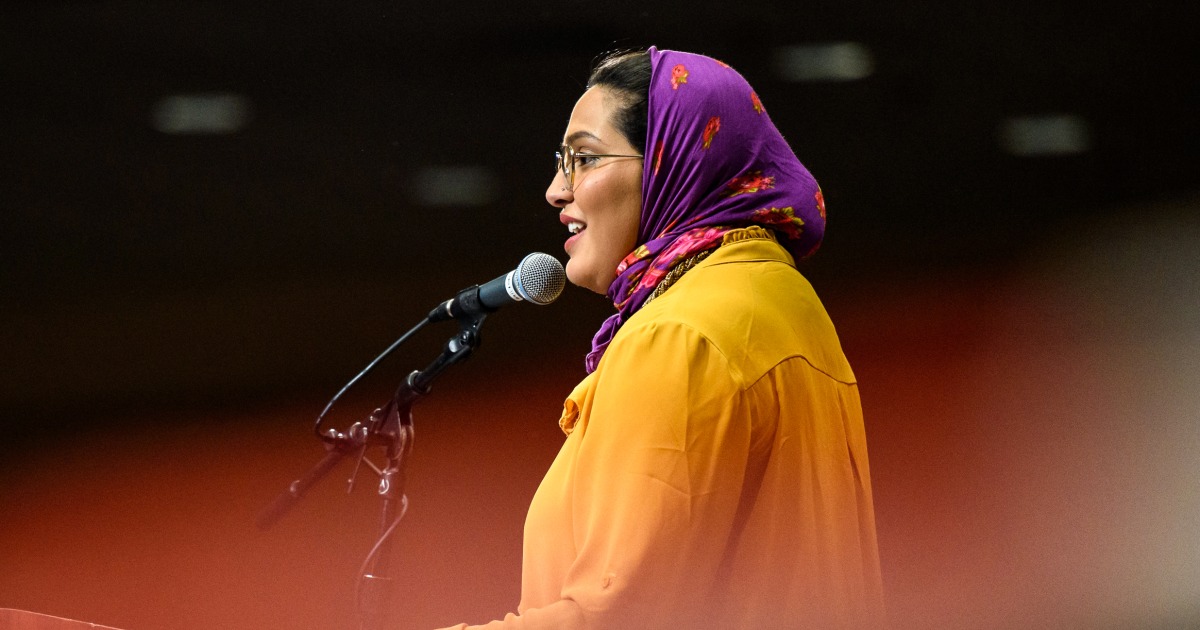
In a closely contested Democratic primary for North Carolina's 4th Congressional District, progressive challenger Nida Allam conceded defeat to incumbent Rep. Valerie Foushee late Wednesday evening, marking the end of a heated race that drew national attention from both progressive activists and establishment Democrats.
Allam, a 32-year-old Durham County commissioner, issued her concession in a statement posted to X, the social media platform formerly known as Twitter. "Though these were not the results we hoped for, I am proud of the movement we have built, the voices we have lifted up, and the journey we have ahead," she wrote. Thanking her staff and supporters, Allam added a pointed message for the Democratic establishment: "While we may not have won the race, the establishment should stay on watch. Our movement sounded the alarm for future Democratic primaries throughout this cycle."
With 99% of the expected vote tallied, Foushee held a narrow lead of 49.2% to Allam's 48.2%, according to results reported by NBC News. The news outlet noted that it had not yet made a projection in the race, reflecting the razor-thin margin in the deep-blue district centered in the state's Research Triangle area, which includes Durham, Chapel Hill, and surrounding communities. The 4th District is considered safely Democratic and not competitive in the general election, making the primary the decisive contest for the seat.
This primary rematch was a rematch of sorts from 2022, when Foushee, then a newcomer to Congress, won a crowded open primary by 9 percentage points. Allam, who entered politics as one of the first Muslim women elected to office in North Carolina, positioned herself as a fresh voice demanding bolder action on progressive priorities. She criticized Foushee, 69, for being too accommodating to business interests and supportive of Israel, particularly in light of the ongoing war in Gaza.
The race became a flashpoint for broader tensions within the Democratic Party, with national progressive groups rallying behind Allam to push for generational and ideological shifts. Organizations such as Justice Democrats, Leaders We Deserve, the Working Families Party, and the Sunrise Movement poured resources into her campaign. Allam also secured an early endorsement from Sen. Bernie Sanders, I-Vt., who praised her commitment to working-class issues and environmental justice.
On the other side, Foushee enjoyed robust backing from North Carolina's Democratic establishment, including endorsements from Gov. Josh Stein, former Gov. Roy Cooper, and fellow congressional representatives Deborah Ross, Alma Adams, and Don Davis. These leaders highlighted Foushee's experience and her record of delivering for the district, which encompasses universities like Duke and the University of North Carolina at Chapel Hill, as well as biotech and tech hubs.
Outside spending played a pivotal role, with over $3 million in advertisements flooding the airwaves, according to ad tracking firm AdImpact. Progressive groups backing Allam, including Leaders We Deserve, Justice Democrats, and the Working Families Party, combined for $790,000 in support. Additionally, American Priorities PAC, a super PAC aimed at countering the influence of pro-Israel lobbying groups, spent nearly $1 million on ads promoting Allam.
Foushee's allies countered with significant financial firepower. Jobs and Democracy PAC, funded in part by the artificial intelligence company Anthropic, contributed major sums to her campaign. Anthropic, which advocates for stricter regulations on AI compared to some industry peers, has been vocal about the need for federal oversight amid rapid technological advancements.
One of the campaign's central issues revolved around AI regulation and the proliferation of data centers in North Carolina, a state increasingly eyed by tech giants for its energy infrastructure and educated workforce. Foushee called for Congress to establish federal standards to mitigate the environmental and infrastructural impacts of these facilities, emphasizing balanced growth that protects local communities. In contrast, Allam aligned with Sanders' proposal for a national moratorium on new data centers, arguing that unchecked expansion posed risks to water resources, electricity grids, and climate goals in the Research Triangle.
The debate over AI and data centers gained urgency in the district, where proposals for massive facilities have sparked local concerns about resource strain. "The AI lobby just bought its first seat in Congress," Allam charged in her concession statement, directly linking Foushee's funding from Anthropic-backed groups to policy outcomes. Foushee's campaign, however, framed her position as pragmatic, aimed at harnessing AI's benefits while addressing its downsides through legislation.
"It should not take being challenged in a primary to take bold stances that voters overwhelmingly support, but I am proud that our movement pushed our incumbent to better reflect our deeply held values and convictions," Allam said in a later addition to her social media post.
Another flashpoint was U.S. policy toward Israel, which fueled much of the outside spending and progressive mobilization. Foushee had received over $2 million in ad support from groups affiliated with the American Israel Public Affairs Committee (AIPAC) during her 2022 campaign and met with Israeli Prime Minister Benjamin Netanyahu in 2024. Allam and her allies portrayed this as evidence of Foushee's alignment with a hawkish agenda, especially amid Israel's military operations in Gaza following the October 7, 2023, Hamas attacks.
In response to criticism, Foushee pledged this year not to accept AIPAC support and condemned Netanyahu's handling of the war, calling for a ceasefire and humanitarian aid. Despite these shifts, Allam continued to highlight Foushee's historical positions, arguing they did not go far enough to represent the district's diverse, progressive electorate, which includes significant Muslim and Arab American communities in Durham.
The primary's intensity underscored divisions in the Democratic Party as it heads into the 2026 midterms. Progressives viewed the race as a test of their ability to unseat incumbents seen as insufficiently aggressive on issues like climate change, corporate accountability, and foreign policy. Foushee's narrow victory, if it holds, signals the challenges of such insurgencies in safe districts where establishment networks remain strong.
As vote counting continues, local Democratic leaders expressed relief at avoiding a more divisive outcome. Gov. Stein, in a statement released Thursday morning, congratulated Foushee and urged party unity: "Valerie has fought tirelessly for North Carolina families, and her leadership will be crucial as we build on our progress." Progressive activists, meanwhile, pointed to Allam's strong showing—nearly matching the incumbent despite being outspent in some areas—as evidence of growing momentum.
Looking ahead, the 4th District's general election in November will pit the Democratic nominee against a Republican opponent in a race expected to be a formality given the district's partisan lean. But the primary's lessons could ripple nationally, influencing how progressive groups allocate resources in future cycles and whether incumbents like Foushee adjust their stances to preempt challenges. Allam, in her concession, hinted at continued activism: "Our journey ahead" suggests she may remain a force in North Carolina politics, potentially eyeing other opportunities or building on the network she cultivated.
The close results also highlight the evolving role of tech money in politics, with AI firms like Anthropic entering the fray through PACs. As data center debates intensify, the district's voters have signaled that technology's promise must be weighed against its costs—a theme likely to persist in congressional deliberations.
In the end, this primary was less about upending the status quo than testing its resilience. Foushee's team celebrated the win at a watch party in Chapel Hill, where supporters gathered amid early returns showing the tight contest. Allam's campaign headquarters in Durham, by contrast, shifted focus to reflection and future organizing, with volunteers vowing to carry the torch on key issues.
As the dust settles in the Research Triangle, the race serves as a microcosm of the Democratic Party's internal dynamics: a battle between bold visions and institutional steadiness, played out in one of the South's most innovative corners.